

Table of Contents
- Why Standard Sizing Fails Athletic Builds
- The 2026 Athletic Build Clothing Fit Framework
- Best Muscle Fit T-Shirts for Men: What to Look For in 2026
- Styling Tips for Muscular Men: Gym to Street Without the Baggy Look
- How to Build a Capsule Wardrobe for Athletes
- Tailoring, Fabric Care and Durability for Performance Apparel
- Frequently Asked Questions
Last Updated: September 26, 2026
Why Standard Sizing Fails Athletic Builds
If you have spent years under a barbell, you know the drill: a shirt that fits your shoulders hangs like a tent at the waist, and trousers that close over your quads gap at the back. This athletic build clothing guide exists because that problem is structural. Standard sizing is drafted around average proportions, and training moves you away from average.
The Shoulder-to-Waist Ratio Problem
A tailored jacket is cut so the shoulder seam sits at the edge of your shoulder and the waist nips in below it. Off-the-rack clothing assumes a modest drop between those points; lifters carry a much larger one. Size to your chest and the waist billows. Size down and the shoulders pull, the armholes bite, and the sleeves ride up.
Quads, Glutes and the Tapered Fit
The lower body creates the second failure point. Squatting and deadlifting build thigh and glute mass a straight-leg cut cannot accommodate. A tapered fit helps only when the thigh has genuine room built in. That is why so many lifters end up in trousers that fit the waist and strangle the leg, or fit the leg and fall off the waist.
The 2026 Athletic Build Clothing Fit Framework
Forget vanity sizing and the number on the label. The framework that works is measurement-led: take five numbers, compare them against the garment's actual construction, and buy to the largest muscle group. This is the biggest shift in how athletic build clothing should be chosen, and it removes almost all the guesswork.
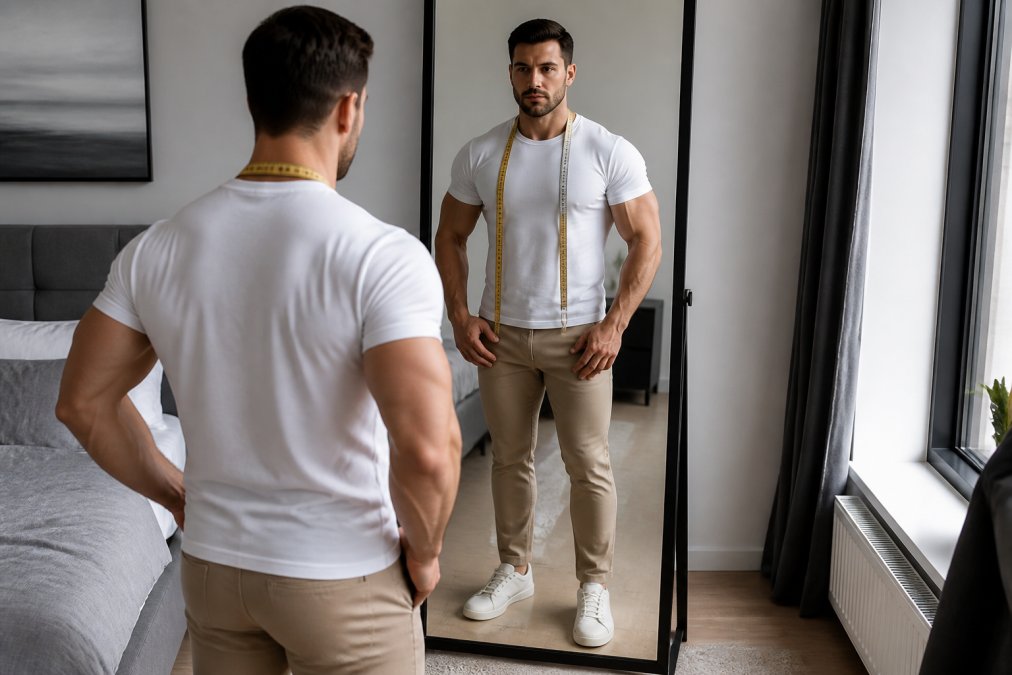
Five Measurements That Decide Every Purchase
Take these with a soft tape, over light clothing, and write them down once.
- Shoulder width: seam to seam across the back, the widest point
- Chest: around the fullest part, tape level under the arms
- Waist: at the natural crease, not where your trousers sit
- Thigh: around the fullest part, standing relaxed
- Inseam: crotch seam to where you want the hem to fall
Reading a Size Chart for Muscle Mass
Most size charts publish chest and waist only, which tells you nothing about whether a garment will clear your thighs. Look instead for a thigh measurement, a stated stretch percentage, and a cut description: tapered, athletic, or muscle fit. If a brand publishes none, size for your largest measurement and accept the excess elsewhere. A gusseted crotch and four-way stretch most reliably buy you range of motion.
| Measurement | What It Decides | Red Flag on a Size Chart |
|---|---|---|
| Shoulder width | Whether the seam sits correctly | Shoulder not listed at all |
| Chest | Base size for tops | Chest listed, no waist drop |
| Waist | Trouser closure | Waist only, no thigh figure |
| Thigh | Whether you can squat and sit | No thigh measurement published |
| Inseam | Hem length and break | Single inseam for all sizes |
Best Muscle Fit T-Shirts for Men: What to Look For in 2026
The best muscle fit t-shirt for men is cut with room through the chest and shoulders, tapered through the waist, and made from a fabric that recovers its shape after washing. Fit comes from the pattern, not from sizing down. A shirt that only looks fitted because it is tight will fail the moment you raise your arms.
Fabric and Construction Checks
Start with fibre content. A synthetic blend with a stated stretch percentage holds its shape better through repeated washing than rigid cotton jersey, and moisture-wicking matters if you wear the shirt straight from a session. Check the shoulder and side seams, which take the most strain on a broad frame; seamless or flatlock construction reduces chafing under a bag strap. [Fitizen's Bamboo Tee In Sky Blue](https://fitizenjeans.com/products/bamboo-tee-in-sky-blue) is built on exactly that brief: soft, breathable, moisture-absorbing, and cut to an athletic shape rather than a boxy one.

Styling Tips for Muscular Men: Gym to Street Without the Baggy Look
The gym-to-street transition fails for one reason: people size up to hide bulk, and the excess fabric adds visual width where you least want it. The fix is structured, tapered pieces in a tight colour range, so nothing needs to be oversized to feel comfortable.
- Keep the palette to three or four neutrals: black, grey, navy, white
- Choose tapered over straight-leg on trousers, every time
- Layer with a fitted hoodie or overshirt rather than a loose one
- Let one piece carry the fit and keep the rest simple
- Match hem length to your shoes so the leg line stays clean
How to Build a Capsule Wardrobe for Athletes
A capsule wardrobe for athletes is a small set of pieces that all fit your physique properly and all work with each other. The goal is not fewer clothes for its own sake, but removing the daily friction of owning twenty items that each fit badly in a different way.
Bodybuilder vs. Calisthenics: Two Different Cut Problems
The distinction is not size but where the mass sits and what that does to a garment's geometry.
Bodybuilder builds (mass-dominant):
- The shoulder-to-waist drop is extreme, often 20cm or more. Shirts that fit the chest billow at the waist unless darted or taken in.
- Thigh circumference is the binding constraint on trousers. A tapered cut only works if the thigh has genuine room built in; otherwise you need a straight or relaxed leg and a tailor.
- Armholes are the second failure point. A shirt sized to the chest often has an armhole cut for a smaller frame, which bites when you raise your arms.
- Look for: gusseted crotch, four-way stretch, stated thigh measurements, athletic or muscle fit blocks.
Calisthenics and lean athletic builds:
Hyper Stretch Chinos In Graphite Grey →
- The drop is more moderate, so off-the-rack athletic fits often work without alteration.
- The problem shifts to length and drape. A lean frame in a boxy cut looks like it is wearing someone else's clothes, because the fabric has nothing to sit against.
- Slim and tapered cuts work, but only if the shoulder seam still lands at the edge of the shoulder. If it drops past it, the garment is too big regardless of how the waist fits.
- Look for: slim-tapered blocks, higher armholes, shorter body lengths, lighter fabrics that drape rather than hang.
The 12-Piece Core List
This list assumes a mixed training week and a wardrobe covering the gym, the commute and casual social settings.
- Two muscle fit t-shirts in neutral colours
- One high-performance shirt for smarter occasions
- One fitted hoodie
- One overshirt or light jacket
- Two pairs of tapered trousers, one chino and one darker
- One pair of dark jeans
- One pair of shorts with a stretch waistband
- Two knitwear pieces for layering
- One pair of clean, minimal trainers
How to Adapt the List to Your Build
If you are mass-dominant, weight the list toward stretch fabrics and gusseted construction, and budget for shirt alterations. If you are lean, weight it toward slimmer blocks and accept you may need to size down in outerwear to get the shoulder line right.

Tailoring, Fabric Care and Durability for Performance Apparel
Tailoring is the angle most athletic build guides skip entirely, and it is the cheapest structural fix available. The principle is simple: buy to your largest measurement, then have the excess removed. A shirt sized to your shoulders and chest will always be too wide at the waist, because the block was drafted for a different ratio. A tailor can fix that.
What a Tailor Can Actually Fix on Gym Wear
Not every alteration is worth doing, and not every garment can take one. As a working rule:
- Taking in a shirt waist: the highest-value alteration for a V-taper. Two vertical seams down the back, or darts, pull the waist in without touching the shoulders or armholes. Expect a modest fee per shirt, and get several done at once to make the trip worthwhile.
- Tapering a trouser leg: a tailor can narrow the leg from the knee down while leaving the thigh and seat untouched, exactly the correction a lifter needs. Ask them to preserve the original hem finish if there is one.
- Shortening sleeves: straightforward on a set-in sleeve, riskier on a raglan, because the seam runs from collar to underarm and shortening it changes where the shoulder line sits.
- Letting out a seam: only possible if the garment has seam allowance left. Most mass-market activewear has almost none, so treat "I'll get it let out" as a hope rather than a plan.
The Alterations Worth Paying For (and the Ones That Aren't)
Lifters who tailor regularly prioritise in this order: shirt waists first, trouser legs second, everything else only if the garment justifies it. Altering a cheap t-shirt costs a meaningful fraction of the shirt itself, so it only makes sense if it fits well everywhere else. Altering a technical jacket or well-made chinos usually pays for itself, because the alternative is replacing a garment that never fitted.
Fabric Care That Protects the Stretch
Performance fabrics fail predictably. The elastane, the fibre providing stretch and recovery, degrades with heat and mechanical agitation, so the garment stops springing back and sags at the knees, elbows and seat. The care rules follow from that mechanism:
- Wash cold, not warm. Heat is the primary enemy of stretch recovery.
- Turn garments inside out to reduce surface abrasion on the face fabric.
- Skip the tumble dryer entirely. Air dry flat or hang, out of direct sun.
- Use a mild detergent and avoid fabric softener, which leaves a residue that coats technical fibres and reduces their wicking performance.
- Wash less often. Technical fabrics are often antimicrobial and odour-resistant by design, so a wear or two between washes is usually fine.
- Rotate. Giving a garment 24 hours to recover between wears extends its useful life more than any detergent will.
Reading a Durability Claim
When a brand claims a fabric holds its colour or shape after repeated washing, that claim is testable against your own routine. Look for specifics: a stated stretch percentage, a named fibre, a described recovery test. Vague language like "premium quality" tells you nothing. [Fitizen's Hyper Stretch Jeans In Stay Black](https://fitizenjeans.com/products/hyper-stretch-jeans-in-stay-black) are built from hyper-stretch denim developed to hold their pitch-black tone after repeated wears and washes, the kind of claim worth holding a brand to over a season, not a single wash.

Frequently Asked Questions
What are the athletic wear trends for 2026?
Expect a shift toward technical fabrics over streetwear basics. Four-way stretch, anti-odor technology and seamless construction are moving from gym kit into everyday clothing. Tapered fits that follow the body rather than hang off it are replacing the oversized silhouette. Thermal regulation and breathability matter more as layering systems become lighter. Colour palettes stay muted, so the fit does the talking. Athleisure has matured into performance apparel you can wear to the office, not just the squat rack.
How should men with an athletic build choose clothing that fits?
Start with shoulder and thigh measurements, not chest and waist alone. If a garment fits your shoulders but billows at the waist, it is the wrong cut, not the wrong size. Look for muscle-fit or athletic-fit labels that account for a V-taper and larger quads. Four-way stretch and a gusseted crotch make a bigger difference than sizing up. Fitizen's Hyper Stretch Jeans in Stay Black (£89) are cut for athletic bodies, so you get a tapered fit without the waist gap.
What fabrics are best for muscle-fit clothing in 2026?
Hyper-stretch denim, bamboo, Gracell and synthetic blends with elastane lead the category. Bamboo regulates temperature and absorbs moisture, which suits warmer training days. Gracell, made from wood pulp, gives a silky feel with high tenacity for muscle-fit shirts. For jeans and chinos, look for four-way stretch with a durable construction that holds shape after washing. The Fitizen Bamboo Tee in Sky Blue (£39) uses bamboo for breathability, while the Hyper Stretch Chinos in Graphite Grey (£89) combine stretch with a formal-enough finish.
How do I transition from gym wear to smart-casual with an athletic physique?
Swap hoodies for a muscle-fit shirt and chinos. The Fitizen High Performance Shirt in Pure White (£51.75) uses Gracell fibre, so it looks sharp enough for a meeting while the stretch handles broad shoulders. Pair it with Hyper Stretch Chinos in Graphite Grey (£89) instead of jeans. Keep trainers clean and minimal. The trick is picking pieces that hold a tailored line without restricting range of motion, so you are not changing between the gym and the office.
How can I avoid the baggy look while staying comfortable?
Stop sizing up to fit your largest muscle group. A size that fits your quads will be loose at the waist unless the cut tapers. Choose garments with a tapered fit and enough stretch to accommodate movement. A gusseted crotch and four-way stretch let you squat and walk without pulling. If the waist is still loose, a tailor can take it in for around £10-15. Fitizen's muscle-fit design targets this exact problem: stretch where you need it, shape where you want it.
How durable is hyper-stretch clothing for intense training?
Durability comes down to fabric weight, stitch quality and how you wash it. Hyper-stretch denim and synthetic blends with elastane hold shape better than cheap stretch fabrics if you wash cold and air dry. Heat is the main enemy: tumble drying breaks down elastane, which is why stretch gear goes saggy. Turn garments inside out, use a gentle cycle and avoid fabric softener, which coats fibres and reduces wicking. Check seams at stress points like the crotch and shoulders before buying.