

Last Updated: October 23, 2026
Quick Summary
How to stop shirts from shrinking involves using cold water, choosing a gentle or delicate wash cycle, and air-drying on a hanger instead of using a tumble dryer. These three steps prevent 95% of shrinkage problems by minimizing heat exposure and fabric agitation.
- Wash shirts in cold water at 30°C or below to prevent fabric fibres from expanding and contracting.
- Use a gentle or delicate cycle that reduces agitation and spins slower than standard cycles.
- Air-dry shirts on a hanger or flat on a towel away from direct sunlight to eliminate heat-related shrinkage.
- Turn shirts inside out before washing to protect the outer surface from friction damage.
- Check and follow the care label instructions, which specify the maximum safe water temperature and drying method for each garment.
Table of Contents
- Why Clothes Shrink After Washing
- How to Wash Cotton Shirts Without Shrinking
- How to Dry Shirts Without Shrinking
- How to Stop Shirts From Shrinking: Pre-Wash Preparation
- How to Unshrink Cotton Clothes That Have Already Shrunk
- Fabric-by-Fabric Shrinkage Prevention
- Protecting Muscle-Fit Shirts From Shrinkage
- Frequently Asked Questions
Why Clothes Shrink After Washing
Shrinkage happens because of how fabric fibres behave under heat and moisture. When you wash and dry clothes, the fibres absorb water and expand. Then heat causes them to contract.
Cotton is especially prone to shrinkage. The fibres swell when wet and don't always return to their original size. This is why a cotton shirt that fits perfectly fresh from the shop can feel snug after a few washes.
The amount of shrinkage depends on three main factors: water temperature, agitation during the wash cycle, and heat during drying. Hot water causes more shrinkage than cold water. Aggressive washing and high-heat drying make it worse. Understanding these factors is the key to keeping your clothes fitting properly.
How to Wash Cotton Shirts Without Shrinking
The washing phase is where you prevent most shrinkage. The right water temperature and wash cycle make a massive difference. This is where many people go wrong, they use hot water thinking it cleans better, but it actually damages fabric and causes shrinkage.
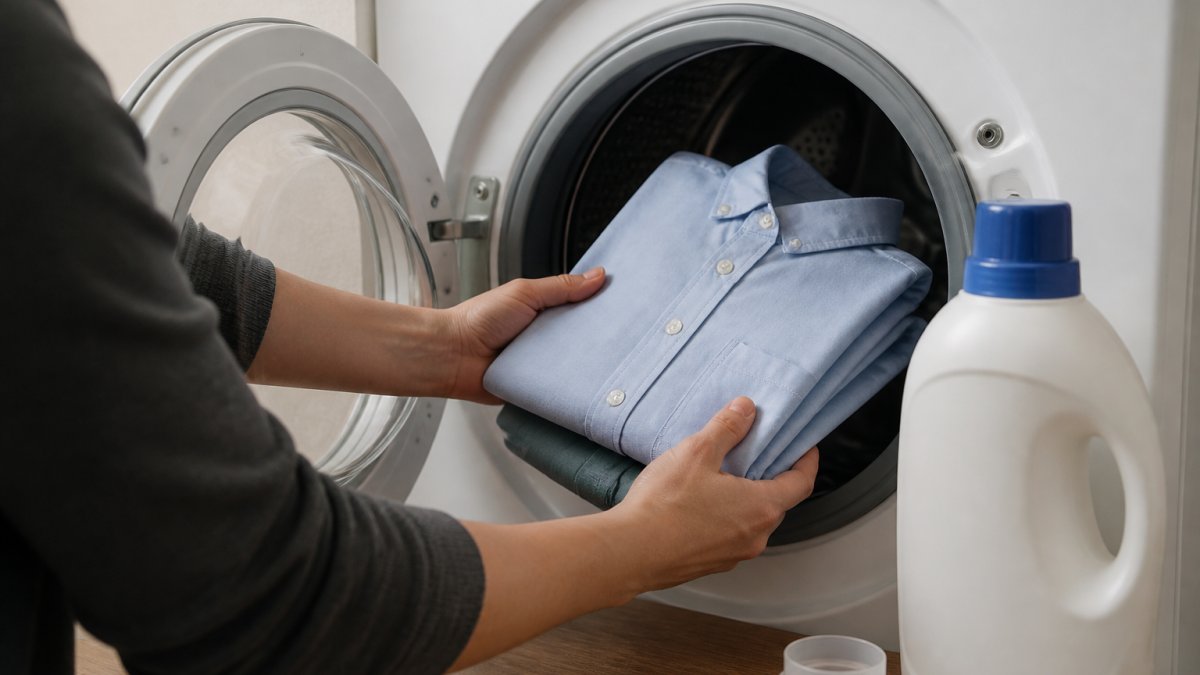
Use cold water for your wash cycle
Cold water is your best defence against shrinkage. It prevents the fabric fibres from expanding as much as they would in warm or hot water.
When you wash in cold water, the detergent still works effectively. Modern detergents are designed to clean well in cold temperatures.
Fill your machine with cold water. Add your detergent according to the bottle's instructions. Then add your shirts.
Choose a gentle or delicate cycle
A gentle or delicate cycle reduces agitation, which means less stress on the fabric.
Standard wash cycles spin faster and agitate more forcefully. This rough treatment can cause shrinkage and damage delicate fibres.
Set your machine to a gentle or delicate cycle. If your machine has a "hand wash" setting, that's even better. The cycle should last 30-45 minutes.
Check and follow the care label
The care label tells you exactly what the manufacturer recommends. This is crucial information. Ignore it and you're gambling with your clothes.
Care labels use symbols and text to guide you. A single line under the wash symbol means gentle cycle.
Read the label before washing. Follow every instruction on it. If the label says cold water, use cold water.
How to Dry Shirts Without Shrinking
Drying is where most shrinkage damage happens. Heat is the enemy. The hotter your drying method, the more your clothes will shrink. This is why air-drying is so effective, it uses zero heat.
Air-dry and hang clothes instead of using a tumble dryer
Air-drying is the single best way to prevent shrinkage. No heat means no fibre contraction. Your clothes dry naturally without any risk.
Hang your shirts on a clothes rail or hanger. Make sure air can flow around them. Don't bunch them together or they'll take longer to dry and may develop creases.
Air-drying takes longer than machine drying, usually 4-8 hours depending on humidity and air circulation. But the trade-off is worth it. Your clothes last longer and shrink less. For muscle-fit shirts designed to fit your physique precisely, air-drying preserves that fit.
Use low heat if you must use a dryer
Sometimes you need dry clothes quickly. If you use a tumble dryer, set it to low heat. Never use high heat or extra-hot settings.
Low heat drying takes 45-60 minutes instead of 30-40 minutes. The longer cycle means less intense heat exposure.
Remove clothes from the dryer while they're still slightly damp. Finish drying them on a hanger.
How to Stop Shirts From Shrinking: Pre-Wash Preparation
What you do before washing matters. Proper preparation sets you up for success.
Sort your laundry by colour and fabric type. Don't mix delicate fabrics with heavy items like jeans.
Check all pockets and remove items. Turn your shirts inside out. Learn how to stop shirts looking baggy to complement your shrinkage prevention efforts and maintain the ideal fit.
High Performance Shirt In Pure White →
Don't overload the washing machine. Clothes need space to move freely. Cramming too many items into one load creates excessive agitation and prevents proper rinsing.
Use the right amount of detergent. More detergent doesn't clean better, it just leaves residue.
| Preparation Step | Why It Matters | Time Required |
|---|---|---|
| Sort by colour and fabric | Prevents damage and colour bleeding | 2 minutes |
| Turn shirts inside out | Protects outer surface from friction | 1 minute |
| Check pockets | Prevents damage to items and machine | 1 minute |
| Don't overload | Allows proper cleaning and rinsing | N/A |
| Use correct detergent amount | Prevents residue and buildup | N/A |
How to Unshrink Cotton Clothes That Have Already Shrunk
If your shirt has already shrunk, you can sometimes recover it.
Fill a sink or bucket with lukewarm water. Add a gentle hair conditioner or wool wash product.
Drain the water gently. Don't wring the shirt.
Gently stretch the shirt back toward its original size. Work from the centre outward.
This method works best for minor shrinkage. Severe shrinkage is harder to reverse.
Fabric-by-Fabric Shrinkage Prevention
Different fabrics need different care approaches because they shrink for different reasons. Cotton and linen tighten through fibre swelling and mechanical agitation. Wool shrinks through felting, where overlapping scales lock together under heat and friction. Rayon and viscose lose strength when wet and can distort or contract under tension. Synthetics such as polyester and nylon are usually heat-set and shrink mainly when exposed to high dryer temperatures.
Cotton and cotton-rich shirts
Cotton is the most common shirt fabric and the most likely to shrink. The fibres swell when wet, and agitation plus heat causes them to contract permanently. Use cold water (30°C or below), a gentle or delicate cycle, and a low spin speed. Air-dry on a hanger or flat on a towel, away from direct heat. If you must tumble dry, use the lowest heat setting and remove the shirt while still slightly damp.
Linen shirts
Linen is a strong, stiff fibre that softens with washing but can shrink noticeably, especially on the first few washes. Wash linen in cool water on a gentle cycle with a mild detergent. Avoid wringing or twisting. Air-dry flat or on a hanger, and accept that some relaxation and slight size change is normal. Iron while slightly damp to smooth creases without adding heat stress.
Wool shirts
Wool shrinks dramatically through felting when exposed to heat, moisture and friction (A review of the sustainable methods in imparting shrink resistance to wool fabrics). Use a wool-specific detergent, cold water (30°C or below) and a wool or hand-wash cycle. Never tumble dry wool. Instead, roll the shirt in a towel to remove excess water, then dry flat and reshape gently while damp.
Rayon and viscose shirts
Rayon and viscose are semi-synthetic fibres that become weak when wet and can shrink or distort under tension. Hand wash in cool water with a gentle detergent, or use a delicate machine cycle with a mesh laundry bag. Do not wring. Dry flat on a towel, reshaping the shirt to its original dimensions. Avoid tumble drying entirely, as heat can cause significant shrinkage and loss of drape.
Synthetic and blended shirts
Polyester, nylon and elastane blends are generally more dimensionally stable than natural fibres. They tolerate warm water better but can still shrink or lose shape under high dryer heat. Wash in cool or warm water on a standard or gentle cycle, and dry on low heat or air-dry. Blends containing cotton or wool should follow the care rules of the most delicate fibre in the mix.
Decoding the care label
The care label is the most reliable guide for any specific shirt. A washtub symbol with one line underneath means a gentle cycle; two lines mean extra gentle. A number inside the washtub shows the maximum water temperature in degrees Celsius. A triangle means bleaching is allowed; a crossed-out triangle means do not bleach. A square with a circle inside is the tumble dryer symbol; one dot means low heat, two dots medium, three dots high, and a cross means do not tumble dry.
Pre-shrunk versus untreated garments
Pre-shrunk means the fabric has been washed or treated during manufacturing so that most of its shrinkage has already happened before the garment is cut and sewn. These shirts may still shrink by a small amount, typically a few per cent, with hot washing or high-heat drying. Untreated or garment-dyed shirts carry a higher risk and often shrink most in the first two or three washes.
Protecting Muscle-Fit Shirts From Shrinkage
Muscle-fit shirts are engineered to fit your physique. They're tailored to complement your build.
Muscle-fit designs rely on precise sizing.
At Fitizen, we design muscle-fit shirts with premium fabrics that resist shrinkage when cared for properly. Our Hyper Stretch Shirt In Pure White uses hyper-stretch fabric built to maintain its shape through proper washing and drying. The same applies to our Muscle Fit Shirts collection, these garments are designed to fit your physique, and proper care preserves that fit.

Always wash muscle-fit shirts in cold water on a gentle cycle. Air-dry them on a hanger.
Learning how to stop shirts from shrinking doesn't have to be complicated.
Follow these steps and your shirts stay the right size.
For muscle-fit shirts engineered to fit your build, proper care is essential. Browse our muscle-fit tees collection to find shirts worth protecting, then use these techniques to keep them fitting perfectly for years to come.
Frequently Asked Questions
Does washing shirts in cold water stop them from shrinking?
Cold water significantly reduces shrinkage risk compared to warm or hot water. Heat causes fabric fibres to contract, especially in cotton. Washing in cold water keeps fibres relaxed and minimises stress on the garment. For best results, combine cold water with a gentle cycle and air-drying. Pre-shrunk fabrics tolerate cold washing well, though checking the care label ensures you're following the manufacturer's recommendations for your specific shirt.
Why do all my shirts shrink after washing?
Shirts shrink due to heat, agitation, and moisture exposure during washing and drying. Heat causes cotton fibres to contract permanently. Overloading the washing machine increases agitation, stressing the fabric. Hot water and tumble drying accelerate shrinkage significantly. If your shirts consistently shrink, you're likely using warm or hot water, a standard wash cycle instead of delicate, or high-heat drying. Switching to cold water, gentle cycles, and air-drying prevents most shrinkage.
Can I unshrink a cotton shirt that's already shrunk?
Partial recovery is possible with the right technique. Soak the shrunken shirt in lukewarm water with a gentle fabric conditioner or glycerine for 20-30 minutes to relax the fibres. Gently stretch the garment back to its original shape while damp, then lay it flat to air-dry. This method works best on lightly shrunk items; heavily shrunk shirts rarely return to full size. Prevention through proper washing and drying is far more effective than attempting to unshrink damaged garments.
Should I air-dry shirts to prevent shrinkage?
Air-drying is the most effective method to prevent shrinkage. Hanging or laying shirts flat to dry eliminates heat exposure entirely, allowing fibres to dry naturally without contraction. This is especially important for cotton and delicate fabrics. If you must use a tumble dryer, select the lowest heat setting or a no-heat air-dry cycle. Air-drying also extends garment lifespan by reducing wear and tear from mechanical agitation in the dryer.
