

Quick Summary
The best breathable tees for intense workouts combine airflow with fast moisture-wicking, since breathability and wicking do different jobs. Synthetic blends generally beat cotton because they dry quickly, and a muscle-fit cut keeps the shirt from trapping heat.
- Breathability is about air moving through the fabric, while moisture-wicking moves sweat across the fibres to evaporate.
- Cotton absorbs and holds sweat, staying wet longer and adding weight, while polyester blends dry quickly.
- In humid conditions, a fabric's drying speed matters more than its airflow.
- Test a shirt both dry and wet, because wet yarn can swell and close the openings that allow airflow.
- Choose a tapered muscle fit that follows your shape without pulling, and check the arms and shoulders first.
Table of Contents
- Breathable Tees for Intense Workouts: What Actually Matters
- Breathability and Moisture-Wicking Are Not the Same Thing
- Cotton vs Polyester Workout Shirts: The Trade-Offs
- Best Fabric for Workout Shirts by Intensity and Climate
- Gym T-Shirt Fit Guide: Ventilation, Mobility and Body Type
- How to Stop Gym Shirts Smelling and Keep Them Performing
- Choosing Your Next Intense-Workout Tee
- Frequently Asked Questions
Breathable Tees for Intense Workouts: What Actually Matters
Last Updated: November 10, 2026
Choosing breathable tees for intense workouts comes down to how well the fabric moves sweat away from your skin and lets air through. Fitizen's Muscle Tee range is built around a hyper-stretch fabric that moves freely with you, so you can focus on the lift rather than the shirt. This guide explains what to look for, where most shoppers go wrong, and which of our tees suits different kinds of training.
Start with two questions. How hard do you train, and how hot is the room? A heavy, high-intensity session in a warm gym asks far more of a shirt than a steady session in cool air. The answers point you towards the right fabric and the right fit.
Most of the time, a tee that feels good in the shop will feel good in the gym. The real test comes after thirty minutes of hard work. That is where fabric, fit and construction either hold up or fall apart.
Breathability and Moisture-Wicking Are Not the Same Thing
Breathability and moisture-wicking are used as if they were one property, but they describe separate physical processes that act on different stages of sweating. Understanding the difference explains why a shirt can feel cool in one session and suffocating in another, even when its label promises both.
Breathability is about air. It describes how readily air moves through the fabric to reach the skin and carry heat away. Several things control it: the openness of the knit or weave, the thickness of the yarn, the number of layers, and whether the garment has any mesh or open panels. A loose, open knit allows air to pass, but it does nothing to move sweat that has already formed on your skin.
Moisture-wicking is about liquid. It describes how sweat is drawn from the skin surface and spread across the fabric, usually along the fibres, so it can evaporate from a larger area. This depends on the fibre type, the yarn's surface structure, and whether the fabric's finish encourages liquid to spread. Synthetic fibres such as polyester are generally more hydrophobic than cotton, which is one reason they move sweat outward more readily, but the effect also depends on how the yarn is spun and treated.
The two properties interact in a useful way. Good wicking without breathability means sweat moves outward but cannot evaporate fast enough, so the shirt stays damp and heavy. Good breathability without wicking means air flows through, yet sweat pools against the skin and the shirt clings. The best training shirts manage both, because moisture has to reach the fabric surface and then be carried away by air.
A simple test you can run at home. Wet a small patch of the fabric with a few drops of water and watch how quickly the water spreads and disappears. A rapid spread across the surface points to good wicking. Then hold the fabric up to a light source or a fan and check how much light or air passes through. A visible, even openness suggests good airflow.
Watch out: a shirt that feels breathable when dry can behave very differently once saturated, because wet yarn can swell and close the openings that allowed airflow. Test a shirt wet as well as dry before you decide.
In practice, identify which problem you have. If you overheat but stay relatively dry, prioritise airflow and a looser knit. If your shirt feels soaked and heavy within minutes, prioritise wicking and drying speed, even if the fabric feels slightly less open.
Cotton vs Polyester Workout Shirts: The Trade-Offs
Cotton feels soft and familiar, but it absorbs sweat and holds on to it. Once wet, a cotton tee stays wet for longer, adds weight and can feel cold between sets. That is why many lifters move away from it for serious training.
Polyester and other synthetic blends handle sweat far better. They dry quickly and feel lighter on the body during long sessions. The trade-off is that some synthetics can feel slightly less soft against the skin, so the blend matters. Look for a fabric that balances stretch, softness and performance rather than maximising just one.
Skin comfort is worth testing in person. A fabric that rubs during high-rep sets becomes distracting fast, regardless of how well it wicks.
The main fabric choices differ in how they handle sweat and how they feel during long sessions.
| Fabric | Sweat behaviour | Trade-off |
|---|---|---|
| Cotton | Absorbs and holds sweat | Stays wet longer, adds weight, can feel cold between sets |
| Polyester and synthetic blends | Handle sweat far better, dry quickly | Some can feel slightly less soft against the skin |
Best Fabric for Workout Shirts by Intensity and Climate
Most shoppers pick a shirt by colour or brand, then wonder why it fails in one particular session. A more reliable approach is to match three variables to the fabric: how much heat your body produces, how much sweat you release, and how humid or dry the air around you is. Once you have those answers, the fabric decision becomes much simpler.
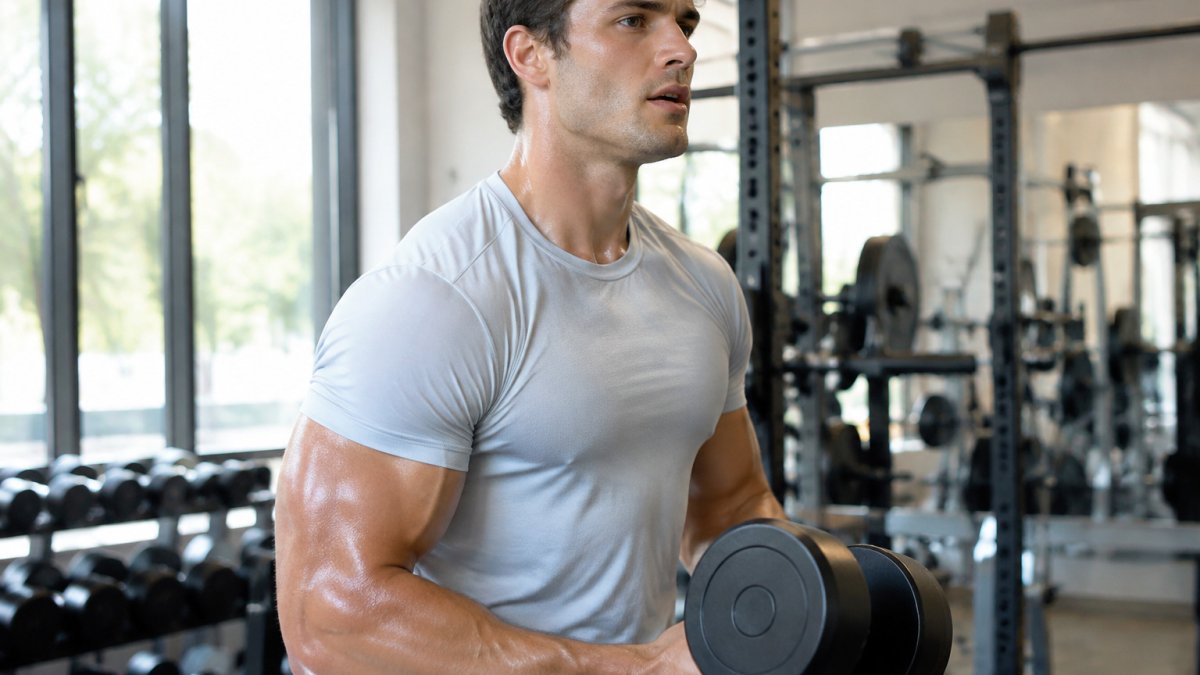
Start with intensity. Heavy lifting produces short bursts of heat and sweat, with long rest periods in between (the NHS). Shirts for this kind of training need to shed moisture quickly so they do not turn heavy between sets. High-intensity intervals behave differently: heart rate and sweat output climb fast and stay high, so airflow matters more than sheer absorbency. Steady cardio over an hour or more tends to produce a slower, more even sweat, where a soft blend that stays comfortable across a long session usually works best.
Then consider climate. Dry heat lets sweat evaporate, so a lighter, more open weave keeps you cool without much help from the fabric's wicking. Humid conditions are harder, because sweat evaporates slowly and the shirt stays damp. In humid air, the drying speed of the fabric matters more than its airflow, so a tightly engineered synthetic that spreads moisture across its surface and releases it quickly tends to outperform a loosely woven shirt that simply lets air through. Cooler environments favour a slightly heavier knit, which holds warmth against the body while still moving sweat away.
A practical way to apply this is to read the fabric's construction rather than only its marketing. A lighter knit with a visible open structure usually means better airflow. A dense, smooth knit with a synthetic-rich blend usually means faster drying and less clinging when wet. Stretch content helps with range of motion but can reduce airflow if the fabric is very thick, so judge the weight in your hand before you assume it will breathe well.
Watch out: a shirt that feels cool when dry can feel heavy and sticky within twenty minutes of hard training, so test any new shirt in a session that is representative of your real training rather than judging it at home.
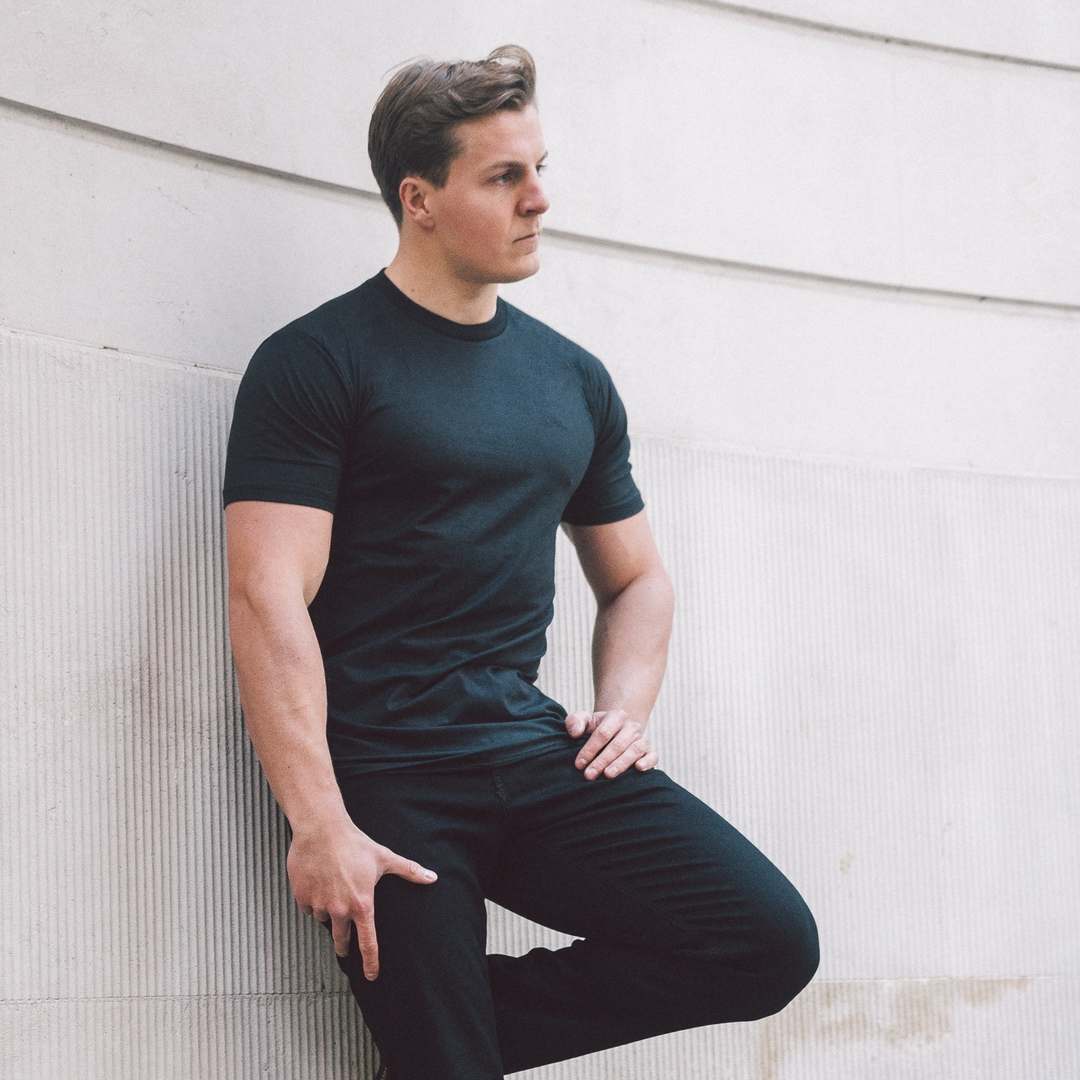
If you train hard in warm conditions, a lightweight, quick-drying blend with an open knit is the most dependable choice. Our Bamboo Tee In Army Green is super soft, breathable, absorbs moisture and regulates temperature, and at £39.00 it suits readers who train in warmer conditions. For the highest-intensity sessions, our Tee In Jet Black pairs a muscle-hugging cut with super soft fabric that lets you move freely, priced at £39.00.
Gym T-Shirt Fit Guide: Ventilation, Mobility and Body Type
Fit affects breathability as much as fabric does. A shirt that clings too tightly across the chest or shoulders restricts movement and can trap heat, while a loose, boxy cut lets air circulate but can bunch and slow drying.
Look for a tapered, muscle fit that follows your shape without pulling. For more on breathable shirts for muscular builds, see our guide to fit and ventilation. Check the arms and shoulders first, since they are where restriction shows up during pressing and pulling movements. If you have a larger upper body, pay attention to chest and shoulder measurements rather than sizing down for a sleeker look.
Ventilation details such as mesh panels or underarm zones can help on hot days. Not every tee has them, so check the product description before you buy.
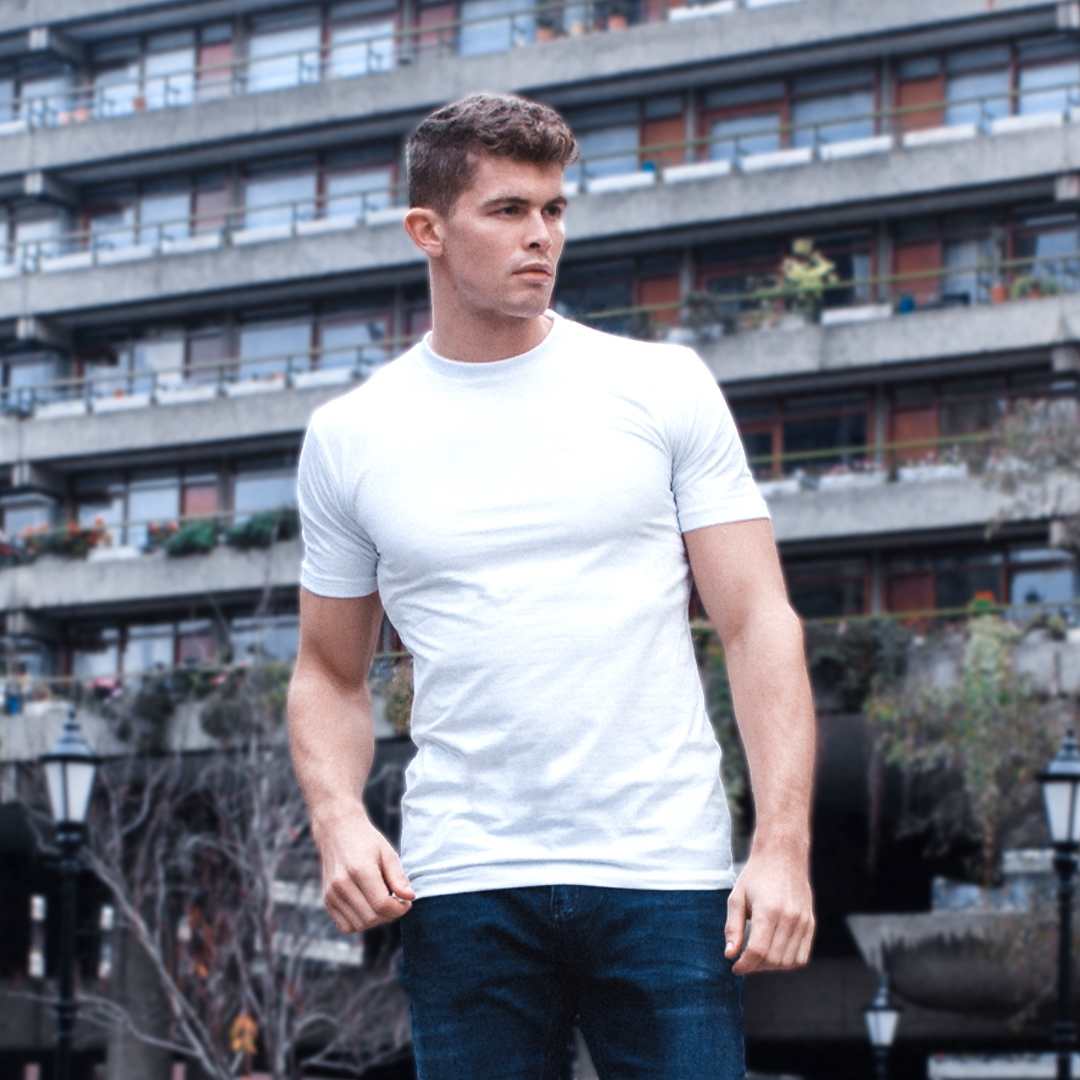
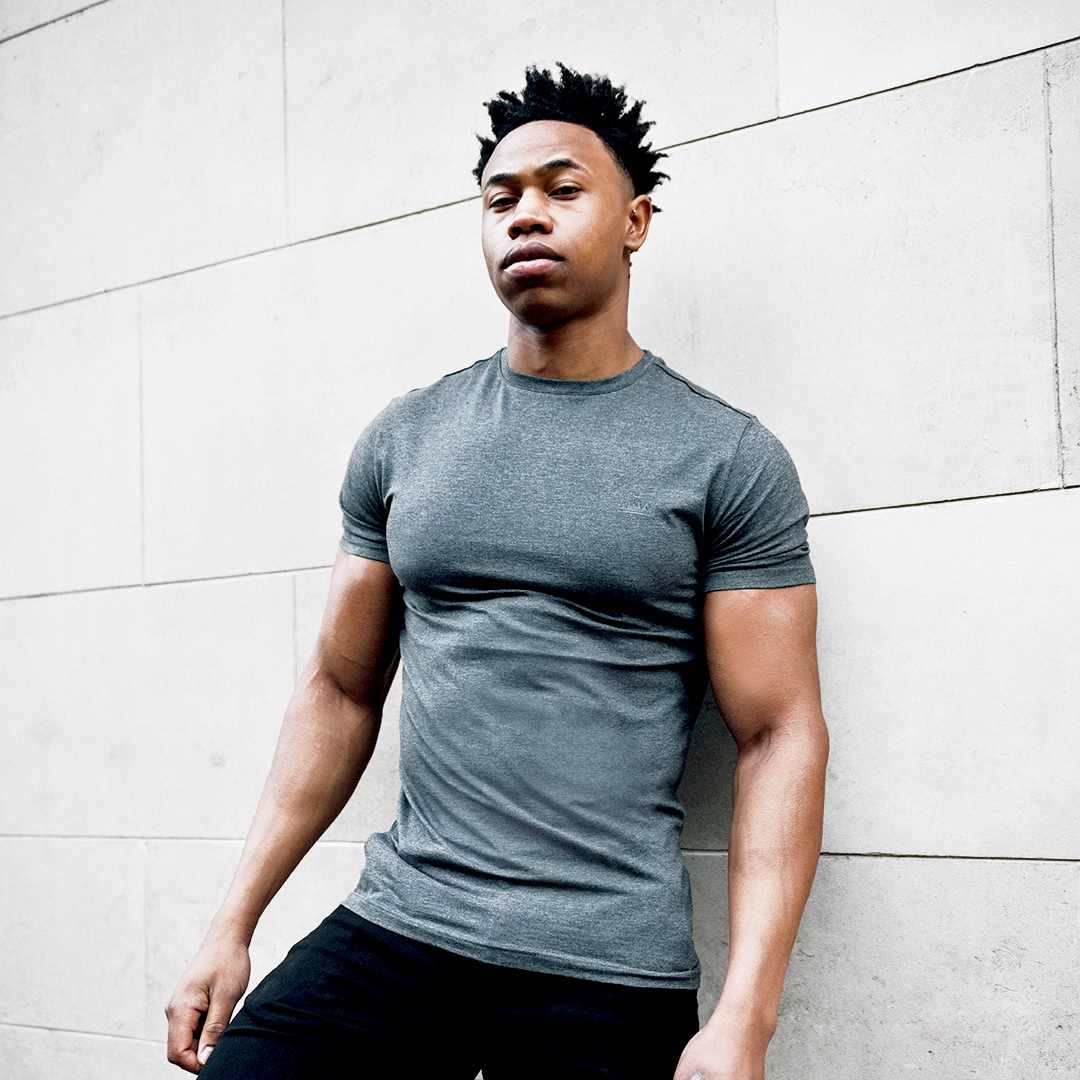
Our Tee In Pure White and Tee In Charcoal Grey both feature a muscle-hugging cut, so you can choose on colour.
How to Stop Gym Shirts Smelling and Keep Them Performing
Sweat odour builds up when damp fabric sits in a warm bag. Wash workout tees after each session where you can, and turn them inside out to clean the sweat-soaked areas properly. Read our complete guide to stopping shirts from shrinking to keep their fit intact. Avoid fabric softeners, which can coat synthetic fibres and reduce their ability to wick moisture.
Dry shirts fully before storing them. Trapped moisture is the main cause of lingering smells. A simple habit of hanging tees to air-dry after training makes a noticeable difference over months of use.
Choosing Your Next Intense-Workout Tee
Work through three steps before you buy. First, decide your main training intensity and your usual climate. Second, choose a fabric that matches that need, prioritising airflow for heat and wicking for heavy sweating. Third, confirm the fit gives you full range of motion without feeling loose.
If you train hard in warm conditions, start with the Bamboo Tee In Army Green or the Tee In Jet Black. If you want a versatile, everyday option, the Tee In Pure White and Tee In Charcoal Grey cover most training and casual wear.
Browse the full collection to compare the Muscle Tee range and find the breathable fit that suits your training.
Frequently Asked Questions
What fabric is best for a breathable workout T-shirt?
For most intense sessions, a lightweight polyester or polyester-elastane blend with an open knit or mesh panels gives the best combination of airflow and fast drying. Pure cotton holds sweat and stays wet longer, so it suits low-intensity training better. Bamboo blends are a useful option in warm conditions because they absorb moisture and help regulate temperature. Look at fabric weight too: lighter weights generally breathe more freely during heavy lifting or HIIT. Fitizen's Bamboo Tee In Army Green is super soft, breathable and absorbs moisture, while the Tee In Jet Black and Tee In Pure White feature a muscle-hugging cut.
Are cotton T-shirts suitable for intense workouts?
Cotton can work for light training, walking or warm-up sessions, but it is poorly suited to intense exercise. Cotton absorbs sweat and holds it against the skin, so the shirt becomes heavy, clingy and slow to dry. Once saturated, it can also cool you down unpleasantly between sets. For high-intensity training, cotton-versus-synthetic trade-offs usually favour a performance fabric that moves moisture away from the body and dries quickly. Choosing a shirt built for sweat transport makes a noticeable difference over a long session.
How do you stop a gym T-shirt from smelling?
Odour comes from bacteria feeding on sweat trapped in the fabric, so faster drying and prompt washing matter most. Rinse or hang the shirt straight after training rather than leaving it balled up in a bag. Wash it after each hard session, use a moderate temperature and avoid fabric softener, which can coat synthetic fibres and trap odour. Dry it fully before storing. If a shirt still smells after washing, the fibres may be holding residue, and a wash with a specialist sportswear detergent can help.
What features should I look for in a workout shirt?
Focus on breathability, moisture management, fit and durability. Mesh panels or open knits improve airflow where you heat up most. Seam construction matters for chafing and for holding up under repeated stretching. Check that the shirt allows full range of motion for squatting and overhead pressing, without riding up or restricting the shoulders. A muscle-fit cut suits lifters who want freedom of movement without excess fabric that catches or stays damp. Stretch recovery is important, since fabric that loses shape quickly becomes loose and saggy after repeated washes.
