

Table of Contents
- Why Muscle Fit Shirts Fit Athletic Builds Better
- How to Choose the Right Shirt Fit for Your Physique
- Fabric and Stretch: What to Look For
- Muscle Fit Shirt Outfit Ideas for Every Occasion
- The Best Trousers for an Athletic Build
- Troubleshooting Common Fit Problems
- Seasonal Styling: Adapting Your Muscle Fit Wardrobe
- Frequently Asked Questions
Last Updated: September 18, 2026
Why Muscle Fit Shirts Fit Athletic Builds Better
Muscle fit shirts are cut to follow the shape of a trained body rather than hang off it. Standard shirts assume a straight torso. If you have built your shoulders, chest and arms, that assumption fails you.
This guide from Fitizen walks through choosing the right fit, the fabrics worth your money, and how to build outfits that work from the gym floor to the office. Below, we'll show you exactly how to fix the fit problems that plague athletic builds.
A common mistake is sizing up to fit your shoulders, then drowning in fabric at the waist.
- Standard fit: loose through the waist, tight at the shoulders
- Slim fit: narrow all over, restricts the chest and arms
- Muscle fit: roomy at the shoulders, tapered at the waist
How to Choose the Right Shirt Fit for Your Physique
Choosing the right muscle fit shirt comes down to three measurements: shoulders, chest and waist. Get those right and the rest of the shirt falls into place.
Shoulders, Chest and Waist: The Three Checkpoints
- Shoulders: seam sits on the shoulder edge
- Chest: fabric sits flat, no gaping
- Waist: tapers in, no billowing
If a shirt passes all three checkpoints, you have your size. If it fails one, try a different cut rather than a different size.
Fabric and Stretch: What to Look For
The best fabric for muscle fit shirts combines stretch with recovery, so the shirt moves with you and springs back into shape. A stretch fabric without recovery goes saggy after a few washes.
- Stretch: at least a small percentage of elastane or a stretch fibre
- Recovery: the fabric snaps back, not sags
- Breathability: air moves through the weave
- Drape: the fabric falls cleanly over your chest and shoulders
Muscle Fit Shirt Outfit Ideas for Every Occasion
A muscle fit shirt works for far more than the gym. The trick is matching the shirt to the setting and building the outfit around your proportions, not fighting them. Below are four complete outfits with the specific cuts, colours and fabrics that make each one work on a trained frame.
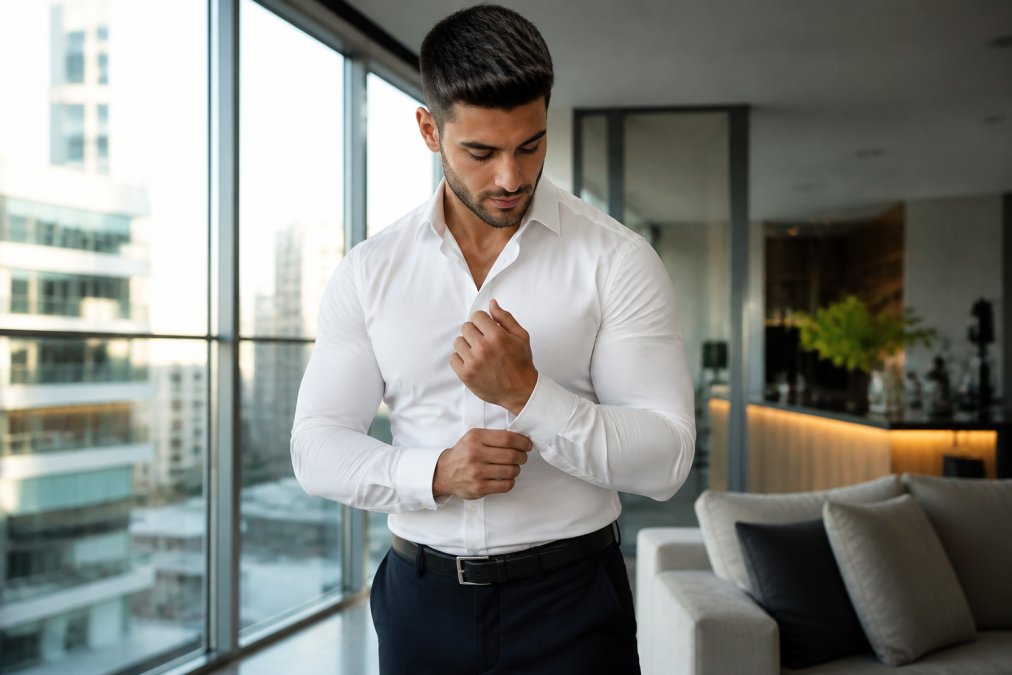
Smart-casual: structured shirt, dark trousers, leather shoes
Choose a shirt with a spread or semi-spread collar and a stiff enough weave to hold its shape across the chest. A structured cotton-blend or high-twist weave sits flat instead of clinging, which stops the fabric from tracing every contour of your chest. Pair it with dark wool trousers cut with a slight taper and a plain leather derby or loafer.

Off-duty active: untucked shirt, tapered joggers, clean trainers
This is the one setting where you want the shirt to drape rather than sit close. Pick a slightly longer body length so the hem clears your waistband when you raise your arms, and a stretch fabric that recovers after movement. Tapered joggers with a cuffed ankle balance the volume up top. Low-profile leather or knit trainers keep the line clean; chunky soles add bulk you do not need.
Office: solid button-down, tailored trousers, minimal accessories
A solid colour, navy, charcoal, stone or white, reads as professional and lets the fit do the talking. Avoid busy checks and large prints, which distort across a tapered chest panel. Tuck the shirt, wear a slim leather belt that matches your shoes, and stop there. A tie is optional; if you wear one, choose a slim blade that follows the taper of the shirt rather than a wide knot that widens the chest further.
Evening: jet black or midnight blue shirt, dark jeans, smart boots
Dark shirts hide creases and flatter a V-taper because the eye reads the silhouette rather than the fabric detail. Midnight blue sits slightly softer against most skin tones than pure black. Pair with dark indigo or black jeans cut slim-but-not-skinny, and a Chelsea or plain-toe boot. Skip the belt if the jeans fit well, a clean waistline lengthens the torso.
- Smart-casual: structured weave, spread collar, dark wool trousers, derby shoes
- Off-duty active: longer body length, stretch fabric, tapered joggers, low-profile trainers
- Office: solid colour, slim belt, tailored trousers, optional slim tie
- Evening: black or midnight blue, dark slim jeans, Chelsea boots, no belt
The Best Trousers for an Athletic Build
The best trousers for an athletic build taper through the leg without squeezing your quads and glutes. Most trousers are cut straight, which means they either strangle your thighs or hang loose at the waist.
- Thigh: room to move without bagginess
- Waist: sits flat, no gap at the back
- Leg: tapers toward the ankle
- Fabric: stretch blend with recovery
Troubleshooting Common Fit Problems
Most fit problems come down to one of four issues: gaping buttons, tight shoulders, billowing waists or short sleeves. Each has a fix.
- Gaping buttons: chest panel too narrow
- Tight shoulders: shirt too small at the top
- Billowing waist: no taper in the cut
- Short sleeves: low armhole placement
Seasonal Styling: Adapting Your Muscle Fit Wardrobe
Your muscle fit shirts work year-round if you adjust fabric weight and layering. The mistake most guides make is treating seasons as a colour swap. In practice, the variables that matter are grams per square metre (gsm) of the fabric, the cut of the outer layer, and how the two interact across your shoulders and chest.
Warm months: single layer, breathable weave
Aim for a lightweight shirt, roughly 120-150 gsm, in a breathable weave. At this weight the fabric moves with you and dries quickly, which matters if you are moving between air-conditioned interiors and warm streets. Wear it as a single layer with the sleeves rolled to just below the elbow; rolling above the elbow pulls the chest panel and distorts the taper.
Cool months: mid-weight shirt under an overshirt
Step up to a mid-weight shirt, around 160-200 gsm, and treat it as a base layer. The outer layer should be an overshirt or shacket with a straight or slightly boxy body and a defined shoulder seam. The key rule: the outer layer must be at least one size roomier through the chest than the shirt, otherwise the two fabrics fight and the shirt bunches at the armhole.
Cold months: shirt under a tailored coat
For genuine cold, layer a mid-weight muscle fit shirt under a coat cut with a defined shoulder and a clean chest. Overcoats and pea coats work well because their shoulder line follows yours rather than adding bulk. Avoid puffer or boxy parkas directly over a muscle fit shirt, the volume difference makes the shirt disappear and the coat look oversized.
The layering rule that protects the silhouette
- Spring: 120-150 gsm shirt, chinos, no jacket
- Summer: breathable weave, rolled sleeves, light trousers or shorts
- Autumn: 160-200 gsm shirt under a structured overshirt
- Winter: mid-weight shirt under a tailored coat, thin merino base layer if needed
Which? guidance on checking fabric care labels is worth a read if you want your stretch shirts to last.
Frequently Asked Questions
What is the difference between a slim fit and a muscle fit shirt?
A slim fit shirt is cut close to the body all over, including the waist, which can feel restrictive across the chest and arms. A muscle fit shirt is designed with extra room through the shoulders, chest and biceps while tapering at the waist. This creates a tapered silhouette that follows your shape without pulling. Muscle fit shirts often use stretch fabric to allow movement, whereas slim fit shirts are usually made from rigid cotton.
How should a muscle fit shirt sit on the shoulders and arms?
The shoulder seam should sit right at the edge of your shoulder bone, not hanging past it or pulling inward. The armhole should be high enough to allow full arm rotation without the fabric bunching under the armpit. Through the bicep, the fabric should hug without cutting off circulation or creating deep creases. If you can pinch more than 2.5 centimetres of fabric at the bicep, the shirt is too loose; if the fabric pulls white at the seams, it is too tight.
Can you wear muscle fit shirts for formal occasions?
Yes, provided the fabric and colour suit the setting. A structured dress shirt in a solid colour like white, midnight blue or jet black works well for formal events when paired with tailored trousers and polished shoes. The key is choosing a shirt with a crisp drape and minimal stretch sheen. Fitizen's High Performance Shirts use Gracell fibre for a silky finish that looks sharp under a blazer without feeling restrictive.
What trousers pair best with muscle fit shirts?
For athletic builds, tapered trousers work best because they accommodate larger quads and glutes while keeping a clean line through the lower leg. Chinos with 2% elastane, tailored joggers in a structured fabric, or straight-leg jeans with stretch all pair well. Avoid skinny jeans that cling to the calf and baggy styles that add bulk. The goal is a tapered silhouette that balances your upper body proportions with your lower half.
Most athletic builds lose the fit battle at the waist, not the shoulders. The fix is a tapered cut with real stretch, not another size up.
Fitizen builds muscle fit clothing for exactly this problem. The range uses hyper-stretch Gracell fabric, a tapered cut that follows your proportions, and designs for both men and women. You get the comfort of gymwear with a fit sharp enough for the office.
Get started with Fitizen and find shirts that show the work you have put in.