

Table of Contents
- Quick Comparison: Best Gym Clothes for Bodybuilding
- What Makes Gym Clothes for Bodybuilding Different
- Muscle Fit Gym Wear: How to Get the Fit Right
- The Best Picks for Lifting, Cardio and Everyday Wear
- How to Style a Bodybuilding Capsule Wardrobe
- Fabric, Durability and Price: What You Actually Pay For
- How We Chose These Pieces
- Frequently Asked Questions
Last Updated: September 29, 2026
Quick Comparison: Best Gym Clothes for Bodybuilding
Finding best gym clothes for bodybuilding that fit a muscular physique is hard: most activewear is cut for average builds, leaving lifters to either size up and look baggy or squeeze into fabric that restricts the quads, glutes and shoulders.
| Piece | Price | Best For | Standout Detail |
|---|---|---|---|
| Hyper Stretch Shorts (Olive, Khaki, Navy, Jet Black, Desert Brown, Charcoal Grey, Cedar Brown) | £62.00 | Squats, deadlifts, leg day | Extra thigh room, strengthened crotch, zip side pocket |
| Cargo Shorts (Olive Green) | £62.00 | Gym-to-street days | Muscle fit with rugged cargo practicality |
| Cargo Shorts (Desert Brown) | £28.00 | Budget pick | Same muscle fit at a lower price |
| Amphibious Shorts (Jet Black) | £69.00 | Swim and training | Quick-drying fabric, elasticated drawstring |
What Makes Gym Clothes for Bodybuilding Different
Bodybuilding gym clothes solve a specific problem: standard activewear assumes an average body, while a trained physique carries mass in predictable places. Gym clothes for bodybuilding is cut to clear the quads, glutes and shoulders without ballooning at the waist.

Fit Through Quads, Glutes and Shoulders
A lifter's proportions break standard sizing. You might need a medium waist and a large thigh. Off-the-rack clothing forces you to pick one.
Fabrics That Handle Sweat and Stretch
Cotton blends feel soft but hold sweat and lose shape. Synthetic fibers with four-way stretch move in every direction and recover after washing.
Muscle Fit Gym Wear: How to Get the Fit Right
Muscle fit gym wear should feel snug through the torso and loose through the legs, never tight overall. Getting that balance right starts with measuring your actual proportions, not guessing from a size label.
Here's a practical checklist:
- Measure your waist at the narrowest point, not where your jeans sit
- Measure your thigh at the fullest point, standing relaxed
- Measure your chest and shoulder width across the back
- Compare each measurement to the brand's size chart, not your usual letter size
- Check whether the garment is cut true to waist size or vanity-sized
- Read reviews from lifters with similar proportions before ordering
The Best Picks for Lifting, Cardio and Everyday Wear
The right pick depends on your training intensity: heavy lifting demands reinforced construction, while cardio and everyday wear prioritise breathability and comfort.
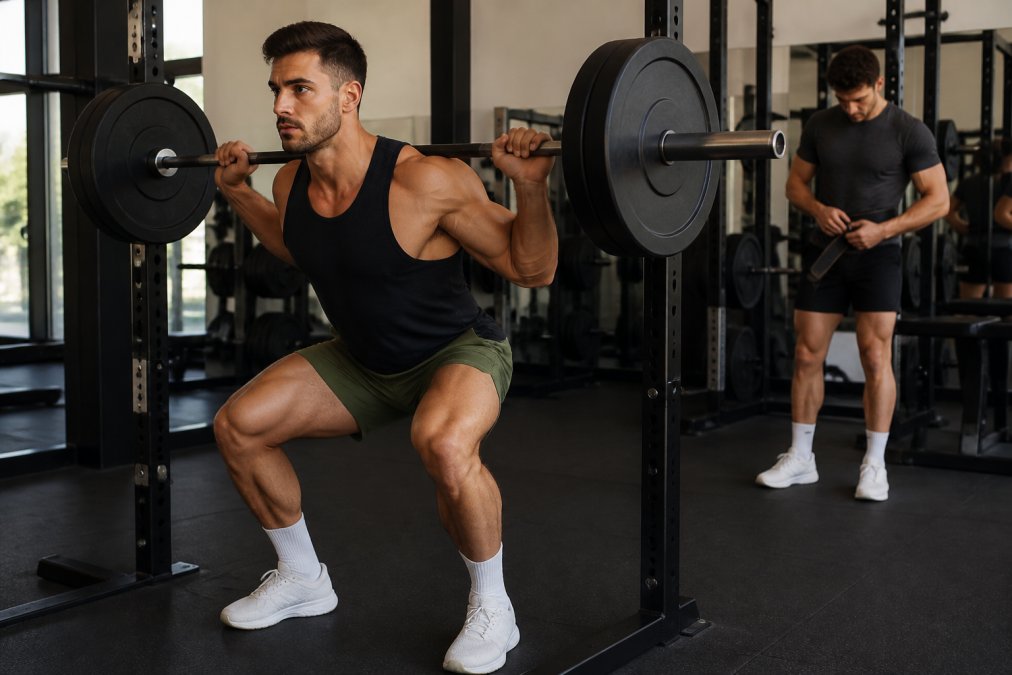
Shorts Built for Heavy Squats and Deadlifts
For leg day, the priority is a garment that clears your thighs and holds up under load. Fitizen's Hyper Stretch Shorts 2.0 deliver a stretchy waistband, extra thigh space and an internally strengthened crotch, fitting true to your waist size so you don't size up and deal with bagginess.
Cargo and Amphibious Styles for Gym-to-Street Days
Not every session ends at the gym door. The Cargo Shorts in Olive Green (£62.00) and Cargo Shorts in Desert Brown (£28.00) carry the same muscle fit and hyper-stretch fabric, so you get the fit without losing the rugged look.

How to Style a Bodybuilding Capsule Wardrobe
A bodybuilding capsule wardrobe is not about looking coordinated. It is about owning a small set of pieces that each clear a specific functional job: squat without binding, press without riding up, and transition from the gym floor to the street without a change of clothes. Most styling guides treat this as a colour-palette exercise.
Build the capsule around the lifts, not the look
Start by mapping your weekly training to the pieces that support it:
- Squat and deadlift days. Shorts with a gusseted crotch, at least 10% elastane, and a hem above the knee so it does not catch on the bar path, a tight hem is the most common cause of restricted depth.
- Overhead press and pull days. Tops matter more here. A raglan or drop-shoulder cut lets the arm travel overhead without pulling across the chest; standard set-in sleeves bind at the armpit once your shoulders pass a certain width.
- Cardio and conditioning. Prioritise breathability over stretch: a lighter polyester blend with a higher surface-area weave dries faster when you sweat continuously.
- Gym-to-street days. Cargo and amphibious styles carry the same muscle fit with enough structure to wear outside the gym.
The three-piece core
A working capsule for most lifters comes down to three categories:
- Two to three pairs of hyper-stretch shorts in neutral tones (olive, black, navy) for leg day, upper-body day and casual wear.
- One cargo or utility style for days moving between the gym and elsewhere.
- One quick-dry or amphibious pair for swim, travel or hot-weather conditioning.
Fit rules that actually matter
- Tops: the shoulder seam should sit at the edge of your shoulder, not on top of it. If it sits inside, the top is too small and will restrict overhead movement.
- Shorts: the waistband should sit flat without digging in when you brace. If you have to loosen it to breathe during a heavy set, the fit is wrong.
- Legs: the hem should clear the knee by a few centimetres when standing. Any lower and it will catch during a squat.
Dressing for a changing physique
Your capsule should survive a bulk and a cut, so choose pieces with enough stretch recovery to hold their shape as your measurements shift, and avoid rigid fabrics that only fit one version of your body. High-elastane, muscle-fit pieces still work twelve weeks into a mass phase and twelve weeks into a cut; fixed-size cotton will not.
Hyper Stretch Shorts In Olive Green →
Fabric, Durability and Price: What You Actually Pay For
Price in gym wear tracks three things: fibre composition, construction and fit engineering. A £28 pair and a £62 pair can look similar on a hanger but behave very differently after twenty washes.
What the fibre label tells you
Most gym shorts and tops are built from one of three families:
- Polyester-dominant blends (often 85-90% polyester with 10-15% elastane). Polyester is hydrophobic, moving sweat to the surface rather than holding it, while elastane supplies stretch, the workhorse blend for bodybuilding because it balances breathability with shape retention.
- Nylon-elastane blends. Softer and slightly heavier than polyester, with excellent abrasion resistance, common in amphibious and swim-to-gym pieces because nylon handles repeated wet-dry cycles better.
- Cotton and cotton-rich blends. Comfortable but slow to dry and prone to losing shape under load, fine for warm-up layers, poor for a heavy squat session.
Construction: where cheap gear fails first
Fibre gets the attention, but seams decide longevity. The stress points in bodybuilding clothing are predictable, the crotch gusset, waistband and inner-thigh seam, and under repeated squat and deadlift loads a standard overlock stitch can pull apart.
Look for:
- A gusseted crotch rather than a single centre seam, which removes the weakest point in the garment
- Flatlock or reinforced stitching at the inner thigh and waistband
- A stretch waistband with a drawcord rather than elastic alone, so the fit holds when the fabric is under tension
Cost per wear, not sticker price
A £28 pair worn twice before it loses shape costs £14 per wear; a £62 pair worn twice a week for a year costs roughly £0.60 per wear. That gap is why "buy cheap, replace often" rarely saves money for anyone training four or more sessions a week.
The bulk-and-cut problem no one else addresses
Here is the gap most gym-wear guides skip: your body changes across a training year. During a bulk, your chest, shoulders and thighs can each gain several centimetres; during a cut, the waist shrinks faster than the legs. Clothing bought at the peak of a bulk hangs loose by the end of a cut, and clothing bought lean binds at the thigh twelve weeks into a mass phase.
How We Chose These Pieces
We built this guide around what actually matters for a trained physique, not marketing claims. Every piece had to clear three tests.
Frequently Asked Questions
What do bodybuilders wear to the gym?
Most bodybuilders wear shorts or joggers with a stretchy waistband and extra room through the thighs, paired with a fitted top that does not restrict shoulder movement. Look for four-way stretch fabrics, flatlock or durable stitching, and moisture-wicking properties so sweat dries quickly. For heavy leg days, shorts with a strengthened crotch area and a true-to-waist fit prevent both restriction and constant readjusting between sets.
Why is muscle fit gym wear preferred for bodybuilding?
Muscle fit gym wear follows the shape of your body instead of hanging loose, so it moves with your quads, glutes and shoulders rather than pulling against them. It also gives you a clear view of muscle definition and body composition changes over a training block. Fitizen's hyper-stretch pieces, for example, are cut with extra space in the thigh while staying true to your waist size, which removes the usual trade-off between a tight waist and baggy legs.
What fabrics are best for high-intensity lifting sessions?
Synthetic fibres with a four-way stretch and moisture-wicking finish handle sweat and repeated movement better than plain cotton. Cotton blends feel soft but hold moisture and lose shape faster. A fabric that combines stretch with breathability and anti-odor technology keeps you comfortable across long training sessions, and it should keep its shape after washing rather than going loose and saggy.
How should bodybuilding gym wear fit to avoid restriction?
The waistband should sit flat without digging in, while the thigh and seat need enough room for a full-depth squat. Check the range of motion before you commit: raise your knees, hinge at the hips and reach overhead. If the fabric pulls tight across the crotch or rides up, size up or switch to a stretchier cut. A tapered fit through the lower leg keeps the silhouette clean without limiting movement.
Are there specific clothing features that help track muscle progress?
A close, muscle fit makes it easier to see changes in muscle definition across your arms, chest and legs week to week. Stretchy fabrics that contour to your body rather than hiding it give you a consistent reference point in photos and in the mirror. Look for garments that keep their shape after washing, since a piece that stretches out loses the very fit that makes progress easy to spot.