

Quick Summary
To wear hoodies in professional settings, choose a plain, close-fitting hoodie in a dark colour and pair it with tailored trousers, smart shoes and a blazer where the dress code allows. The phrase how to wear hoodies in professional settings depends first on your workplace's dress code.
- Check your handbook for wording like 'smart', 'business casual' or 'no sportswear' before wearing a hoodie.
- Choose a hoodie whose shoulder seam sits on your shoulder bone and whose hem reaches the top of your hip.
- Pick plain black, navy, charcoal, heather grey or olive, with no large logos or bold prints.
- Pair the hoodie with chinos or tapered trousers and leather loafers or clean white leather trainers.
- Add a dark, slim blazer over the hoodie for client visits or smart casual days.
Table of Contents
- Checking Your Workplace Dress Code First
- How to Choose a Hoodie That Looks Smart
- How to Style a Hoodie for Work
- Business Casual Hoodie Outfits by Season
- Adding a Blazer or Structured Jacket Over a Hoodie
- What to Wear With a Hoodie: Layers, Shirts and Knitwear
- Booking Your Next Work-Ready Hoodie Outfit
- Frequently Asked Questions
Checking Your Workplace Dress Code First
Before you pick a hoodie for work, work out what your employer actually expects, because knowing how to wear hoodies in professional settings starts with the dress code. Dress codes sit on a spectrum, and a hoodie only reads as deliberate at the relaxed end of it.
Reading the spectrum:
- Formal or business dress (suits, tailored separates, client-facing roles in law, finance, consulting): a hoodie is unlikely to meet the code. Keep it for weekends and travel days.
- Business casual (smart trousers, collared shirts, no tie): a plain, close-fitting hoodie can work on non-meeting days, especially under a blazer. Check whether 'no casual tops' appears in written guidance.
- Smart casual (chinos, knitwear, clean trainers): a plain hoodie in a dark colour is usually acceptable if the rest of the outfit is structured.
- Creative, tech and studio environments: hoodies are often normalised. The bar shifts from 'is a hoodie allowed?' to 'is this hoodie clean, fitted and free of loud graphics?'
- Remote and hybrid days: dress for the video call, not the commute. A plain hoodie with a collared shirt underneath reads well on camera; a faded gym hoodie does not.
How to read your own workplace:
- Note what managers wear on meeting days, not just on Fridays.
- Check whether client-facing staff dress differently from back-office staff.
- Read the staff handbook for wording such as 'smart', 'business casual' or 'no sportswear', these phrases are the actual rules.
- Ask HR or a team lead if the policy is unclear. A one-line email removes the guesswork.
- Look at what people wear on the days you would actually wear a hoodie, such as a normal Tuesday rather than a dress-down Friday.
Watch out: A 'dress-down Friday' policy is not the same as an everyday casual policy. Wearing a hoodie on a Friday does not mean it will pass on a Monday, and assuming otherwise is the most common way this goes wrong.
If your workplace sits at the formal end, treat the hoodie as an after-hours piece and put your effort into knitwear and structured layers instead. If it sits at the relaxed end, the rest of this guide shows how to keep the look sharp.
How to Choose a Hoodie That Looks Smart
Fit matters more than fabric when you want a hoodie that looks polished, but fabric and construction decide whether it stays that way through a working day.
Fit and silhouette:
- Shoulders: the seam should sit on your shoulder bone, not drop past it. A dropped shoulder reads as loungewear.
- Chest and body: close without pulling. If the fabric strains across the chest or bunches at the waist, size up or choose a different cut.
- Length: the hem should sit around the top of your hip bone. A hem that reaches mid-thigh looks like gym kit.
- Sleeves: they should end at the wrist bone, not cover the hand.
Fabric and performance:
- Weight: a mid-weight cotton or cotton-blend jersey holds its shape better than thin, drapey fabric. Very light hoodies cling and show creases.
- Stretch and recovery: a small amount of elastane helps the hoodie keep its shape through a day of sitting and standing. Fabric that bags at the elbows by lunchtime will not look smart by 4pm.
- Breathability: cotton-rich fabric is more comfortable under a blazer than polyester-heavy fabric, which traps heat.
- Pilling: look at the cuffs and underarms of a worn sample if you can. Pilling is the fastest way for a hoodie to look tired.
- Opacity: hold the fabric up to the light. If you can see through it, it will look thin under office lighting.
Details that signal 'work' rather than 'gym':
- Waistband and cuffs: a clean ribbed band that sits flat. Avoid elasticated bands that gather the fabric into a bulge.
- Pockets: a single kangaroo pocket is fine if it lies flat. Bulky zip pockets or cargo-style pockets push the look towards sportswear.
- Drawcords: plain, tonal cords, or remove them. Contrasting or branded cords draw the eye.
- Logos and graphics: none, or a small tonal logo. Large prints, bold text and sports branding are the clearest signal that a hoodie is not for work.
- Neckline: the hood should lie flat at the back of the neck and not bunch under a collar or blazer.
Colour:
Plain black, navy, charcoal, heather grey and olive are the safest choices because they pair with tailored trousers and knitwear. A single colour with no loud graphics keeps the hoodie looking tidy in most offices.
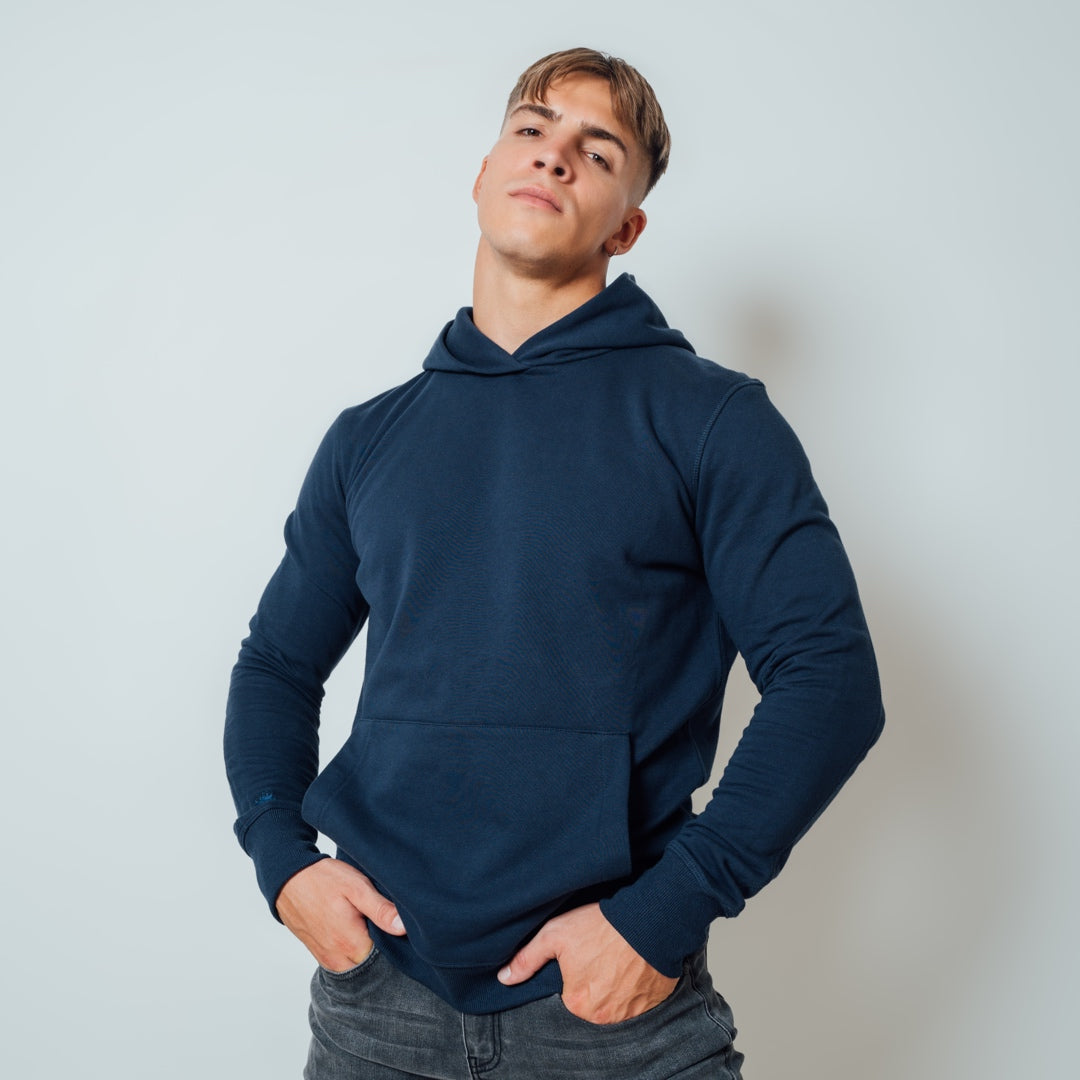
The Muscle Fit Hoodie In Jet Black from Fitizen is a useful benchmark: a close, clean shape and a single colour with no loud graphics.

Watch out: A hoodie that fits well but has a large chest logo or contrasting drawcords will still read as casual. Details matter as much as fit, so check both before you commit.
The checklist below sums up what to look for in a hoodie that will read as smart rather than casual.
| Area | What to look for | Why it matters |
|---|---|---|
| Shoulders | Seam sits on the shoulder bone | Dropped shoulders read as loungewear |
| Length | Hem around top of hip bone | Mid-thigh length looks like gym kit |
| Weight | Mid-weight cotton or cotton blend | Holds its shape better than thin fabric |
| Stretch | Small amount of elastane | Keeps shape through a working day |
| Pilling | Check cuffs and underarms | Pilling makes a hoodie look tired |
| Pockets | Single kangaroo pocket that lies flat | Bulky zip or cargo pockets push toward sportswear |
| Logos | None or a small tonal logo | Large prints signal the hoodie is not for work |
| Colour | Black, navy, charcoal, heather grey or olive | Pairs with tailored trousers and knitwear |
How to Style a Hoodie for Work
A hoodie looks smart when you build the rest of the outfit around it, and that is the core of how to wear hoodies in professional settings. The goal is to balance its casual feel with more structured pieces. Your bottoms, shoes and layers do most of the work.

Think of the hoodie as the relaxed piece in the outfit. Then add one or two items that signal you have dressed with care. This balance keeps the look smart without making it stiff.
Pairing a Hoodie With Trousers and Chinos
Trousers and chinos set the tone of the whole outfit. Tailored options look sharper than loose, casual bottoms. Pick a fit that matches the close shape of the hoodie.
Good bottom choices for work include:
- Chinos in navy, stone or black
- Tapered trousers that narrow at the ankle
- Cargo trousers in a matching dark colour for a more relaxed office
For a clean finish, match the colour of your trousers to the hoodie or choose a shade one step darker.
If you are unsure between tapered and slim chinos, How to Choose Between Tapered and Slim Fit Chinos explains which fit suits a close-cut top.
Pairing a Hoodie With Shoes That Fit the Setting
Shoes can make or break a smart hoodie outfit. Trainers that look like running shoes will pull the outfit towards the gym. Leather or smooth-soled shoes look more polished.
Try these options:
- Leather loafers for a smart, relaxed look
- Clean white leather trainers for a modern office
- Chelsea boots in black or brown for colder months
Avoid chunky running trainers, worn-out soles or bright logos. Keep the shoes clean and in good condition. Scuffed shoes undo even the best outfit.
Business Casual Hoodie Outfits by Season
Your outfit should change with the weather and the season. A hoodie works well in autumn and winter, when layering feels natural. In warmer months, a lighter layer or a shirt underneath can keep you looking sharp.
Autumn and winter:
- Hoodie with chinos and leather loafers
- Hoodie under a wool overcoat for commuting
- Dark hoodie with tapered trousers and Chelsea boots
Spring and early summer:
- Lighter hoodie with a collared shirt underneath, open at the neck
- Chinos in stone or olive
- Clean white leather trainers
Late summer:
- Hoodie as an outer layer on cooler mornings, removed indoors
- Shorter-sleeved shirts underneath for a relaxed look
Layering is the easiest way to adapt. Remove the hoodie once you are indoors if the office runs warm.
Adding a Blazer or Structured Jacket Over a Hoodie
A blazer is one of the strongest ways to make a hoodie look office-ready. The structured shoulders of a blazer cut through the softness of the hoodie. The result looks intentional and smart.
Choose a blazer in a dark, plain colour. Navy and charcoal work best. Keep the blazer slim so it sits neatly over the hoodie without bulk.
Here is what to check before you wear the combination:
- The blazer fits the shoulders without strain
- The hoodie does not bunch under the blazer sleeves
- The colours sit well together, such as navy with navy or black with charcoal
- The blazer is fastened or open in a way that looks relaxed but neat
Use this look for client visits or smart casual days when your office allows it. Skip it in very formal settings.
What to Wear With a Hoodie: Layers, Shirts and Knitwear
Layers add structure and help a hoodie look more deliberate. Think of a shirt or knitwear piece as the bridge between casual and smart.
Layering options that look sharp:
- Collared shirt worn open at the neck under a hoodie
- Fine-knit jumper in a plain colour for cooler days
- Denim jacket in a dark wash for a relaxed, modern look
- Lightweight overcoat for outdoor walks between buildings
Keep layers simple. Stick to two or three colours at most. Too many layers make the outfit look busy and can work against the smart effect.
Booking Your Next Work-Ready Hoodie Outfit
A hoodie can look smart at work when you choose the right fit, match your bottoms and shoes, and check your office dress code. Start with one outfit you feel confident in, then build from there.
Ready to start? Explore the Muscle Fit Hoodie In Navy Blue and see how it pairs with your existing wardrobe. Fitizen makes hoodies with a close, muscle-hugging fit.
Frequently Asked Questions
Can you wear a hoodie to work?
Often yes, but it depends on your workplace dress code. In offices with a business-casual or smart-casual policy, a plain, well-fitted hoodie in a neutral colour such as navy, charcoal or black can be appropriate when paired with tailored trousers and clean shoes. In client-facing or formal environments, a hoodie is usually not suitable. When in doubt, check your staff handbook or ask a manager how the team dresses for meetings with clients.
How do you make a hoodie look professional?
Choose a hoodie with a clean, fitted silhouette, no large logos or graphics, and a smooth fabric such as a fine french terry. Avoid faded or heavily distressed pieces. Pair it with tailored trousers or chinos rather than joggers, add polished shoes such as loafers or clean leather sneakers, and consider a structured blazer or jacket on top. Fit matters most: a hoodie that is close to the body but not tight looks far sharper than an oversized one.
Can you wear a hoodie with a blazer?
Yes, a hoodie and blazer outfit works well in many smart-casual settings. Use a navy or charcoal blazer over a plain hoodie in a complementary neutral colour, and keep the trousers tailored. The blazer provides the structure that signals a more formal look. Remove the blazer for relaxed days and keep the hoodie as the base layer, which makes the outfit versatile across the working week.
What shoes should you wear with a hoodie to work?
Loafers, derby shoes, Chelsea boots and clean leather or minimalist white sneakers all pair well with a hoodie for work. Avoid worn trainers, bulky running shoes and flip-flops. Match the shoe to the trousers: smart chinos suit loafers, while dark tailored trousers work with boots or polished leather trainers. Keeping shoes clean and in good condition does more for the overall look than the exact style.
