

Table of Contents
- What Makes a Fabric 'Premium' in Hyper Stretch Apparel
- Four-Way vs Two-Way Stretch: What Athletes Need to Know
- The Best Fabrics for Muscle Fit Clothing
- Durability and Shape Retention: Will Hyper Stretch Fabrics Last?
- Breathability, Moisture-Wicking, and All-Day Comfort
- How to Care for High-Stretch Garments
- Gym-to-Office: Hyper Stretch Fabrics in Professional Settings
- Conclusion
- Frequently Asked Questions
Last Updated: September 19, 2026
What Makes a Fabric 'Premium' in Hyper Stretch Apparel
Hyper stretch fabrics are textiles engineered to stretch significantly in multiple directions while returning to their original shape, and the "premium" label separates those that hold that performance over hundreds of wears from those that sag after a few washes. This guide from Fitizen breaks down what actually earns that label, and why it matters if you train hard and dress for it.

The difference comes down to fibre quality, construction, and testing, not marketing language.
Most shoppers assume all stretch is created equal. It isn't. A cheap elastane blend and a premium one can look identical on the hanger and behave completely differently after a month of squatting, walking, and washing.
Fibre Content and Denier: The Technical Difference
Denier measures the linear density of a fibre, and lower denier generally means a finer, softer yarn. Premium stretch fabrics typically combine a high-quality elastane with a durable base fibre, then specify denier so the fabric stretches without thinning.
Fibre content tells you what's in the blend. A label reading "92% cotton, 8% elastane" behaves differently from one with a higher elastane percentage or a synthetic base. The elastane provides elasticity; the base fibre provides structure, breathability, and feel.
Four-Way vs Two-Way Stretch: What Athletes Need to Know
Four-way stretch means the fabric stretches both across and lengthwise, while two-way stretch only stretches in one direction. For lifting, squatting, and walking, four-way is the difference between fabric that moves with your quads and fabric that fights them.
Two-way stretch works fine for garments that only need to flex in one plane, such as a simple top. Once you're asking a pair of trousers to accommodate a deep squat and a full stride, you need movement on both axes.
The practical test: pull the fabric sideways, then pull it vertically. If it gives in both directions and snaps back, it's four-way. If it only gives one way, it isn't.
The Best Fabrics for Muscle Fit Clothing
The best fabrics for muscle fit clothing combine four-way stretch with a base fibre that holds structure, so the garment contours to your shape instead of clinging or bagging. Fitizen builds its range around this principle, using hyper stretch fabric cut into tapered, athletic fits.

Elastane Blends vs Natural Fibre Blends
Elastane blends (often listed as spandex or Lycra on labels) offer the highest stretch and recovery, which is why they dominate performance apparel. Natural fibre blends, such as cotton with a smaller elastane percentage, feel softer and breathe well but recover more slowly under repeated strain.
| Blend Type | Stretch | Recovery | Breathability | Best For |
|---|---|---|---|---|
| High elastane synthetic | Excellent | Excellent | Moderate | Intense training, compression |
| Cotton-elastane blend | Good | Moderate | Excellent | Everyday wear, casual fits |
| Performance synthetic mix | Excellent | Very good | Good | Gym-to-office versatility |
Durability and Shape Retention: Will Hyper Stretch Fabrics Last?
Shape retention is the measure of how well a fabric returns to its original dimensions after stretching, and it's the single best predictor of whether a garment will still fit in a year. Premium stretch holds its recovery; cheap stretch stretches out and stays out.
How 'Premium' Is Actually Tested
Textile laboratories assess stretch fabrics using standardised methods rather than marketing claims. The relevant families of test are:
- Tensile and elongation testing, which measures how far a specimen extends under a controlled load.
- Elastic recovery testing, which stretches a specimen to a set extension, holds it, releases it, and measures how much length is retained.
- Cyclic fatigue testing, which repeats the stretch-and-release cycle many times to simulate real wear and reveal growth over time.
- Dimensional stability testing after washing, which checks whether the garment shrinks, grows or distorts once it has been laundered repeatedly.
Why This Matters More for Muscle Fit Cuts
A tapered, athletic cut places more strain on specific zones: the shoulder, the upper arm, the seat and the thigh. Those are the areas where recovery is tested hardest, and where a weak elastane blend fails first. This is why premium stretch is not a luxury in muscle fit clothing, it is the mechanism that lets a close cut stay close without clinging or distorting.
If you can only remember one thing: judge stretch by how it returns, not by how far it goes. Recovery and growth are the numbers that decide whether the fit survives the year.
Washing stretch garments in hot water or tumble drying them on high heat breaks down elastane fibres over time. The garment won't fail overnight, but it will lose recovery gradually until it sags permanently.
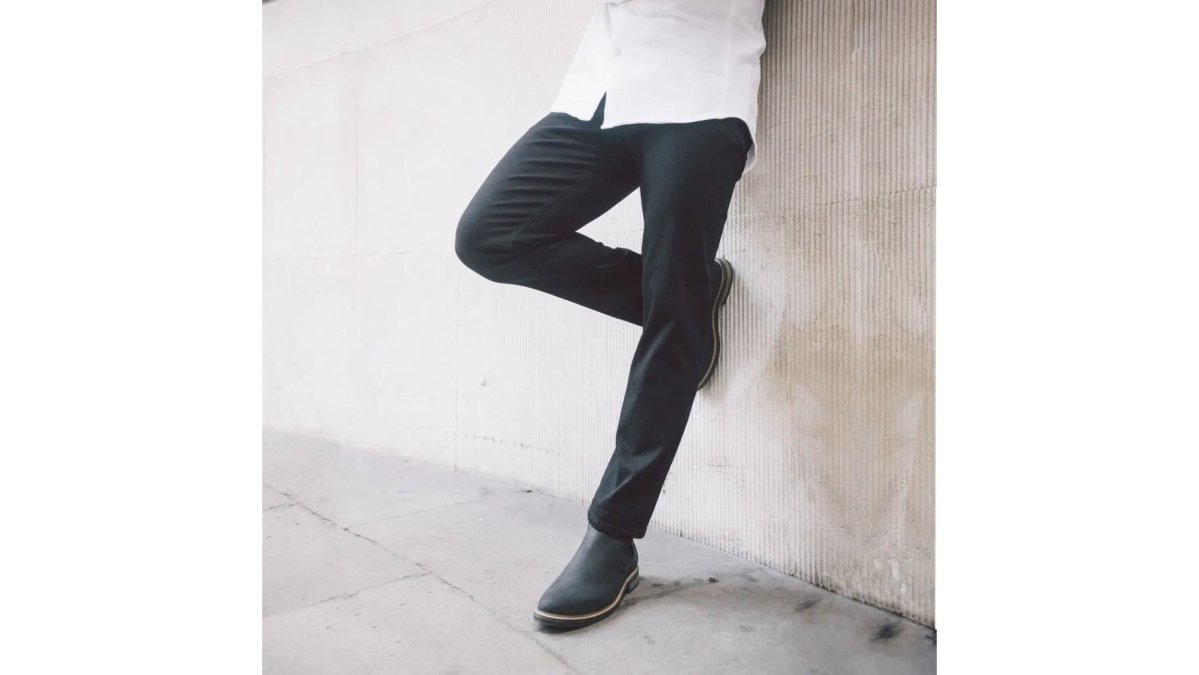
Hyper Stretch Jeans In Stay Black →
Breathability, Moisture-Wicking, and All-Day Comfort
Breathability lets heat and vapour escape, while moisture-wicking moves sweat away from your skin to the fabric surface where it evaporates. Together they determine whether a garment is comfortable for a full day or only for a short session.
How to Care for High-Stretch Garments
Caring for high-stretch garments means washing cool, avoiding high heat, and skipping fabric softener, which coats fibres and reduces recovery. These three habits do more for longevity than any specialty detergent. But the reason they work is worth understanding, because it tells you what to protect against.
A Longevity Protocol, Not Just a Wash Cycle
- Turn garments inside out before washing, to reduce surface abrasion on the face of the fabric
- Wash at 30°C or lower on a gentle cycle, and use a mesh laundry bag for high-elastane pieces
- Skip fabric softener and bleach, softener leaves a residue that interferes with recovery, and bleach attacks the elastane itself
- Air dry flat or line dry, away from direct heat and sunlight; never tumble dry on high heat
- Fold rather than hang heavy stretch pieces, so the shoulders and neckline are not stretched by their own weight
- Rest a garment for a day between wears where possible, giving the elastane time to relax back to shape
- Wash stretch pieces less often than you would a cotton tee, spot-clean and air between wears
Follow the care label first. It reflects how that specific fabric was engineered, and it will tell you the maximum wash temperature the manufacturer is prepared to stand behind.
Preventing Bagging Out
Bagging out is not a washing fault on its own, it is the cumulative result of poor recovery, repeated strain and heat damage. You can slow it considerably by:
- Choosing garments with a higher-quality elastane and a base fibre that holds structure, rather than relying on elastane percentage alone.
- Avoiding prolonged tension, don't leave a stretch garment stretched over a hanger or stuffed into a tight drawer.
- Rotating your most-worn pieces so no single garment takes all the strain.
- Treating the first wash as a test: if a garment distorts after one cool wash, the recovery was never there to begin with.
A quick at-home check: stretch a sleeve or thigh panel, hold it for a few seconds, release, and look for rippling or a lingering bulge. A premium fabric settles flat almost immediately. A fabric that stays slightly stretched is telling you its recovery is already compromised.
What Shortens a Stretch Garment's Life
The usual suspects, in rough order of damage:
- Tumble drying on heat, the single fastest way to destroy elastane recovery.
- Hot washing, accelerates the same degradation, more slowly.
- Chlorine and bleach, chemically attack the fibre rather than just the colour.
- Fabric softener, coats the fibre and blunts its ability to return.
- Heavy mechanical agitation, abrasion thins the fabric and stresses the elastane network.
Get the first two right and you will already extend a premium garment's useful life well beyond a cheap one. Get all five right and the fabric's recovery will outlast most people's patience with the fit.
Gym-to-Office: Hyper Stretch Fabrics in Professional Settings
Stretch fabric has moved well beyond activewear. A well-cut pair of hyper stretch chinos or a tapered stretch shirt reads as smart-casual in most workplaces, because the fabric holds a clean line rather than looking like gym kit.
Conclusion
Finding clothing that fits a muscular build without resorting to baggy sizing is a genuine problem, and stretch percentage alone won't solve it. Fitizen designs muscle fit clothing around hyper stretch fabrics that contour to your shape, hold their recovery, and work from the gym to the office. Explore the range and see the difference a proper athletic fit makes.
UK Textile Industry guidance on fibre labelling
Frequently Asked Questions
What makes a fabric 'premium' in the context of stretch apparel?
Premium hyper stretch fabrics use higher-quality elastane blends with consistent fibre content and higher denier ratings. This means better shape retention, less sagging after washes, and improved durability. They also undergo stricter tensile strength and elongation testing. Cheaper stretch fabrics often use lower-grade elastane that loses recovery quickly, leading to baggy knees and elbows within weeks.
How does hyper stretch fabric improve the fit of muscle-fit clothing?
Hyper stretch fabrics provide four-way stretch that accommodates large quads, glutes, and shoulders without adding excess fabric. Unlike standard two-way stretch, four-way stretch moves in every direction, so the garment contours to your body rather than restricting movement. This eliminates the need to size up and deal with baggy waists or sagging seats.
Are there durability concerns with high-stretch synthetic blends?
Lower-quality synthetic blends can lose elasticity and develop pilling over time. Premium hyper stretch fabrics address this with higher denier yarns and reinforced stitching. Look for garments that specify stretch percentage and fibre content. Proper care, like cold washing and air drying, also extends the life of any stretch garment significantly.
How do hyper stretch fabrics maintain their shape after repeated wear?
Shape retention depends on the quality of the elastane and the fabric's recovery properties. Premium hyper stretch fabrics use elastane with high modulus, meaning they snap back to their original shape after stretching. This prevents the sagging and bagging common in fast-fashion stretch clothing. Washing in cold water and avoiding tumble drying helps preserve recovery.