

Last Updated: November 6, 2026
Quick Summary
Breathable shirts for muscular men work best in a lightweight, breathable weave with some stretch, cut with a higher armhole, shoulder seams on your actual shoulder point, and a tapered body. Look for fabrics around 110-150 gsm with 3-8 per cent elastane, and favour open plain weaves or mesh panels over dense twill.
- Sizing up to fix tight shoulders usually makes the waist problem worse, not better.
- Cotton-linen blends give the best balance for everyday heat, combining airflow with reduced creasing.
- A muscle fit keeps room through chest, shoulders and arms, then tapers sharply to the waist.
- Check for mesh under the arms, a vented back yoke, or laser-cut perforations for real ventilation.
- Wash cool and avoid fabric softener, which coats fibres and reduces wicking.
Table of Contents
- Why Standard Shirts Fail Muscular Builds
- The Best Fabric for Shirts in Hot Weather
- Shirts for Broad Shoulders and Narrow Waist: Getting the Taper Right
- Slim Fit vs Muscle Fit Shirts: What Actually Changes
- How to Judge Breathability Before You Buy
- Fitizen Breathable Shirts Compared
- Choosing Your First Breathable Shirt
- Frequently Asked Questions
Why Standard Shirts Fail Muscular Builds
Most high-street shirts are cut for an average frame, so they assume a chest-to-waist ratio that a trained body simply doesn't have. If you have spent years building your back and shoulders, the standard block gives you two bad options: size up and swim in fabric at the waist, or stay true to size and fight the shoulder seam all day.
The failure points are predictable. A common mistake is blaming your chest measurement when the real culprit is the armhole: a low, wide armhole drags the whole shirt upward the moment you reach forward. Shoulder seams sit inboard of your actual shoulder point, pulling tight across the delts. And the waist is cut straight, so any fabric that fits your chest bunches into a boxy silhouette around your middle.
Watch out: sizing up to fix tight shoulders usually makes the waist problem worse, not better. You trade a squeeze for a tent.
The fix starts with construction, not size. Look for a higher armhole, a shoulder seam that lands on your actual shoulder point, and a tapered body that removes excess fabric below the chest. That combination lets a close-fitting shirt move with you instead of against you.
The Best Fabric for Shirts in Hot Weather
The best fabric for shirts in hot weather is a lightweight, breathable weave with some stretch, because airflow and moisture management matter more than thickness alone. But "breathable" is not a single property. It is the sum of how a fibre moves air, how it handles sweat, and how the weave is built. Two shirts can both be labelled breathable and perform very differently by mid-afternoon.
Here is how the main options compare for a muscular build, with the mechanism behind each:
| Fabric | Airflow | Moisture handling | Stretch | Best for | Watch out for |
|---|---|---|---|---|---|
| Cotton | Good | Absorbs sweat but releases it slowly, so it can feel damp and cling | Low unless blended | Everyday wear, office | Holds moisture, can cling to the chest and back |
| Linen | Excellent | Wicks and dries quickly, but has little give | Low | Hot, dry days, relaxed settings | Creases fast, can look rumpled |
| Merino wool | Good | Absorbs vapour and resists odour, regulates temperature | Moderate with a knit | Travel, variable weather, commuting | Can feel warm in still, humid heat |
| Bamboo blend | Good | Soft hand-feel, moderate wicking | Moderate | Smooth, soft everyday shirts | Performance varies widely by weave and blend ratio |
| Performance blend (polyester/elastane) | Good to excellent | Moves sweat to the surface to evaporate quickly | High | Gym-to-street, active commuting | Check it isn't shiny and doesn't trap odour |
Fabric weight matters as much as fibre. A lighter woven fabric, roughly in the 110-150 gsm range, lets air pass through the weave, while a heavy one traps heat no matter how breathable the fibre claims to be.
A common pattern is that cotton-linen blends give the best balance for everyday heat: linen supplies the airflow and quick drying, cotton softens the hand-feel and reduces creasing. For a closer look at how bamboo performs in practice, our guide to bamboo fabric benefits and limits covers the trade-offs in detail, and you can browse bamboo muscle tees to see the fabric advice applied to real shirts.
Shirts for Broad Shoulders and Narrow Waist: Getting the Taper Right
Shirts for broad shoulders and a narrow waist only work when the taper is cut into the pattern, not created by taking in the sides. A true V-taper follows your chest-to-waist drop, so the shirt hugs the chest and shoulders and sits flush at the waist without pulling. That is the difference between a shirt that flatters a muscular physique and one that looks borrowed.
Getting the taper right comes down to three measurements:
- Chest and shoulders: the shirt should sit close without straining the buttons or the armhole.
- Waist: enough fabric removed that it doesn't billow, but not so much that it grips.
- Length: long enough to stay tucked, short enough not to bunch over the hips.
A common mistake is chasing the tightest possible waist. In practice, a shirt with no room to move will ride up the moment you sit or reach. If you want the full measurement method, our guide to all-day comfort in a tapered shirt fit walks through it step by step.
Slim Fit vs Muscle Fit Shirts: What Actually Changes
Slim fit and muscle fit are not the same cut with a different label. A slim fit narrows the whole shirt evenly, including the chest and arms, so it suits leaner frames. A muscle fit keeps room through the chest, shoulders and arms, then tapers sharply to the waist, which is what an athletic fit needs to avoid both bagginess and restriction.
The practical difference shows up in movement. A slim fit shirt on a muscular build tends to pull across the back and restrict the arms. A muscle fit with stretch fabric lets you reach, drive and rotate without the seams fighting back. That freedom of movement is the whole point.
Fit language is also inconsistent between brands, so treat the label as a starting point. Compare the actual chest, waist and sleeve measurements instead of trusting the name on the tag.
How to Judge Breathability Before You Buy
You can judge breathability before buying by checking the fabric composition, the weight and the construction, not just the marketing copy. Breathable shirts earn the label through airflow, moisture management and ventilation details, and each of those shows up in the spec sheet if you know where to look.
Start with the construction, because this is where most retail pages stop short:
- Weave and knit structure: an open plain weave or a mesh knit lets air through; a dense twill or a tightly woven poplin blocks it. Look for visible texture or a described "open weave" rather than a smooth, sealed finish.
- Fabric weight: lighter weights ventilate better. If the weight is listed, favour the lighter end for hot weather and the heavier end for air-conditioned offices.
- Ventilation panels: look for mesh under the arms, a vented back yoke, or laser-cut perforations. These are the details that separate a genuinely breathable shirt from one that simply uses a breathable fibre.
- Lining and plackets: a full lining traps heat. An unlined or half-lined shirt moves air better, and a lighter placket reduces bulk across the chest.
- Armhole height: a higher armhole lets air circulate under the arm and reduces the fabric drag that makes a shirt feel hotter.
Then match the shirt to how you will actually wear it, because breathability is use-case dependent:
- Heat and humidity: favour linen, merino or a performance blend with quick-dry properties; avoid heavy cotton that holds dampness.
- Commuting and office: a cotton-linen blend or a smooth performance blend gives airflow without looking too casual.
- Workouts and gym-to-street: a performance blend with high stretch and mesh panels handles sweat best; check it doesn't turn shiny.
- Everyday wear: a lightweight cotton or bamboo blend balances comfort and easy care.
Finally, check the care instructions, because breathability and stretch degrade with the wrong washing. Wash cool, avoid fabric softener (it coats the fibres and reduces wicking), and dry flat or on a low setting to preserve both shape and moisture management.
Use this checklist before you commit:
- Fabric composition listed, with a breathable fibre such as cotton, linen, merino or bamboo in the mix
- Lightweight fabric weight rather than a heavy, dense weave
- Some stretch for freedom of movement
- A smooth fabric finish that won't cling when you sweat
- Ventilation-friendly construction, such as a higher armhole, mesh panels or a vented yoke
- Care instructions that won't wreck the stretch or the weave after a few washes
Breathability also depends on what you are doing. A shirt that feels fine at a desk may trap heat in a packed gym, and a fabric built for intense training may look too casual for the office. Match the fabric to the activity, not just the weather.
Fitizen Breathable Shirts Compared
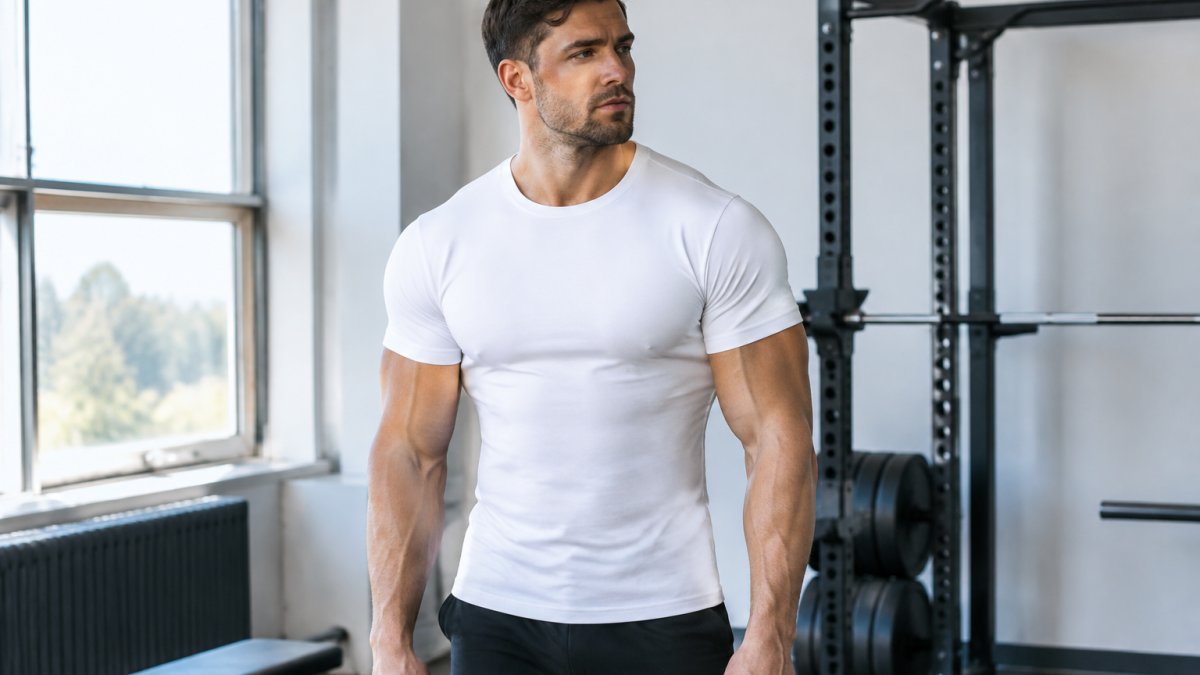
The three Hyper Stretch Shirts share the same hyper stretch fabric and tapered muscle fit, so the choice comes down to colour and occasion. All are priced at £69.00 and cut to give total freedom of movement while complementing athletic shapes.
- Hyper Stretch Shirt In Pure White (£69.00): the sharpest option for a clean, formal look. The white shows every seam, so the tapered cut does the work. Best for: presentations and evenings out. Skip if: you want something that hides creases.
- Hyper Stretch Shirt In Jet Black (£69.00): the most versatile of the three, easy to dress up or down. Best for: gym-to-office days. Skip if: you prefer lighter tones in summer heat.
- Hyper Stretch Shirt In Grey Melange (£69.00): a softer, more casual finish that pairs well with denim. Best for: relaxed weekends. Skip if: you need a formal edge.
There is also the High Performance Shirt In Pure White at £51.75, made with Gracell fibre from wood pulp for a silky-soft feel with high stretch. It suits athletes who want a sharp look with a lighter touch. If you want to see the full range in one place, you can browse the muscle fit shirts and compare colours side by side.
Fitizen breathable shirt prices
Choosing Your First Breathable Shirt
Start with one shirt in the most versatile colour you'll actually wear, check the chest and waist measurements against the size guide, and test the stretch before you commit to a full wardrobe. Fitizen has sold over 40,000 products with a 4.8/5 average rating.
If shoulder pulling is your main frustration, our guide to fixes for shirt pulling at the shoulders is worth reading before you buy. Then pick the fabric and fit that match how you actually spend your days.
Building a wardrobe that fits a trained body shouldn't mean choosing between comfort and looking sharp. Fitizen designs muscle fit clothing with hyper stretch fabrics that move with you, a tapered cut that highlights your physique, and options for both men and women. Get started with Fitizen and find breathable shirts that fit the body you've built.
Frequently Asked Questions
What fabric is best for breathable shirts?
Linen and lightweight cotton move air well in still heat, while performance blends dry faster when you sweat. For muscular builds, a stretch blend with a smooth finish gives airflow without clinging. Check the label for fibre content and weight: a mid-weight knit or woven with some stretch usually balances breathability with shape retention better than a thin, tight weave.
How should a shirt fit a muscular man?
The chest and shoulders should sit close without pulling at the buttons, and the waist should taper rather than hang loose. Sleeves should hug the arm without cutting in at the bicep. A tapered muscle fit handles this better than sizing up, which fixes the chest but leaves excess fabric around the middle. Check the chest-to-waist drop before ordering.
What is the difference between slim fit and muscle fit shirts?
Slim fit trims the whole shirt evenly, so it can feel tight across the chest and still loose at the waist on a lifter. Muscle fit cuts more room through the chest, shoulders and arms, then tapers sharply to the waist. For a V-taper shape, muscle fit usually sits flush where slim fit strains or bags.
Are cotton or performance-fabric shirts more breathable?
Cotton breathes well in dry heat but holds moisture once you sweat. Performance blends, including stretch synthetics and fibres like Gracell, wick moisture and dry faster, which suits gym-to-street wear and humid days. For office wear in warm weather, a lightweight cotton or a cotton-rich stretch blend is a solid middle ground.
