

Last Updated: October 25, 2026
Quick Summary
To prevent inner thigh chafing in denim, choose athletic-fit jeans with 5-10% elastane and moisture-wicking fabric, wear seamless anti-chafing underwear that extends to mid-thigh, and apply a silicone-based balm before activity. This layered approach reduces friction, manages moisture, and protects skin from the rubbing and sweat that causes irritation.
- Athletic-fit jeans with wider thighs and lower tapers reduce pressure points compared to slim or straight-leg cuts.
- Anti-chafing underwear should be seamless, moisture-wicking, and compression-fit to stay in place without bunching.
- Silicone-based balms last longer under denim than water-based formulas and resist staining dark washes.
- Reapply anti-chafing balm around midday during activity lasting 8+ hours, since sweat wears away the initial layer.
- Change into dry clothes immediately after sweating to stop moisture from prolonging irritation.
Table of Contents
- Why denim causes inner thigh chafing and friction
- Jeans that prevent thigh chafing: fit, cut, and fabric choice
- Best underwear to prevent thigh chafing under denim
- Anti-chafing products for thighs: balms, bands, and barriers
- Step-by-step prevention routine for a denim day
- How to treat chafed inner thighs when damage has started
- Finding denim that fits your athletic build without compromise
- Frequently Asked Questions
Why denim causes inner thigh chafing and friction
To prevent inner thigh chafing in denim, you need to address the perfect storm: tight fabric, friction, moisture, and heat. When denim sits close to your skin, every step creates rubbing, and sweat intensifies it until skin breaks down into irritation, redness, and painful rash.
The problem is worse for muscular thighs. Standard jeans are cut for average builds, so athletic legs create more skin-on-skin contact, the fabric pulls tighter, and chafing becomes almost inevitable.
Denim itself is the culprit. Traditional denim is stiff and unyielding, so every squat, stride, and bend creates micro-tears in the skin's surface. Moisture gets trapped, bacteria multiply, and mild irritation becomes painful chafing within hours.
The fix isn't complicated. To prevent inner thigh chafing, you need to reduce friction, manage moisture, and choose denim that actually fits your build. Here's how.
Jeans that prevent thigh chafing: fit, cut, and fabric choice
The right denim makes all the difference. Look for three things: an athletic fit, breathable fabric, and a cut that doesn't bunch at the inner thigh.
Athletic fit matters most. Slim or straight-leg jeans taper aggressively through the thigh, pressing fabric against skin. Athletic-fit jeans have a wider thigh and taper lower, around the calf, giving muscles room without excess fabric at the waist.
Fabric construction is critical. Rigid denim worsens chafing. Look for high-stretch denim, ideally 5-10% elastane or spandex, which moves with your body and recovers so it doesn't bunch. Moisture-wicking denim pulls sweat away from skin, keeping the area dry.
Fitizen's DenimTech Jeans combine both. The hyper-stretch denim adapts to muscular thighs without bagging at the waist. The sweat-wicking technology keeps moisture away from skin, the enemy of chafing.

Seam placement matters. Standard jeans have a flat seam running down the inside of the thigh, and every step grinds it against your skin.
Check the inseam length too. A longer inseam means more fabric coverage on the inner thigh, spreading friction across a wider area instead of concentrating it. If you're between sizes, go longer, you can always cuff or hem.
For specific recommendations tailored to muscular thighs, check out best jeans for muscular thighs and active people jeans designed for athletic builds.
Best underwear to prevent thigh chafing under denim
What you wear under your jeans matters as much as the jeans. The right underwear creates a protective barrier and manages moisture.
Anti-chafing underwear is purpose-built. Compression shorts or anti-chafing boxer briefs use smooth, seamless construction, sit snug against skin without excess fabric, and reduce skin-on-skin rubbing. Moisture-wicking fabrics pull sweat away before it creates friction.
Look for these features in anti-chafing underwear:
- Seamless construction, especially on the inner thigh
- Moisture-wicking fabric (synthetic blends, merino wool, or bamboo)
- Compression fit that stays in place during movement
- Flat seams that don't dig in
- Thigh-length coverage (at least mid-thigh)
Longer coverage is better. Mid-thigh boxer briefs cover the exact area where chafing happens; compression shorts extend further down the leg and offer more support.
Fabric choice prevents moisture buildup. Cotton holds sweat and increases friction. Synthetic blends or merino wool wick moisture away. Bamboo fabric is naturally breathable and antimicrobial, reducing the bacterial growth that makes chafing worse.
The key is fit. Loose underwear bunches under denim and creates new pressure points; tight underwear restricts movement and traps moisture. Compression-fit anti-chafing underwear stays put and moves with your body.
Anti-chafing products for thighs: balms, bands, and barriers
If underwear and denim fit alone aren't enough, topical products and barriers add protection. But denim changes the equation: heavier fabric traps heat, seams create concentrated pressure points, and repeated movement wears products away faster than under loose clothing.
Anti-chafing balms and sticks create a slippery barrier. Under denim, the key questions are longevity and fabric transfer. Silicone-based formulas last longer through sweat than water-based ones and tend not to stain denim.
Anti-chafing bands and thigh guards are physical barriers that wrap around the thigh and separate skin surfaces. Under denim, they work best with looser fits or wider leg openings; in slim or tapered jeans they can bunch, roll, or create new pressure points.
Powders reduce moisture. Talc-free body powder absorbs sweat and keeps skin dry, though under denim it can clump with heavy sweat and mark dark denim. Apply a light layer in the morning and reapply if sweating heavily. Powder alone won't prevent chafing if friction is severe, but it's a helpful addition.
Denim-specific performance conditions. Heat, sweat, long walks, and repeated movement in heavier fabric shorten how long protection lasts. A morning balm often needs reapplying around midday on an active day in denim, especially in warm weather, so carry a stick or small balm for discreet reapplication.
The most effective approach combines anti-chafing underwear and a solid prevention routine. This layered approach addresses friction, moisture, and irritation simultaneously.
Step-by-step prevention routine for a denim day
A simple routine done consistently prevents chafing before it starts. Follow these steps on days you'll wear denim for extended periods.
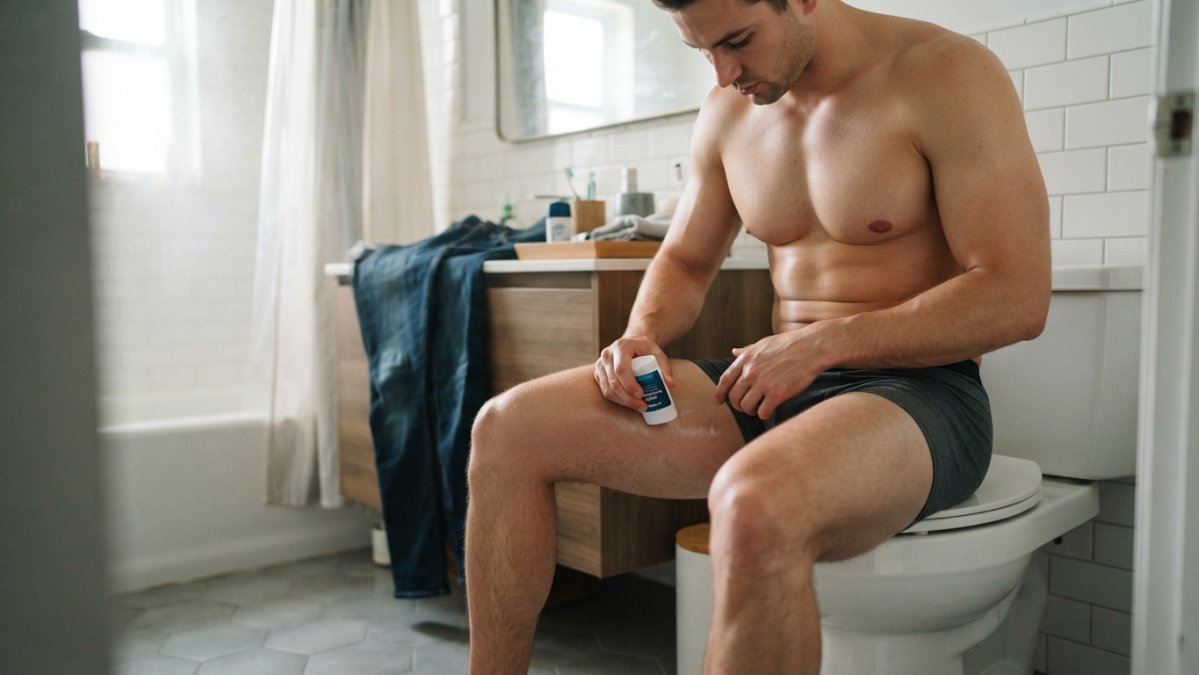
Step 1: Shower and dry thoroughly. Clean skin resists the bacterial growth that worsens chafing. Dry completely, especially between the thighs, damp skin increases friction.
DenimTech Jeans In Medium Wash →
Step 2: Apply anti-chafing balm. Use a silicone-based balm or petroleum jelly. Apply a thin, even coat from the groin down to mid-thigh to create a slippery, friction-reducing surface.
Step 3: Put on anti-chafing underwear. Wear compression shorts or anti-chafing boxer briefs that extend to at least mid-thigh, snug without restricting movement, so skin doesn't rub against itself.
Step 4: Put on your jeans. Choose jeans with an athletic fit and stretch fabric, like Fitizen's DenimTech Jeans in your preferred wash at £89.00.

Step 5: Reapply balm mid-day if needed. If you'll be active for 8+ hours, reapply anti-chafing balm around midday, since sweat and movement wear away the initial layer.
Step 6: Change out of sweaty clothes. After activity or heavy sweating, change into dry clothes, since damp denim accelerates chafing.
This routine takes 2 minutes but prevents hours of discomfort. Do it consistently on days you know you'll be active in denim.
| Prevention Step | When to Do It | Why It Matters |
|---|---|---|
| Shower and dry | Before putting on jeans | Removes bacteria, prevents moisture buildup |
| Apply balm | After drying, before underwear | Creates friction-reducing barrier |
| Wear anti-chafing underwear | Before jeans | Adds protective layer, manages moisture |
| Choose athletic-fit denim | Every time | Reduces pressure and friction points |
| Reapply balm | Mid-day during activity | Restores barrier worn away by sweat |
| Change into dry clothes | After sweating | Stops moisture from prolonging irritation |
How to treat chafed inner thighs when damage has started
If chafing has already started, stop the damage immediately and let skin heal. Prevention and treatment advice diverge here: friction-reducing products can irritate broken skin, and continuing to wear the denim that caused the problem delays healing.
First 24 hours: stop friction and clean the area. Remove the irritating fabric and wear loose clothing. Wash gently with mild soap and cool water, pat dry completely, and don't scratch or pick.
Distinguish irritation from broken skin. Mild chafing shows as redness and tenderness without broken skin; broken skin means the surface has cracked, blistered, or is weeping. For mild irritation, a soothing barrier cream can help.
Apply soothing products appropriately. For intact, irritated skin, aloe vera gel can reduce inflammation and a thin barrier cream can protect the area.
Keep the area dry. Moisture delays healing and increases infection risk. Change underwear if it gets damp and wear loose, breathable clothing until skin recovers. If you must wear denim, choose the loosest, softest pair you own with smooth, thigh-length underwear underneath.
When to stop using friction-reducing products. Stop balms, sticks, and powders if the skin is broken, if you notice stinging or burning beyond mild transient sensation, or if the area looks more irritated after application. Resume them only once the skin has healed.
When to see a healthcare professional. Seek advice from a pharmacist or GP if chafing is severe, shows signs of infection (pus, excessive redness, warmth, spreading redness), doesn't improve after 3-5 days, or keeps recurring in the same spot. Infected chafing may require prescription treatment. If you have diabetes or a condition that affects skin healing, seek advice sooner.
Recovery timeline. Mild chafing often settles in 3-5 days with proper care. Moderate chafing can take 1-2 weeks. Severe or broken-skin chafing can take longer. During healing, avoid the activities and clothing that caused the problem, and reintroduce denim gradually with prevention measures in place.
Prevention is always easier than treatment, and it's worth stopping prevention products the moment skin breaks down.
Finding denim that fits your athletic build without compromise
Standard sizing doesn't work for muscular thighs. Brands that size for average builds force you to choose between a waist that fits and thighs that suffocate.
The athletic-fit solution. Denim designed for athletic builds uses a different pattern: wider thigh, higher rise, lower taper.
Measurements matter more than size. Know your actual measurements: waist, thigh circumference, inseam. Compare these to the brand's size chart, not the size number. A "32" from one brand might not fit like a "32" from another.
Stretch fabric is non-negotiable. Without stretch, even a well-cut athletic jean will feel restrictive and cause chafing. Look for denim with at least 5% elastane. This gives you movement without losing the tailored fit that highlights your physique.
For guidance on tailoring options if off-the-rack sizing still doesn't work perfectly, explore how to tailor jeans for large thighs.
Fitizen's DenimTech Jeans are built for this exact problem. The hyper-stretch fabric adapts to muscular builds. Available in multiple washes, Medium Wash, Indigo Wash, Light Wash, and Midnight Wash, all at £89.00.

Inner thigh chafing in denim is preventable. The right combination of fit, fabric, underwear, and protective products stops friction before it starts. View our DenimTech Jeans collection and see how the hyper-stretch fabric and sweat-wicking technology eliminate the chafing problem for good.
Frequently Asked Questions
How do you stop denim from chafing your inner thighs?
Prevent inner thigh chafing in denim by combining three strategies: wear breathable, sweat-wicking underwear or compression shorts underneath; apply a protective barrier before wearing jeans; and choose denim with hyper-stretch fabric that moves with your body rather than creating friction. Keep the area dry throughout the day and reapply if needed.
What type of jeans are best for preventing thigh chafing?
Jeans with hyper-stretch denim, thermo-regulating properties, and sweat-wicking technology work best for preventing chafing. Look for athletic-fit jeans designed for muscular builds, as they provide room through the thigh without excess fabric that bunches and rubs. Denim that breathes and moves with your body reduces both friction and moisture buildup, cutting chafing risk significantly.
Can wearing shorts or underwear under jeans prevent chafing?
Yes. Wearing compression shorts, anti-chafing underwear, or moisture-wicking boxer briefs under your jeans creates a protective barrier between your skin and the denim, reducing friction and absorbing sweat. Choose close-fitting styles that stay in place and won't bunch up. This single step prevents most chafing for people with muscular thighs.
What should you do if your inner thighs are already chafed?
Stop wearing tight denim temporarily and allow the area to air-dry. Clean the chafed skin gently with mild soap and lukewarm water, then pat dry. Apply a soothing balm to reduce irritation and protect against further rubbing. Wear loose, breathable clothing until the redness and irritation fade. If chafing is severe, painful, or shows signs of infection (warmth, pus, or spreading redness), seek medical advice. Once healed, use the prevention strategies in this guide to avoid repeat damage.
