

Last Updated: October 24, 2026
Quick Summary
Casual shoes thick legs need stretch fabrics, roomier upper collars with deeper gussets, and tapered silhouettes that accommodate larger calf circumferences without excess ankle fabric. Look for materials like neoprene panels and spandex blends that move with your leg while maintaining shape through multiple wears.
- Avoid sizing up as a solution, since it creates shoes too long and wide everywhere rather than just where you need room
- Stretch materials like neoprene and spandex blends are non-negotiable for comfort and maintaining shape through dozens of wears
- Shop for shoes later in the day when your feet are slightly swollen to ensure proper fit during actual wear
- Choose shoes with vertical design elements and darker colours to create a slimmer visual appearance
- Trainers designed for CrossFit or functional fitness athletes typically feature wider forefoot room and better ankle support for muscular builds
Table of Contents
- Why standard casual shoes fail men with muscular builds
- Key fit features for casual shoes with thick legs
- Best trainers for wide feet men
- Shoes that make legs look slimmer
- Comfortable everyday shoes for men
- Best walking shoes for men
- Common mistakes when choosing shoes for muscular legs
- Start building your muscle-fit casual wardrobe
- Frequently Asked Questions
Why standard casual shoes fail men with muscular builds
Casual shoes thick legs aren't designed with standard physiques in mind. Most off-the-rack trainers assume a proportional relationship between leg circumference and shoe width that simply doesn't exist for athletes with thick thighs and calves. When you've built substantial muscle through years of squatting, deadlifting, or consistent training, conventional sizing creates a painful choice: buy shoes that fit your foot width and watch them pinch around your leg, or size up and deal with excess fabric bunching at the ankle and heel.
The problem runs deeper than just comfort. A shoe that's too tight restricts blood flow and creates pressure points during movement. A shoe that's too loose offers poor ankle support and looks sloppy. Neither option works for someone who wants casual shoes for thick legs that look intentional rather than like a compromise.
This is where understanding fit becomes critical. Most retailers stock shoes built on lasts designed for average leg proportions. They don't account for the reality that muscular athletes often have larger calf circumferences, thicker thighs, and different weight distribution than the standard model assumes.
Key fit features for casual shoes with thick legs
The right casual shoes thick legs share three core characteristics: adequate thigh and calf room, stretch fabrics that move with your body, and a silhouette that doesn't add bulk where you don't need it.
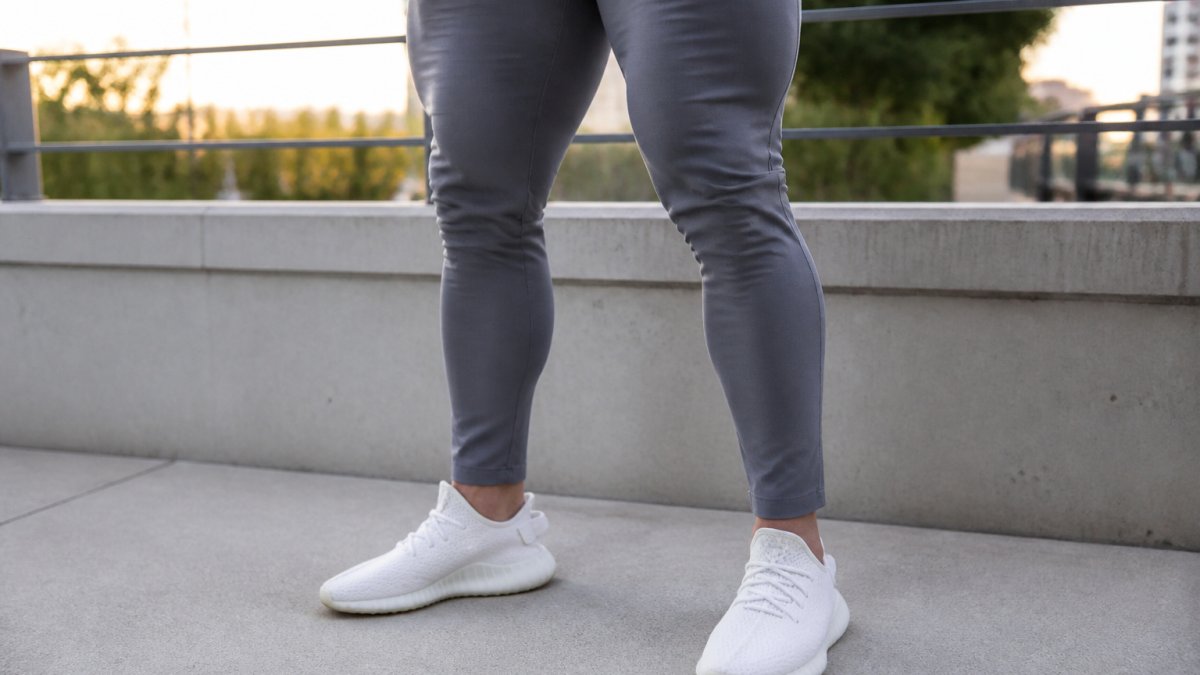
Thigh and calf room without excess fabric
Look for shoes with a roomier upper collar and gusset design that accommodates larger leg circumferences without creating excess material around the ankle. Many athletic-focused brands now offer extended collar heights and deeper gussets specifically for this reason. The shoe should slip on comfortably over your calf without requiring you to loosen laces significantly or fold the collar down.
Pay attention to the shoe's cut around the instep and ankle. A well-designed shoe for muscular legs tapers at the foot while remaining open through the leg opening. This prevents the "baggy sock" look while giving your calf room to breathe. Avoid shoes with tight elastic cuffs or narrow ankle openings, these create visible pressure lines and restrict circulation during activity.
Materials that stretch and recover
Stretch fabrics are non-negotiable for best casual shoes for men with thick legs. Look for materials that combine structure with elasticity: neoprene panels, spandex blends, or technical knits that move with your leg without losing shape. These fabrics should recover after each wear, returning to their original form rather than stretching out permanently.
Cotton canvas and rigid leather will fight against your leg throughout the day. Hybrid materials that blend traditional aesthetics with modern stretch technology give you the look of a classic casual shoe with the comfort of athletic wear. Quality stretch maintains its properties through dozens of washes and wears, while cheaper alternatives lose elasticity quickly.
The right casual shoes for thick legs share three core characteristics that work together to provide comfort and style.
| Feature | What to Look For | Why It Matters |
|---|---|---|
| Thigh and calf room | Roomier upper collar and deeper gussets | Accommodates larger leg circumferences without excess ankle fabric |
| Stretch materials | Neoprene panels, spandex blends, technical knits | Moves with your leg while maintaining shape through multiple wears |
| Tapered silhouette | Narrower heel, wider forefoot, clean lines | Prevents baggy look while giving calf room to breathe |
| Ankle opening | Avoid tight elastic cuffs or narrow openings | Prevents pressure lines and restricts circulation during activity |
Best trainers for wide feet men
When you're looking for best trainers for wide feet men, the same principles apply to muscular builds. Start by identifying trainers with wide toe boxes and substantial heel counters that won't compress under pressure. Many athletic brands now offer wide and extra-wide options specifically designed for athletes.
Look for trainers with reinforced side panels that won't collapse inward when you're wearing them during intense activity. The midsole should provide adequate cushioning without being so soft that your foot rolls excessively, this is especially important if you're wearing trainers for both gym and casual settings.
Consider trying trainers designed for CrossFit or functional fitness athletes. These shoes typically feature wider forefoot rooms and more substantial ankle support than standard casual trainers. They're built to handle dynamic movement and accommodate muscular legs without sacrificing style. Learn how to measure for muscle fit to ensure your trainers accommodate your actual leg dimensions rather than relying on standard size charts.
Shoes that make legs look slimmer
The visual appearance of shoes that make legs look slimmer comes down to proportions and silhouette. Avoid chunky, oversized trainers that add visual bulk to your lower leg. Instead, opt for shoes with simplified profiles that don't extend beyond your natural foot width.
Vertical design elements, like minimal side stripes or seams running lengthwise, create the illusion of height and slimness. Darker colours on the shoe itself draw less attention to your leg, while lighter midsoles keep the overall look balanced. A tapered shoe shape, where the heel is narrower than the forefoot, creates a more refined appearance than a boxy silhouette.
Avoid shoes with excessively padded collars or oversized tongue designs. These elements add visual weight around your ankle and calf. Instead, choose shoes with minimal collar padding and simplified tongue designs that maintain a clean line from your leg through your foot. Streamlining the silhouette at the ankle creates a balanced foundation that pairs naturally with the relaxed proportions of shoes for cargo pants.
Comfortable everyday shoes for men
Comfortable everyday shoes for men with muscular builds need to handle multiple contexts: gym sessions, casual outings, and potentially office environments. The ideal shoe transitions seamlessly between settings without requiring you to change footwear.
Look for shoes with responsive cushioning that supports your weight without feeling mushy. Your leg muscles create different pressure patterns than average wearers, so you need shoes with structured midsoles that won't compress unevenly. The shoe should feel stable when you're standing or walking, not wobbly or loose.
Breathability matters during extended wear. Shoes with mesh panels or perforated uppers help regulate temperature, especially if you're wearing them during or after training. Moisture-wicking linings prevent the uncomfortable feeling of damp socks, which is particularly important when you're wearing shoes with thicker leg coverage.
Best walking shoes for men
When selecting best walking shoes for men with athletic builds, prioritise shoes with excellent arch support and cushioning designed for extended periods on your feet. Walking shoes need more structured support than casual trainers because you're not moving explosively, you're maintaining steady pressure on your foot for longer durations.
Look for walking shoes with rocker soles that facilitate a smooth heel-to-toe transition. The shoe should have a wider base for stability and a deeper heel cup that prevents your foot from rolling excessively. Muscular athletes often have different gait patterns than average wearers, so the shoe needs to accommodate potential pronation or supination without creating discomfort.
Fit a pair of walking shoes later in the day when your feet are slightly swollen. This ensures the shoe won't feel tight during longer walks. The shoe should feel snug around your midfoot and heel without any slipping, and your toes should have approximately one thumb's width of space from the shoe's end.
Common mistakes when choosing shoes for muscular legs
The biggest mistake athletes make is assuming standard sizing will work if they just buy a half-size or full-size larger. This creates shoes that are too long and too wide everywhere, not just where you need the extra room. You end up with blisters on your heels and excess fabric at your toes while your calves still feel compressed.
Another common error is ignoring the shoe's upper material entirely. You might find a shoe with adequate width in the forefoot but rigid material that won't stretch around your calf. This creates an uncomfortable pressure point that worsens throughout the day. Always check the material composition and look for stretch components.
Many athletes also overlook the importance of trying shoes on later in the day. Your feet swell naturally as the day progresses, and muscle pump from training makes your legs temporarily larger. A shoe that fits perfectly in the morning might feel uncomfortably tight by evening. Shopping for shoes after activity gives you a more realistic sense of how they'll feel during actual wear.
Finally, don't assume that more expensive shoes automatically fit better. Price doesn't correlate directly with accommodation for muscular builds. Instead, focus on shoes specifically designed for athletic physiques or those with documented stretch materials and roomier cuts.
Start building your muscle-fit casual wardrobe
Building a casual wardrobe that actually fits your physique requires moving beyond standard retail options. The shoes you choose set the foundation for how your entire outfit comes together. When your footwear fits properly, the rest of your clothing can be tailored and intentional rather than oversized as compensation.
Start with one pair of well-fitting casual trainers that work across multiple settings. This gives you a baseline for understanding what proper fit feels like on your leg.
Explore casual shirts designed for athletic body types to complete your wardrobe with pieces that fit your proportions intentionally. Understanding how to layer and combine pieces that actually accommodate your build transforms how you look and feel in everyday clothing.
At Fitizen, we specialise in muscle-fit clothing designed specifically for athletes, lifters, and bodybuilders who've struggled with standard sizing. Our collection features hyper-stretch fabrics that provide the comfort of gymwear while offering a tailored fit that contours to your body.
Finding casual shoes for men with thick legs that actually fit your physique is possible when you prioritise the right fit features over generic sizing. Discover how premium hyper-stretch fabrics enable proper fit for every piece of your wardrobe, from trainers to everyday wear.
Frequently Asked Questions
What makes casual shoes for men with thick legs different from standard shoes?
Shoes designed for muscular builds feature wider thigh and calf accommodation without creating excess fabric at the ankle or waist. They use stretch materials that move with your legs rather than restrict them, and taper properly so you avoid the baggy look that comes from sizing up. Standard shoes force a choice between squeezing your thighs or drowning in fabric everywhere else.
How do I find trainers that fit wide feet without looking oversized on my calves?
Look for trainers with a structured toe box and midfoot that accommodate width, paired with tapered ankles. Mesh or knit uppers stretch to your foot shape without adding bulk. Avoid shoes with overly padded collars or thick sidewalls, which add visual weight. Trying on multiple widths and styles is essential since width varies significantly across brands.
Can shoes actually make legs look slimmer, or is that just marketing?
Yes, shoe choice affects how your legs appear. Vertical lines, darker colours, and fitted silhouettes create a leaner look. High-top trainers can elongate the leg line if they fit snugly at the ankle. Avoid wide, chunky soles that emphasise width. Pairing the right shoe with tapered trousers amplifies the effect, loose trousers will undo any slimming benefit from the shoe itself.
What should I look for in comfortable everyday shoes if I have thick legs?
Prioritise arch support, cushioning in the heel and forefoot, and breathable materials that won't trap heat during all-day wear. Your shoe should feel snug around the midfoot and heel but allow your toes to spread naturally. Break them in gradually rather than wearing them for 8+ hours on day one. Quality construction and proper fit matter far more than brand name when it comes to all-day comfort.
