

Last Updated: October 22, 2026
Quick Summary
How to tailor jeans for large thighs involves letting out the inseam, the seam running along the inside of your leg, by approximately 1-2.5 cm to create more room through the thigh. You can work with a professional tailor for £40-80 or attempt DIY seam letting yourself if comfortable with basic sewing. Most jeans have enough seam allowance to let out up to 2-5 cm per leg without compromising durability.
- Always wash and dry jeans to final fit before measuring and altering to account for fabric shrinkage.
- The inseam is the primary seam to adjust when enlarging thighs, as it usually has the most fabric to work with.
- After letting out the thighs, taper the outseam from knee to ankle to restore a fitted silhouette.
- Professional tailoring typically costs £40-80 and takes 1-2 weeks for basic alterations.
- Avoid letting out more than 2-5 cm total per leg, as most jeans lack sufficient seam allowance beyond that.
Table of Contents
- Why Standard Jeans Don't Fit Large Thighs
- What You'll Need Before Starting
- How to Make Jeans Bigger in the Thighs
- How to Let Out Jeans at the Thigh Seam
- How to Taper Jeans After Enlarging the Thighs
- Common Mistakes to Avoid When Tailoring for Thigh Fit
- Finding Jeans That Fit Without Major Alterations
- Frequently Asked Questions
Why Standard Jeans Don't Fit Large Thighs
Learning how to tailor jeans for large thighs starts with understanding why finding jeans that fit large thighs is genuinely difficult. Most off-the-rack styles are cut with a straight leg from hip to ankle, which means the fabric either bunches awkwardly or pulls tight across muscular quads and glutes.
This is where tailoring comes in. Learning how to tailor jeans for large thighs gives you control over the fit. You can keep the waist snug while creating room where you actually need it. The good news is that tailoring for thigh fit is achievable, whether you work with a professional or tackle it yourself.
The key is understanding which seams to adjust and how much fabric you have to work with. Most jeans have enough seam allowance to let out up to 2-5 cm per leg without compromising durability. Beyond that, you're looking at more complex alterations or choosing jeans designed with athletic builds in mind from the start.
What You'll Need Before Starting
Before you attempt to tailor jeans for large thighs, gather these essentials:
For Professional Tailoring:
- Your jeans (washed and dried to final fit)
- Measurements of your thigh circumference at the fullest point
- Clear communication about how much room you need
- Budget of £40-80 per pair for basic alterations
For DIY Seam Letting:
- Seam ripper (small tool with curved blade)
- Hand sewing needle or sewing machine
- Thread that matches your denim colour
- Measuring tape
- Fabric scissors
- Pins or fabric chalk to mark new seam lines
- Iron for pressing seams flat
Optional but Helpful:
- Tailor's ham or pressing surface
- Needle threader for hand sewing
- Seam gauge for consistent measurements
The most important step is trying on your jeans after washing and drying them to your final fit. Denim shrinks and shifts during washing. Measure the thigh circumference at the fullest point while wearing the jeans. Mark exactly where they feel tight. This prevents over-altering and gives you a clear target for how much room you need.
How to Make Jeans Bigger in the Thighs
When you need to make jeans bigger in the thighs, you have two main paths: work with a professional tailor or attempt the alteration yourself. Both methods involve letting out the inseam, which is the seam running along the inner leg from crotch to ankle.
Working with a Professional Tailor
A professional tailor is your safest option if you're uncertain about the alteration. They have experience with denim and understand how much fabric is available to work with. Most tailors can let out 2-5 cm from the inseam without visible damage to the jeans.
When you visit a tailor, explain exactly where the tightness occurs. Point to the specific area of the thigh that needs more room. A skilled tailor will measure, assess the seam allowance, and give you an honest answer about what's possible. They'll also let you know if the alteration will be visible from the outside.
The cost typically ranges from £40 to £80 depending on your location and the tailor's experience level. Turnaround time is usually 1-2 weeks.
DIY Seam Letting Methods
If you're comfortable with basic sewing, you can let out the inseam yourself. This method works best if you only need approximately 1-2.5 cm of extra room. Larger adjustments are riskier because the seam allowance is limited.
Start by trying on your jeans and pinning the inseam where it needs to move outward. The inseam is the seam on the inside of your leg. Mark how much fabric you need to release, typically 1-2.5 cm total (0.5-1.25 cm per side). Use fabric chalk or a pen to draw your new seam line.
Use a seam ripper to carefully cut and remove the old thread. Work slowly and avoid cutting the fabric itself. Once the old seam is out, try the jeans on again to confirm the new seam line feels right. Then sew along your marked line using either a sewing machine or hand stitching. Machine sewing is faster and stronger, but hand stitching gives you more control.
Press the new seam flat with an iron after sewing. This helps the alteration blend with the rest of the denim and makes the new seam less visible.
How to Let Out Jeans at the Thigh Seam
The inseam is your primary target when you need to let out jeans at the thigh. This is the seam running along the inside of your leg from the crotch down to the ankle.
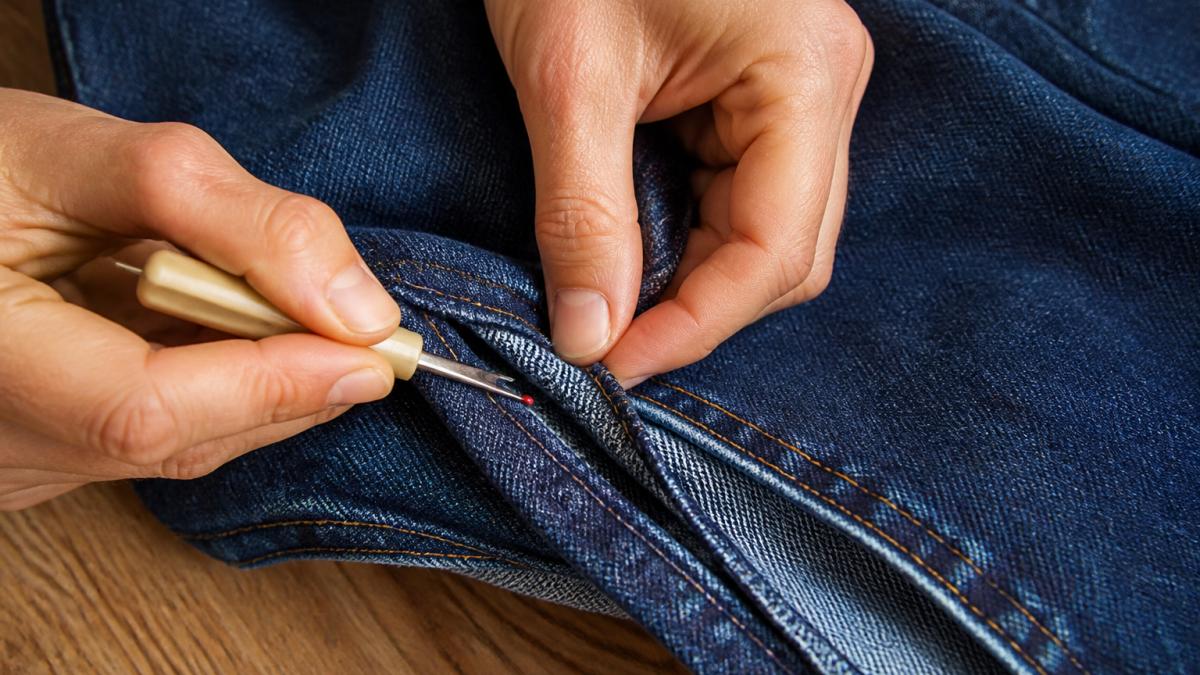
Start by measuring how much extra room you need. Put on the jeans and pinch the fabric at the thigh where it feels tight.
Mark your new seam line using fabric chalk or a washable pen. Draw along the inside of the leg from the crotch area down through the thigh and calf. Keep the line parallel to the original seam.
Use your seam ripper to cut the thread of the original inseam. Work carefully to avoid cutting the denim fabric. Remove all the old thread completely.
Sew your new seam using a sewing machine set to a straight stitch. Use thread that matches your denim. Backstitch at the beginning and end to secure the thread.
After sewing, try the jeans on to check the fit. If they feel right, trim any excess seam allowance to about 1.25 cm and finish the raw edges with a zigzag stitch or pinking shears to prevent fraying.
DenimTech Jeans In Medium Wash →
How to Taper Jeans After Enlarging the Thighs
After you've let out the thighs, you might find the rest of the leg feels too loose. This is normal. Tapering the calf and ankle restores a fitted silhouette while keeping the thigh room you created.
Tapering works by taking in the outseam, the seam running along the outside of your leg. Start at the knee and taper down toward the ankle. You can taper gradually or more dramatically depending on your preference.
Try on the jeans and pinch the outseam to see how much narrower you want the leg. Mark your new seam line with fabric chalk. The taper should be gradual, not sudden.
Use your seam ripper to remove the old outseam thread from the knee down. Sew your new seam line using a straight stitch. Try the jeans on frequently during this process to check the fit. It's easier to take in more fabric than to let it back out.
Taper both legs evenly. If one leg is narrower than the other, the jeans will look crooked when you wear them. Measure and mark both legs before sewing.
Common Mistakes to Avoid When Tailoring for Thigh Fit
Several mistakes can ruin an otherwise good alteration. Knowing these pitfalls helps you avoid expensive do-overs.
Letting out too much at once. Many people try to let out 5-7.5 cm from the inseam all at once. Most jeans don't have that much seam allowance. You'll end up with a seam that's too close to the edge and frays easily. Start with 1-2.5 cm and assess the fit before going further.
Not accounting for fabric shrinkage. Always wash and dry your jeans to their final fit before measuring and altering. Denim shrinks in the wash, especially the first few times.
Tapering too aggressively. When you enlarge the thighs, it's tempting to taper the leg dramatically to compensate. Aggressive tapering restricts your movement and looks awkward. A gradual taper from knee to ankle is more flattering and comfortable.
Ignoring the outseam. Some people only let out the inseam and ignore the outseam. Both seams need to move outward to create balanced thigh room. Adjusting only one seam creates an uneven fit.
Using thread that doesn't match. Mismatched thread is visible and looks unprofessional. Spend a few pounds on thread that matches your denim colour. It makes a huge difference in how the alteration looks.
Sewing crooked seams. A crooked seam will be visible and uncomfortable. Use pins or fabric chalk to mark a straight line before sewing. Take your time and sew slowly, especially if you're hand stitching.
Finding Jeans That Fit Without Major Alterations
The best solution is finding jeans that fit well from the start. This saves time, money, and the risk of a botched alteration. Look for brands and styles designed with athletic builds in mind.
Athletic-fit jeans have more room through the thigh and glute while maintaining a tapered leg. They're cut wider at the hip and thigh, then taper toward the ankle.
Check the fabric content. Jeans with higher elastane content (5-10%) stretch more and conform to your shape better than rigid denim.
Fitizen's DenimTech Jeans in multiple washes, including Medium Wash, Indigo Wash, Light Wash, and Midnight Wash, are engineered specifically for athletic builds.

Try on multiple brands and styles. What fits one person perfectly might not work for another. Spend time in the dressing room and move around, squat, walk, sit.
| Alteration Type | Difficulty | Cost | Time | When to Use |
|---|---|---|---|---|
| Let out inseam | Medium | £40-80 | 1-2 weeks | 1-2.5 cm more thigh room needed |
| Taper outseam | Medium | £30-60 | 1-2 weeks | Leg feels too loose after thigh adjustment |
| Both adjustments | Hard | £70-140 | 2-3 weeks | Complete thigh and leg overhaul needed |
| DIY seam letting | Hard | £5-15 | 2-4 hours | Comfortable with basic sewing |
Finding jeans that fit your muscular build shouldn't require a complete wardrobe overhaul or hours at the tailor. When standard sizing doesn't work, tailoring gives you a practical solution.
If tailoring feels like too much hassle, consider investing in jeans built for athletic bodies from the start. Fitizen's DenimTech Jeans are designed to fit large thighs without requiring alterations.
Frequently Asked Questions
Can jeans be tailored to fit larger thighs without changing the waist?
Yes, a skilled tailor can let out the thigh seams to add width without altering the waistband. This works best when there is visible seam allowance (typically 1-2 cm) to release. The tailor removes stitching along the inseam and restitches further out, giving you extra room. However, the amount you can let out depends on how much excess fabric exists in the seam allowance. If the seams are already tight, there may not be enough material to work with.
How much can you let out jeans at the thigh?
Most jeans can be let out by 2-5 cm per thigh seam, depending on the original seam allowance. This means a total of 4-10 cm of extra width around the thigh. Standard jeans typically have 1-2 cm of seam allowance, so letting out both inseams gives you realistic gains. Stretch denim often has slightly more allowance than rigid denim. If you need more than 5 cm of extra room, consider sizing up and having the waist tailored down instead.
Is it better to size up in jeans and have the waist tailored, or try to let out the thighs?
Sizing up and tapering the waist is often the better choice for large thighs. When you size up, you get the thigh room you need plus extra seam allowance to work with. A tailor can then reduce the waistband and taper the leg without limitations. Trying to let out thighs on a pair that already fits the waist usually leaves you with minimal seam allowance and less flexibility. The trade-off is higher tailoring costs, but you end up with a better fit overall.
Can stretch denim be altered for large thighs?
Stretch denim can be altered, but with some care. The elastic fibres make it trickier to work with than rigid denim. When a tailor lets out stretch jeans, they must match the original stitch line and tension to avoid puckering. Some stretch fabrics also recover differently after being released, so the fit may feel slightly different. High-quality stretch denim with proper seam allowance works best. If you're buying stretch jeans specifically for large thighs, choose a brand like DenimTech that uses hyper-stretch fabric designed for athletic builds.
