

Table of Contents
- Why Fitted Clothing Matters for Athletes
- Fitted vs Baggy Gym Clothes: What the Difference Really Is
- How Fitted Clothing Supports Muscle Performance
- Benefits of Compression Clothing for Athletes
- How Should Athletic Clothing Fit for Maximum Benefit
- Best Gym Clothes for Weightlifting and Strength Training
- What Fitted Clothing Means for Recovery and Injury Prevention
- Frequently Asked Questions
Last Updated: October 8, 2026
Why Fitted Clothing Matters for Athletes
Fitted clothing athletes rely on has become essential for serious training. When your garment moves with your body instead of flapping around, you gain better awareness of your position and movement, and this proprioceptive feedback helps you maintain form during compound lifts, sprints, and explosive movements.
The difference goes beyond comfort. Fitted clothing reduces excess fabric that can catch on equipment, tangle during movement, or create drag. For weightlifters performing heavy squats, deadlifts, and bench presses, this matters: baggy shorts shift as you descend into a squat, obscuring your view of your knees and hips, and oversized shirts ride up during overhead presses. These distractions break concentration and potentially compromise your form.
Beyond performance, fitted athletic wear serves a psychological function. Clothing that highlights your physique rather than hiding it reinforces your commitment to training. This isn't vanity, it's motivation: when you see the shape you've worked for reflected in how your clothes fit, you're more likely to stay consistent with your training programme.
Fitted vs Baggy Gym Clothes: What the Difference Really Is
The core distinction between fitted and baggy gym clothes comes down to how the garment interacts with your body during movement. Fitted clothing maintains consistent contact with your skin and muscles, while baggy clothing creates distance and excess fabric that moves independently.
Fitted garments follow your body's contours with minimal gap, using four-way stretch or elastic materials that expand with movement and return to shape. When you raise your arm, the sleeve rises with you; when you squat, the thigh section accommodates the expanded muscle without bunching at the waist.
Baggy clothing, by contrast, is designed with significant excess fabric, prioritising comfort for casual wear and accommodating a wider range of body sizes.
The fabric composition matters here. Fitted athletic wear typically uses polyester, spandex, and moisture-wicking materials that provide elasticity and breathability. Baggy gym clothes often use heavier cotton or looser weaves that don't stretch as much. Cotton absorbs sweat rather than wicking it away, making the garment heavier and less responsive to movement.
| Aspect | Fitted Clothing | Baggy Clothing |
|---|---|---|
| Fabric Movement | Moves with your body | Moves independently |
| Stretch | Four-way or multi-directional | Limited elasticity |
| Fit Through Thighs | Contoured, extra room where needed | One-size-fits-all approach |
| Waist Stability | Stays in place during movement | Shifts and requires adjustment |
| Visibility of Form | Clear view of muscle engagement | Obscured by excess fabric |
| Sweat Management | Wicks moisture away | Absorbs and holds moisture |
How Fitted Clothing Supports Muscle Performance
Fitted clothing directly influences how your muscles function during exercise through two primary channels: muscle stabilisation and reduced oscillation during movement.
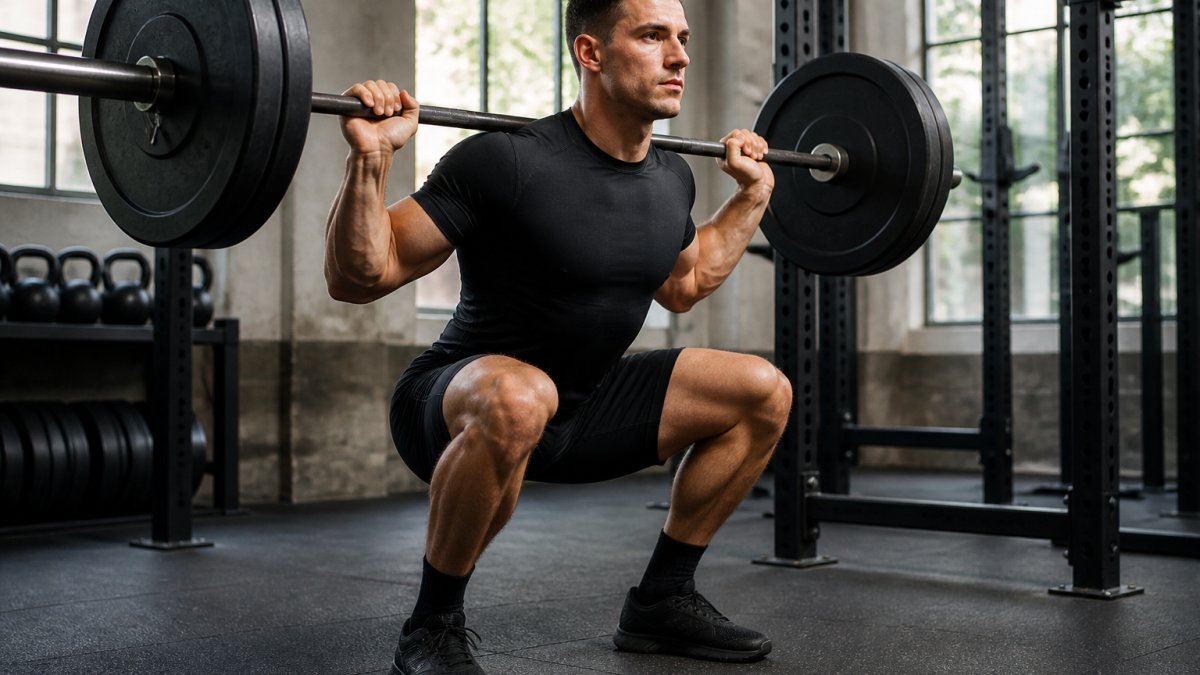
Muscle Support and Stabilisation
When fitted clothing hugs your muscles, it provides external support that works alongside your connective tissue. This isn't clinical compression, it's a gentler pressure that stabilises the muscle during dynamic movement. During a squat, fitted shorts support your quadriceps and glutes, reducing micro-movements within the muscle belly, so your nervous system can focus energy on producing force rather than controlling unwanted oscillation.
This support becomes particularly valuable during heavy strength training. When you're lifting near your maximum, every bit of muscular efficiency counts. Fitted clothing reduces the energy your body expends stabilising muscle tissue, allowing more effort to go toward moving the weight. Athletes performing compound movements like squats, deadlifts, and bench presses benefit most directly, with the fitted garment acting as an external frame similar to how a lifting belt supports your core.
Reducing Muscle Oscillation During Movement
Muscle oscillation, the rippling or vibration that occurs when muscle tissue moves, increases during explosive or heavy movements. Fitted clothing damps this oscillation by providing consistent pressure against the muscle surface. The effect is subtle but measurable: excessive oscillation increases fatigue and reduces the efficiency of force production.
When you drop a weight, your muscles don't stop contracting immediately; they continue oscillating slightly as they absorb the eccentric force. Fitted clothing reduces this post-contraction oscillation, so your muscles recover slightly faster between repetitions, and over a full workout of multiple sets and reps, this small efficiency gain compounds.
Reduced oscillation also improves proprioceptive feedback: you feel your muscles working more distinctly when they're not rippling excessively, and this enhanced body awareness helps you maintain better form and catch breakdowns before they become problematic.
Benefits of Compression Clothing for Athletes
Compression clothing takes the fitted approach further by applying graduated pressure designed to enhance blood circulation and muscle recovery. While fitted clothing follows your body's shape, compression garments actively squeeze your muscles.
Compression clothing improves blood flow by creating pressure that helps veins return blood to your heart more efficiently.
The evidence for compression is mixed. Some athletes report improved endurance and reduced soreness, while others notice minimal difference; the effect likely depends on compression intensity, duration of use, and individual physiology.
For daily wear and recovery, compression can be beneficial. Wearing compression shorts or tights after a heavy leg workout may reduce soreness the following day. During training itself, the primary benefit is psychological, the pressure reminds you that you're working hard and can boost motivation.
Fitizen's Hyper Stretch Shorts provide fitted support without the intensity of medical-grade compression. They offer the stabilisation benefits of fitted clothing with the freedom of movement that compression can sometimes restrict. For most athletes, this balance between support and mobility is ideal.

How Should Athletic Clothing Fit for Maximum Benefit
Proper fit determines whether fitted clothing athletes wear delivers its benefits or creates problems. The wrong fit, too tight or too loose, undermines the purpose of wearing fitted clothing.
Fit Guidance by Sport and Garment Type
Different sports and different garment types require different fit considerations.
For shorts and bottoms: The garment should feel snug through the thigh without restricting your range of motion. If you have muscular quads or glutes, standard sizing often fails because the thigh is too tight while the waist is too loose; Fitizen's Hyper Stretch Shorts address this by offering extra space in the thigh while maintaining a fitted waistband.

For shirts and tops: A fitted shirt should follow your shoulders, chest, and torso without pulling or creating visible wrinkles, with sleeves snug on the bicep without restricting shoulder movement. When you raise your arm overhead, the shirt should rise only slightly; if it rides up excessively, it's too tight or the armhole is too small.
Hyper Stretch Shorts In Olive Green →
For sports requiring explosive movement: CrossFit, rugby, and sprinting demand clothing that moves through extreme ranges of motion, accommodating deep squats, overhead reaches, and lateral movement without restriction. Hyper stretch fabrics with four-way elasticity perform best here.
For strength training: Weightlifting benefits from fitted clothing that provides visual feedback on your form, letting you see your leg position during squats and shoulder position during presses while providing the stabilisation support described earlier.
Avoiding Clothing That Is Too Tight
There's a line between supportive fitted clothing and restrictive clothing that's too tight. Clothing that's too tight can reduce your range of motion, restrict blood flow, and create discomfort that distracts from your training.
Signs your clothing is too tight: difficulty moving through your full range of motion, visible creases or bunching at joints, numbness or tingling in your limbs, or difficulty breathing during intense effort. If you can't perform a full squat or raise your arm overhead without the garment pulling, it's too tight.
Clothing that's too tight can also increase skin irritation and chafing. Seams that dig into your skin during movement cause friction that leads to painful rashes. Quality fitted clothing uses flatlock seams or seamless construction to prevent this.
Heat management becomes problematic with clothing that's too tight. Restrictive garments trap heat against your skin and prevent sweat from evaporating efficiently, which can lead to overheating during intense training, reducing performance and increasing injury risk. Fitted clothing should allow sweat to wick away and air to circulate.
Best Gym Clothes for Weightlifting and Strength Training
For serious strength training, your clothing needs to balance support, visibility, and durability. The best options prioritise fitted cuts, hyper-stretch fabrics, and construction that withstands heavy training.
Shorts designed for weightlifting should offer extra room through the thigh while maintaining a fitted waist. The Hyper Stretch Shorts from Fitizen deliver this balance.
For tops, fitted shirts that provide full range of motion are essential. The Hyper Stretch Shirt in Jet Black or Pure White offers a tapered muscle fit that complements athletic shapes while providing total freedom of movement, working for both gym training and everyday wear.
For athletes who prefer t-shirts, the Tee in Jet Black provides a muscle-hugging fit with super soft fabrics that let you move freely. At £39.00, it's an accessible entry point into fitted athletic wear.
If you train in varying weather conditions, the DenimTech Jeans in Indigo Wash combine fitted athletic design with performance features. They incorporate hyper-stretch denim, thermo-regulating properties, and sweat-wicking technology, making them suitable for cooler months or for athletes who prefer denim during gym sessions.
For layering or cooler training sessions, the Muscle Fit Hoodie in Jet Black provides warmth without sacrificing the fitted aesthetic. Made with hyper-stretch material and soft French terry fabric, it's cut into a flattering muscle-hugging shape.
What Fitted Clothing Means for Recovery and Injury Prevention
Fitted clothing contributes to injury prevention through multiple mechanisms.
During the eccentric (lowering) phase of a lift, your muscles control the descent of the weight. This eccentric loading is where most muscle damage occurs, and where most injuries happen if form breaks down.
Recovery is enhanced when you wear fitted clothing after training. The gentle compression and support of fitted garments can reduce muscle soreness in the 24-48 hours following intense training.
Fitted clothing also provides psychological recovery benefits. When your training apparel highlights your physique and makes you feel confident, it reinforces your identity as an athlete, supporting the long-term consistency that is ultimately the most important factor in injury prevention.
The durability of quality fitted clothing matters for injury prevention too. Fitizen's products use high-quality hyper-stretch fabrics and reinforced seams, so you can rely on consistent support and fit throughout your training journey.
Fitted clothing designed specifically for athletes addresses a real problem: standard gym wear doesn't accommodate muscular physiques. Whether you're preparing for competition or training for personal strength goals, clothing that fits your physique properly enhances both performance and confidence. View products and find the fitted athletic wear that matches your training intensity.
Frequently Asked Questions
Do fitted clothes actually help athletes perform better?
Yes. Fitted clothing for athletes reduces muscle oscillation during movement, which decreases fatigue and improves efficiency. Proper muscle support and stabilization mean your body expends less energy compensating for unwanted movement. Compression and close-fitting garments also enhance proprioception, your body's awareness of its position in space, which improves control during complex lifts and movements. Athletes in fitted clothing report better form and endurance during training.
Can tight sportswear restrict movement or circulation?
Properly fitted athletic clothing should never restrict movement or blood flow. The key difference is between compression (beneficial pressure that supports muscles) and constriction (clothing that is genuinely too tight). If your garment leaves deep marks on your skin, causes numbness, or makes breathing difficult, it is too tight. Well-designed fitted clothing, like hyper-stretch athletic wear, moves with your body through full range of motion whilst providing support. Always check that waistbands, armholes, and thigh areas allow comfortable movement without pinching.
Why should I pay more for fitted gym clothes when I can just size up?
Sizing up creates excess fabric that causes chafing, restricts movement, and shifts during intense exercise. Baggy clothing also fails to provide muscle support and stabilization, meaning your connective tissues work harder and fatigue faster. Fitted apparel designed for athletic builds, like those with hyper-stretch fabrics and reinforced construction, offers durability and performance benefits that justify the investment, especially for serious lifters and athletes.
How do I know if fitted athletic clothing will work for my body type?
Look for garments specifically designed for athletic and muscular builds, not generic activewear. Check product descriptions for features like extra thigh space, stretchy waistbands that fit true to size, and reinforced construction in high-stress areas. Read customer reviews from people with similar body types and training styles. Many specialist brands, including Fitizen, provide sizing guidance tailored to different physiques. Start with one piece to test the fit, and look for brands that offer detailed fit photos and honest customer testimonials from athletes with your build.