

Table of Contents
- What to Look for in Stretch Fabric for Athletic Wear
- Moisture-Wicking Fabric Properties Explained
- Elastane vs Spandex for Sportswear: Same Fibre, Different Name
- Fabric Comparison Table: Which Stretch Fabric Suits Your Training
- Muscle-Fit vs Oversized: How Cut Changes Fabric Performance
- How to Care for High-Stretch Gym Clothes
- Matching Stretch Fabric to Training Phases and Body Types
- Conclusion
- Frequently Asked Questions
Last Updated: September 17, 2026
What to Look for in Stretch Fabric for Athletic Wear
The best stretch fabric for athletic wear is a four-way stretch knit with enough elastane to recover its shape, enough weight to stay opaque under tension, and enough breathability to move sweat away from your skin. At Fitizen, we build our entire range around that brief, because a fabric that only stretches in one direction will fight you the moment you squat, press or sprint.
Most shoppers judge activewear on how it looks on the hanger. That is backwards.
Stretch is a mechanical property, not a marketing word. A fabric can feel soft in the changing room and still fail on rep eight of a heavy set, either by going see-through across the glutes or by refusing to snap back to its original shape.
Below, we break down the specifications that actually decide whether training gear performs: stretch direction, fabric weight, breathability and durability. Get these four right and almost everything else follows.
Four-Way Stretch and Range of Motion
Four-way stretch means a fabric stretches both across the width and along the length of the garment. Two-way stretch only gives you crosswise give, which restricts movement in the direction your limbs actually travel.
For lifting, this matters most at the shoulders, hips and knees. A four-way knit lets a garment follow a deep squat or an overhead press without pulling tight across the joint or riding up.
Look for elastane content stated on the label. Too little and the fabric sags after a few wears; too much and it feels flimsy. Four-way stretch also improves range of motion under a barbell, where a locked-up fabric can genuinely change how a lift feels.
Fabric Weight, Breathability and Durability
Fabric weight is measured in grams per square metre, or GSM. It is the single best predictor of whether a stretch garment will survive heavy use.
Lightweight knits, roughly 150 to 180 GSM, feel cool and are fine for cardio or summer training.
Moisture-Wicking Fabric Properties Explained
Moisture-wicking describes a fabric's ability to pull sweat away from your skin and spread it across the surface of the garment, where it evaporates faster. It is a transport mechanism, not a coating, and it depends on fibre type and knit structure working together.
- Breathability is how easily air passes through the fabric, which controls heat build-up.
- Thermal regulation is the fabric's ability to help keep your temperature steady as your output changes.
Sweat-Wicking vs Water-Resistant: What You Actually Need
For training, you want sweat-wicking, not water-resistant. Water-resistant fabrics are built to keep rain out, which means they also keep vapour in. Wear one to the gym and you trap sweat against your skin.
Elastane vs Spandex for Sportswear: Same Fibre, Different Name
Elastane and spandex are the same fibre. Elastane is the standard term used in Europe and in UK labelling, while spandex is the name more common in North America. There is no performance difference between them; only the word on the care label changes.
How Elastane Content Affects Gym Clothing Performance
A small amount of elastane goes a long way. Even a low single-digit percentage blended into a knit transforms how a garment moves and recovers.
The practical effects of higher elastane content:
Hyper Stretch Jeans In Stay Black →
- Greater stretch and a more contouring fit
- Faster recovery, so the garment holds its shape
- Better aesthetic fit across muscular quads, glutes and shoulders
- Slightly lower resistance to heat and chlorine over time
Fabric Comparison Table: Which Stretch Fabric Suits Your Training
Different stretch fabrics suit different jobs. The table below maps the main options against the training they handle best.
| Fabric | Stretch | Breathability | Durability | Best For |
|---|---|---|---|---|
| Polyester-elastane knit | Four-way | High | High | Heavy lifting, CrossFit |
| Nylon-elastane knit | Four-way | Medium | Very high | Compression, high-intensity |
| Cotton-elastane blend | Two to four-way | Medium | Medium | Gym-to-street, casual wear |
| Bamboo-elastane blend | Four-way | High | Medium | Warm-weather training |
| Performance stretch denim | Four-way | Low to medium | High | Everyday wear, gym-to-street |
Muscle-Fit vs Oversized: How Cut Changes Fabric Performance
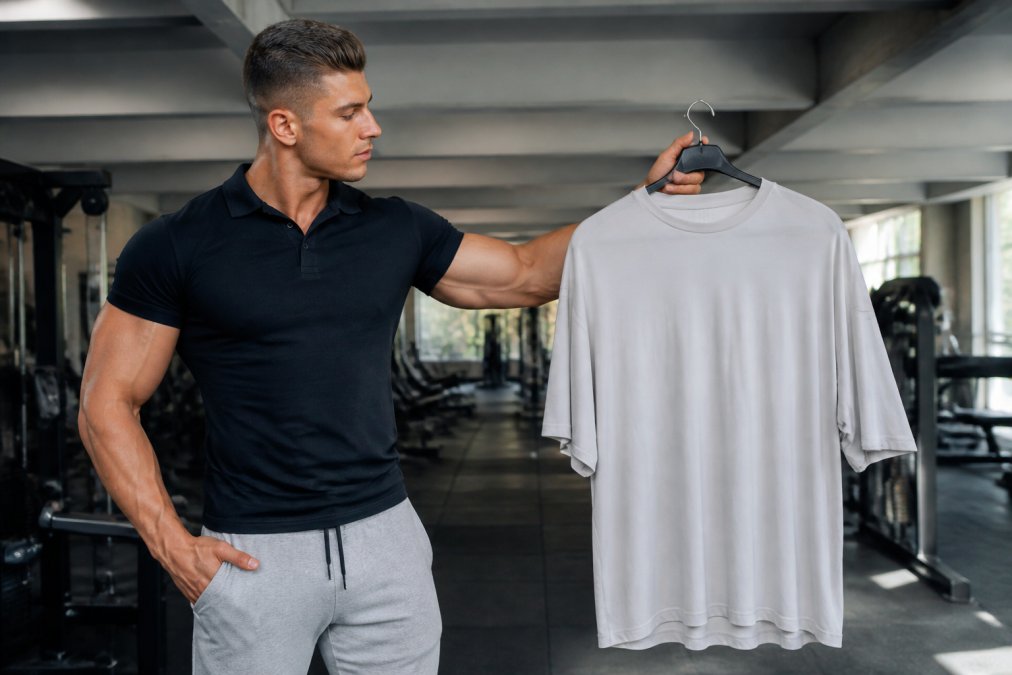
Cut changes how a fabric performs, not just how it looks. A muscle-fit garment keeps the stretch fabric in contact with the body, so it moves with you. An oversized cut drapes away from the body, which means the fabric has to travel further before it stretches, and it bunches instead of following the muscle.
How to Care for High-Stretch Gym Clothes
High-stretch gym clothes last longer if you protect the elastane. Heat is the enemy, and so is fabric softener, which coats the fibres and reduces their ability to wick sweat.
A care routine that works:
- Wash cool, at 30°C or below, on a gentle cycle
- Turn garments inside out to reduce surface abrasion
- Skip fabric softener and dryer sheets entirely
- Air dry flat or on a line, away from direct heat
- Wash stretch gear separately from towels and heavy denim
- Avoid chlorine and hot tubs, which degrade elastane fast
- Store folded rather than hung, so shoulders do not stretch out
Matching Stretch Fabric to Training Phases and Body Types
Stretch fabric should change with your training phase, not just your sport. Bodybuilders move through bulking and cutting cycles, and a physique that changes size needs clothing that keeps up.
Bulking vs Cutting: Sizing Fluctuations and Fabric Choice
During a bulk, your measurements grow, particularly through the chest, arms, thighs and glutes. During a cut, they shrink back, but usually not in the same places or at the same rate.
Adaptive Stretch Clothing for Injury Recovery
Injury recovery is the gap most activewear guides ignore. After a strain, a sprain or surgery, getting dressed can be the hardest part of the day, and standard gym gear offers no help.
- Wide, stretchy waistbands that are easier to pull on
- Side zips or magnetic closures for limited mobility
- Softer, higher-stretch knits that do not press on a tender area
- Seam placement that avoids rubbing on a brace or support
Conclusion
Matching fabric to your training is harder than it should be, because most activewear is built for an average body that does not lift. The fix is to buy on specification: four-way stretch, sensible fabric weight, real breathability and enough elastane to recover.
Frequently Asked Questions
What fabric is best for athletic wear?
The best stretch fabric for athletic wear usually combines a performance fibre with elastane. A blend of polyester or nylon with 10-20% elastane gives four-way stretch, moisture-wicking fabric properties and breathability without losing shape. For lower-impact or gym-to-street wear, bamboo blends offer softness and thermal regulation. The right choice depends on your training intensity, how much range of motion you need, and whether the garment must transition to everyday wear.
What is the stretchy athletic fabric called?
The stretchy component in most athletic fabric is elastane, known as spandex in some markets. It is blended with polyester, nylon or cotton to create four-way stretch. You will also see trade names like Lycra on care labels. When a garment lists 10% elastane or higher, expect noticeable stretch and recovery. Lower percentages, around 2-5%, give a subtler stretch suited to denim and chinos rather than heavy lifting gear.
How does elastane content affect gym clothing performance?
Elastane content determines how far a fabric stretches and how well it springs back. Around 5% gives light stretch for casual wear. At 10% or more, fabric moves with deep squats and overhead presses without sagging. Higher elastane also improves shape retention after washing, which matters for muscle-fit clothing that needs to contour to quads, glutes and shoulders. Too much elastane without enough durable base fibre can reduce breathability, so balance matters.
How do I care for high-stretch gym clothes so they keep their shape?
Wash high-stretch gym clothes inside out in cold water on a gentle cycle. Skip fabric softener because it coats fibres and reduces moisture-wicking fabric properties. Air dry where possible; if you use a tumble dryer, choose low heat. Heat breaks down elastane over time, which is why stretch garments go saggy. Rotate between several pieces so each one recovers between wears, and follow the care label for anything with thermo-regulating or anti-odor finishes.
Is elastane the same as spandex for sportswear?
Yes. Elastane and spandex describe the same synthetic fibre. Elastane is the term used in Europe and on most care labels, while spandex is common in North America. Both stretch up to several times their length and recover. When comparing elastane vs spandex for sportswear, look at the percentage rather than the name. A 12% elastane blend behaves the same as a 12% spandex blend, so the label wording alone tells you nothing about performance.
Can stretch fabric for athletic wear work for the office as well as the gym?
Yes, if the cut and finish are right. Hyper-stretch chinos and dark stretch denim look smart enough for most workplaces while moving like gymwear. Look for tapered or muscle-fit cuts in muted colours, and pair them with a stretch shirt or polo. The fabric does the work: four-way stretch, breathability and shape retention mean you can squat, sit and commute without the garment bagging out or restricting movement.