

Table of Contents
- Why Standard Sizing Fails an Athletic Build (and What to Look For)
- The 5 Best Jeans for Small Waist Big Thighs: A Comparison
- Fabric Science: Why Elastane and Stretch Recovery Matter for Athletic Thighs
- How to Measure for an Athletic Build: Waist-to-Hip Ratio and Inseam
- Capsule Wardrobe for Gym-Goers: 7 Pieces That Transition from Gym to Street
- Tailoring Tips for Athletic Women: Fixing the Waist Gap and Thigh Fit
- Common Fit Issues and How to Troubleshoot Them
- Conclusion: Dress the Body You Have, Not the One on the Tag
- Frequently Asked Questions
Last Updated: September 9, 2026
Why Standard Sizing Fails an Athletic Build (and What to Look For)
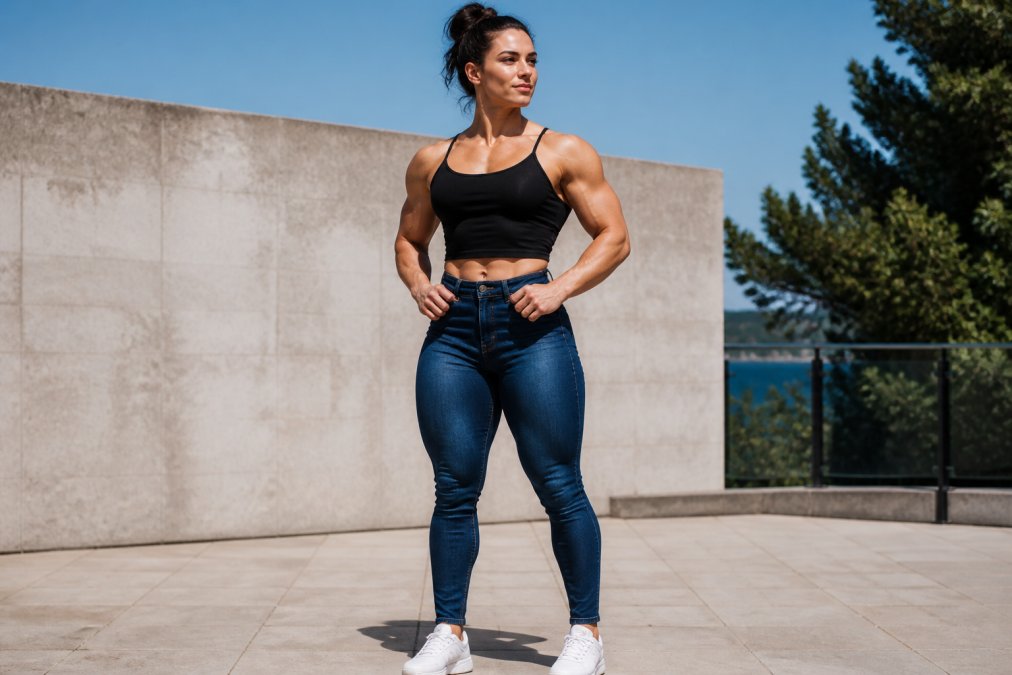
If you train legs more than once a week, you already know the frustration: jeans that fit your waist slide down over your hips, while anything that fits your thighs leaves a fistful of fabric bunched at the back. Clothing for women with an athletic build is not a niche problem; it is a sizing system failure. Most high-street denim is cut on a straight vertical block that assumes a hip-to-waist difference of around 20 cm (peer-reviewed research). Lifters and athletes routinely sit at 25 cm or more.
The result is the classic waist gap, the tell-tale sign that a jean was not designed for a body that squats. At Fitizen, we have spent years building denim around muscular proportions rather than asking you to squeeze into standard blocks. The fix is not sizing up; it is understanding what to look for: a contoured waistband, genuine stretch recovery, and a rise measurement that matches your torso, not a mannequin.
Below, we will show you exactly how to pick jeans that stay put and how to measure yourself properly. But first, here is what most fit guides get wrong: they treat fabric stretch as a single feature when the real difference comes down to recovery, how well the elastane snaps back after you move.
The 5 Best Jeans for Small Waist Big Thighs: A Comparison
Every jean below is built on the same principle: hyper-stretch denim engineered with enough elastane to move with your quads and a contoured waistband that eliminates the gap. We have tested each cut against the demands of an athletic build, and these consistently deliver on fit, comfort, and durability. Each pair is priced at £89.00.
| Jean | Best For | Key Feature | Wash |
|---|---|---|---|
| Hyper Stretch Deep Blue | All-round everyday wear | Best-selling classic cut | Deep indigo |
| Contour Cosmic Black | Eliminating the waist gap | Contoured waistband | Black |
| Hyper Stretch Jet Black | Versatile gym-to-office | Classic black, high stretch | Jet black |
| Hyper Stretch Indigo Wash | Lighter, casual look | 30% off promotional price | Indigo |
| Hyper Stretch Light Wash | Warmer months | Lightweight feel | Light blue |
Hyper Stretch Jeans In Deep Blue: The All-Rounder
If you only buy one pair, make it this one. The Hyper Stretch Jeans In Deep Blue are a best seller for a reason: they deliver the full range of motion you need for daily wear while keeping a tailored silhouette that flatters your quads without looking like gym wear. The deep blue wash works from a coffee meeting to a night out.

What makes them work for an athletic build is the fabric. The hyper-stretch denim moves when you squat, lunge, or walk, then returns to its original shape rather than sagging at the knees by midday. If you have tried "stretch" jeans before and watched them bag out, the recovery in this cut is the difference.
Contour Jeans In Cosmic Black: Built for the Waist Gap
The Contour Jeans In Cosmic Black exist for one purpose: to sit flush against your lower back with zero gap. The contoured waistband is cut with a deeper curve that follows the natural shape of a muscular lower back, so you do not spend the day hitching your jeans up.
This is the pair to reach for when you are tired of belts doing the work your jeans should do. The cosmic black finish is sharp enough for a smart-casual dress code, and the stretch means you can actually sit down comfortably. For anyone with a pronounced waist-to-hip difference, this cut offers a tailored fit off the rack.
Hyper Stretch Jeans In Jet Black: The Versatile Classic
Every wardrobe needs a dependable black jean, and the Hyper Stretch Jeans In Jet Black is exactly that. It shares the same hyper-stretch fabric as the Deep Blue but in a clean, uniform black that transitions effortlessly from the gym floor to the office. No fading, no distressing, just a sharp finish.
The versatility is the selling point here. Dress it up with a blazer or keep it casual with a fitted tee. The high elastane content means your thighs have room to breathe without the fabric clinging uncomfortably, and the colour holds its depth wash after wash.
Fabric Science: Why Elastane and Stretch Recovery Matter for Athletic Thighs
An athletic build demands more from denim than a straight-cut body. The science comes down to two factors: elastane content and stretch recovery. Elastane, also known as spandex, is the synthetic fibre that gives denim its give. But the percentage alone does not tell the full story; what matters is how the yarn is spun and how quickly the fabric returns to its resting state after being stretched.
Cheap stretch denim uses a low-quality elastane that deforms permanently. You put the jeans on, your thighs stretch the fabric, and by the end of the day the knees are baggy and the waist has loosened. High-quality hyper-stretch denim, like the kind we use at Fitizen, uses a tighter core-spun yarn that snaps back into place. This is why our jeans hold their shape through a full day of squatting, walking, and sitting.
Denim weight also plays a role. Heavier denim, typically 12 oz or more, holds its structure better but offers less give (textiles.ncsu.edu). Lighter denim is more comfortable but can sag. The sweet spot for an athletic build is a mid-weight fabric with a high elastane content, which is precisely the balance our hyper-stretch range strikes.
How to Measure for an Athletic Build: Waist-to-Hip Ratio and Inseam
Before you buy anything, you need your numbers. The waist-to-hip ratio is the single most useful measurement for finding jeans that fit an athletic build, because it tells you how much curvature your jeans need to accommodate. Measure your waist at its narrowest point, usually just above the belly button, and your hips at the widest point around the glutes.
Divide your waist measurement by your hip measurement. A ratio of 0.7 or lower indicates a pronounced curve that standard jeans will not accommodate. For example, a 71 cm waist with 102 cm hips gives a ratio of 0.7, which explains why size 10 jeans pinch your thighs while size 14 jeans fall off your waist.
The inseam is simpler: measure from the crotch seam to the hem on a pair of jeans that already fit you well in length. This gives you your true inseam, typically 30 or 32 inches for most women. The rise measurement, from the crotch seam to the top of the waistband, determines where the jeans sit on your torso. High-rise jeans suit longer torsos, while mid-rise works better for shorter torsos or those who prefer a lower waistline.
Capsule Wardrobe for Gym-Goers: 7 Pieces That Transition from Gym to Street
A capsule wardrobe for gym-goers is about building a small set of pieces that work as hard as you do. The goal is to move from a training session to a coffee meeting without looking like you forgot your clothes. These seven items form the foundation.
- High-stretch dark jeans: The Hyper Stretch Jet Black or Deep Blue, depending on your colour preference. They read as smart-casual, not gym wear.
- A structured blazer: Cut with room through the shoulders, it instantly elevates a fitted tee or tank.
- A fitted crew-neck tee: Choose one with a touch of elastane so it skims, not clings, your shoulders and arms.
- A midi skirt with stretch: Counter-intuitive for some, but a stretchy midi skirt balances broad shoulders and muscular legs beautifully.
- A lightweight knit jumper: Layer it over a collared shirt for a polished look that accommodates your back and arm development.
- Tailored joggers: Not the baggy gym variety, but a tapered, structured pair that passes for smart trousers.
- A leather or canvas belt: The practical fix for any waist gap while you build your collection of contoured-fit jeans.
The principle is simple: buy pieces that fit your largest muscle groups and use tailoring or strategic styling for everything else. A capsule wardrobe for gym-goers should make you look intentional, not like you are squeezing into clothes that almost fit.

Tailoring Tips for Athletic Women: Fixing the Waist Gap and Thigh Fit
Tailoring tips for athletic women often start with the assumption that you should buy for your thighs and take in the waist. That is half right. The strategy works, but only if the jeans have enough fabric through the seat to allow for a clean alteration. A good tailor can take in the waistband by up to 5 cm without distorting the pockets or yoke.
The yoke, the curved panel at the back of the waistband, is where most waist gap fixes happen. If the gap is small, under 2 cm, a tailor can simply take in the centre back seam. For a larger gap, they need to reshape the yoke itself, which is a more involved alteration. This is why buying jeans with a contoured waistband in the first place is often the smarter move.
If you are altering off-the-rack jeans, always bring the shoes you will wear with them. The heel height changes where the jeans sit on your hip and affects the length you need. A tailor should pin the hem with your shoes on, not barefoot.
Common Fit Issues and How to Troubleshoot Them
Even with the right cut, you will hit the occasional fit failure. Here is how to diagnose and fix the most common problems.
The waist gap. If you can fit more than two fingers between the waistband and your lower back, the jeans are not cut for your shape. Try a contoured waistband cut, or buy for your hips and have the waist taken in.
Thigh pinch. If the fabric pulls tight across your quads when you sit, the jeans are too narrow through the leg. Look for a cut described as "athletic" or "curvy" fit, which adds room through the thigh without adding it through the waist. A tapered leg can still give you a slim silhouette below the knee.
Knee bagging by midday. This is a fabric failure, not a fit failure. The elastane content is too low or the quality is poor. Switch to a hyper-stretch denim with proper recovery.
The rise rides down. If your jeans slide down even with a belt, the rise is too short for your torso. A high-rise cut will sit at your natural waist and stay put, provided the waistband is contoured to your back.
Back pocket placement. Pockets that sit too low visually widen the hips. Look for pockets that sit at the top of the glutes, not in the middle of them, to keep the silhouette lifted.
Conclusion: Dress the Body You Have, Not the One on the Tag
The sizing tag on a pair of jeans is a starting point, not a verdict. An athletic build is a sign of hard work, and your clothing should celebrate that, not fight it. Stop buying for the waist and suffering in the thighs, or sizing up and living with a belt. The solution is denim engineered around your actual proportions, with the stretch to move and the recovery to hold its shape.
Fitizen builds every pair of women's jeans with hyper-stretch fabric and a contoured fit designed for muscular thighs and a smaller waist. Our customers, from competitive bodybuilders to CrossFit athletes, have bought over 40,000 products and rate us 4.8 out of 5 for good reason. View the full women's collection to find the cut that finally fits the body you have built.
Frequently Asked Questions
What type of jeans look good on thick thighs?
High-rise jeans with a tapered leg or a straight cut work best for thick thighs. They provide enough room through the quad and glute area without excess fabric pooling at the ankle. Look for denim with at least 2% elastane or spandex so the fabric moves with you. A contour waistband helps prevent the waist gap that often occurs when you buy jeans sized for your thighs.
How do I know if jeans will fit my small waist and big thighs before buying?
Check the fabric composition first. Jeans with sufficient elastane offer the stretch needed for muscular thighs. Then compare the waist measurement against your own, and look for styles described as having a contour waistband or curved yoke. If you are between sizes, size for your thighs and plan to take the waist in, or choose hyper stretch jeans designed for athletic builds that accommodate both measurements.
What type of clothing best flatters an athletic build?
Fitted clothing that follows your natural silhouette flatters an athletic build best. Avoid oversized pieces that hide your shape, and skip stiff fabrics that pull across the shoulders or thighs. Hyper stretch fabrics with good recovery highlight your physique while allowing full range of motion. High-rise bottoms balance broad shoulders, and V-neck or scoop tops soften a muscular upper body.
Why does the waist gap happen with jeans, and can I fix it?
The waist gap happens because most jeans are cut straight from hip to waist, but athletic builds have a more dramatic difference between those measurements. When you buy jeans to fit your thighs, the waist is too loose. A tailor can take in the waistband. Alternatively, buy jeans with a contour waistband or curved yoke, which are cut to follow the natural curve of your lower back.