

Table of Contents
- What Makes Clothing Durable for CrossFit Training?
- Abrasion Resistance and Seam Construction
- 4-Way Stretch and Squat-Proof Coverage
- Best Fabrics for High-Intensity Training
- Muscle-Fit Gym Clothing Benefits for Lifters
- How to Build a Functional Fitness Wardrobe
- Compression vs Loose-Fit Gear: What Works for WODs
- Caring for CrossFit Training Clothing So It Lasts
- Budget vs Investment: What Durable Kit Really Costs
- Frequently Asked Questions
Last Updated: September 21, 2026
What Makes Clothing Durable for CrossFit Training?
Durable clothing for CrossFit training survives repeated abrasion, high stretch loads, and constant sweat without losing shape or tearing at the seams. Three things separate kit that lasts years from kit that fails in months: fabric composition, seam construction, and how the garment handles movement under load.
CrossFit exposes weaknesses fast. A WOD moves from barbell work to burpees to rope climbs in under twenty minutes, pulling fabric in different directions. Cheap cotton tears at the crotch during deep squats, weak stitching blows out at the shoulder during overhead presses, and sweat-soaked fabric stays heavy and chafes.
This guide from Fitizen breaks down what makes training gear last and which fabrics perform under high-intensity interval training.
Abrasion Resistance and Seam Construction
Abrasion resistance determines how long a garment survives barbells, rigs, and gym floors. Seam construction decides whether it holds together when stretched to its limit.
Two construction details separate durable kit from fast fashion:
- Flatlock seams lie flat against the skin and resist pulling apart under tension. They also reduce chafing during high-rep movements.
- Reinforced crotch and gusset panels add fabric where stress concentrates. A gusset gives the garment room to move without splitting at the seam.
A common mistake is buying gear with standard overlock stitching: it looks fine on the hanger and fails within weeks. Check the inside before you buy, raised, bulky seams rub and eventually give.
Fitizen's Hyper Stretch Shorts address this directly with an internally strengthened crotch area and a stretchy waistband that fits true to your waist size, with extra room through the thigh.

4-Way Stretch and Squat-Proof Coverage
Four-way stretch means fabric stretches in both directions, not just across the body. Deep squats, lunges, and overhead positions demand fabric that moves with you rather than against you.
Squat-proof coverage is the practical test: a garment passes if it stays opaque and in place through a full-depth squat. Thin fabric that goes sheer under tension fails immediately.
More stretch usually means more elastane, which degrades faster than polyester. A well-made polyester-elastane blend balances flexibility with durability; a poor one stretches out after a few washes and never recovers. When trying gear on, squat deep, if the fabric pulls tight across the hips or rides up, it will do the same mid-WOD.
Best Fabrics for High-Intensity Training
The best fabrics for high-intensity training are synthetic blends, specifically polyester combined with elastane: they manage sweat, dry quickly, and hold their shape through repeated washing.
Here is how the main options compare:
| Fabric | Sweat Management | Durability | Recovery After Stretch | Best For |
|---|---|---|---|---|
| Polyester-elastane blend | Excellent | High | High | CrossFit, lifting, HIIT |
| Nylon-elastane | Good | High | High | Compression gear |
| Polyamide-elastane | Good | High | High | Premium leggings |
| Cotton | Poor | Low | None | Rest days only |
| Cotton-polyester mix | Moderate | Moderate | Low | Light training |
Why polyester wicks and cotton does not
Polyester fibres are hydrophobic, they repel water at a molecular level, so sweat travels along the fibre surface and evaporates faster. Cotton fibres are hydrophilic: they absorb water into the fibre itself, which is why a soaked cotton tee stays heavy, clings, and cools you down when you stop moving.
That difference matters most during high-volume metcons: a cotton top holds sweat against the skin, increasing friction at the seams, the exact conditions that cause chafing during burpees and double-unders.
The elastane percentage nobody talks about
Elastane (listed as Spandex or Lycra on care labels) gives a garment its stretch and spring-back, and it is the first component to fail. It degrades through hydrolysis, reaction with water, especially warm water, plus chlorine, heat, and mechanical fatigue from repeated stretching.
A blend of 10-20% elastane gives four-way stretch without sacrificing longevity.
Why nylon and polyamide blends behave differently
Nylon and polyamide are close cousins, polyamide is the broader chemical family, nylon its best-known member. Both are tougher than polyester in abrasion terms, which is why they dominate compression gear and premium leggings, but they absorb slightly more water and dry more slowly.
A quick test in the shop
Hold the fabric to a light: if individual fibres separate as you stretch it, the knit is too open for squat-proof coverage. Release it and watch how quickly it returns to shape, slow recovery is the earliest visible sign of elastane fatigue, and no amount of careful washing will reverse it.
Muscle-Fit Gym Clothing Benefits for Lifters
Muscle-fit gym clothing follows the shape of a developed physique rather than hanging loose around it, solving the fit problem off-the-rack clothing creates for lifters with large quads, glutes, and shoulders.
Hyper Stretch Shorts In Olive Green →
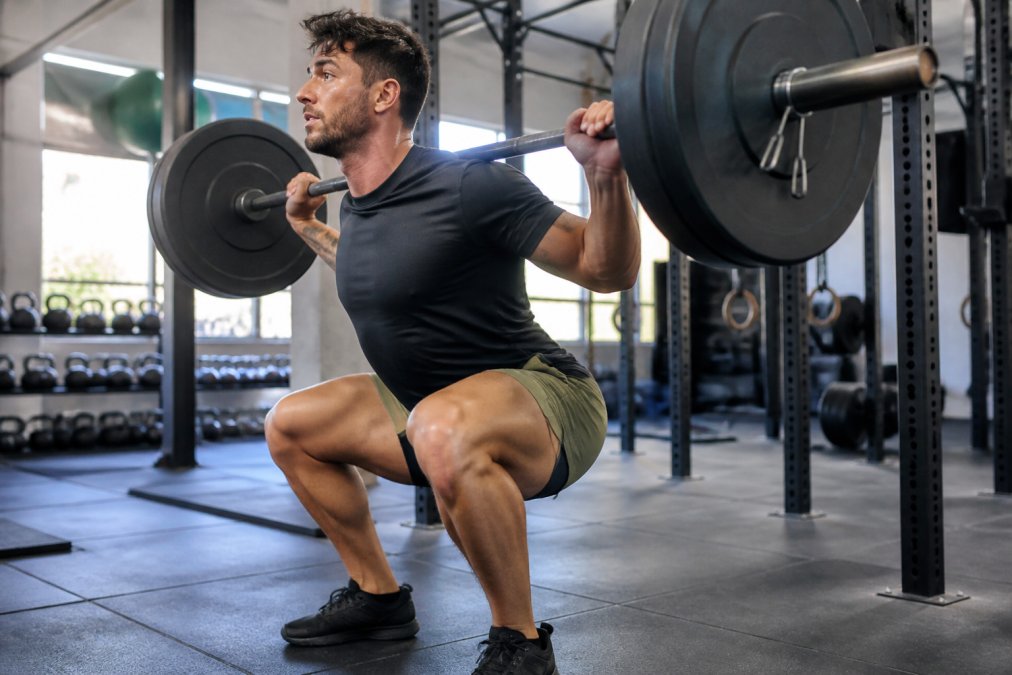
Beyond fit, muscle-fit gear offers practical benefits:
- Freedom of movement for squatting, lunging, and walking without restriction
- No baggy fabric to catch on equipment or bunch during movement
- All-day comfort so the same garment works for training and daily wear
How to Build a Functional Fitness Wardrobe
Building a functional fitness wardrobe starts with a few versatile, durable pieces rather than a large collection of cheap ones. Cover most sessions first, then add specialised items.
Compression vs Loose-Fit Gear: What Works for WODs
Compression gear fits tight to the skin and supports muscle during movement. Loose-fit gear prioritises airflow and freedom. Neither is universally better. The right choice depends on the session and your preferences.
Compression works well for:
- Heavy lifting where muscle support helps
- Recovery sessions and long metcons
- Reducing muscle oscillation during high-impact work
Loose-fit works well for:
- Hot sessions where airflow matters most
- Athletes who find compression restrictive
- General training and gym-to-street wear
Caring for CrossFit Training Clothing So It Lasts
Follow these rules:
- Wash cold, around 30°C, to protect elastane
- Skip fabric softener, which coats fibres and blocks moisture-wicking
- Turn garments inside out to reduce surface abrasion
- Air dry where possible; if you tumble dry, use low heat
- Wash with similar colours and avoid rough items like towels
Sweat left in fabric encourages odour and fibre damage. Rinse or wash soon after training rather than letting damp kit sit in a bag overnight.
Budget vs Investment: What Durable Kit Really Costs
Cheap training gear costs less per item and more per year. Here is a framework for deciding when to spend and when to save.
The cost-per-session framework
Cost per session = purchase price ÷ (sessions per week × weeks the garment actually lasts)
Where to spend, where to save
The mistake most athletes make is treating all kit the same. Spend where the garment meets stress; save where it does not.
Spend on:
- Shorts and leggings, these take the brunt of barbell contact, rig abrasion, and the deepest stretch loads. A gusset and flatlock seams are non-negotiable here.
- Anything you wear for rope climbs, rope shreds cheap fabric in a single session.
- Your primary training top, the one you reach for three times a week.
Save on:
- Warm-up layers, a basic fleece or hoodie does not need technical fabric.
- Backup tops, a second or third top worn once a week can be a mid-range option.
- Accessories, wrist wraps, lifting belts, and chalk bags are commodity items where brand premium rarely buys durability.
The 3-session test
Before committing to a premium piece, ask whether you will wear it at least three times a week for the next two years. If yes, the cost-per-session maths almost always favours the better-made option. If no, a seasonal layer, a competition-only singlet, an impulse colour, buy mid-range and put the savings into pieces you actually live in.
The hidden cost of replacing cheap kit
There is a training cost that does not show up on a receipt. Gear that sags, rides up, or goes sheer mid-squat makes you self-conscious, and self-conscious athletes cut reps short, skip the deep squat, and avoid movements that expose the problem, a real performance cost over a training year. The right question is not "what is cheapest" but "what costs least per training session over its life, and what does it let me do in the gym".
Frequently Asked Questions
What features make clothing durable for CrossFit?
Look for abrasion-resistant fabric with a polyester-elastane blend that holds its shape through barbell work and high-intensity interval training. Reinforced seam construction, an internally strengthened crotch area and a gusset reduce blowouts during squats and lunges. Four-way stretch keeps the fabric moving with you instead of tearing, and moisture-wicking properties stop sweat from breaking down the fibres over time.
How should CrossFit clothing fit to prevent restriction during movements?
Your kit should sit close without pinching. A stretchy waistband that fits true to your waist size, plus extra room through the thigh, lets you hit full range of motion in squats and overhead lifts. Muscle-fit designs contour to your shape rather than hanging loose, which keeps fabric from catching on bars or your own knees during high-impact work. If you can feel the fabric pulling at the bottom of a squat, size up.
Are synthetic fabrics better than cotton for CrossFit?
For high-sweat sessions, yes. Cotton soaks up moisture and stays heavy, which leads to chafing and a fabric that loses shape fast. Synthetic blends like polyester-elastane dry quickly, manage sweat and keep their stretch through repeated washing. That said, a small cotton content can add softness for lower-intensity days. For WODs, quick-dry synthetic fabric is the practical choice.
How do I maintain the durability of my gym apparel?
Wash at 30 degrees on a gentle cycle and skip the fabric softener, which coats fibres and reduces stretch. Turn garments inside out to protect the outer surface from abrasion in the drum. Air-dry where possible; tumble drying breaks down elastane over time. Rotating two or three sets of shorts across the week gives each piece time to recover its shape, which extends the life of the stretch significantly.