

Table of Contents
- Why Standard Sizing Fails Athletic, Curvy Bodies
- Quick Comparison: Fitizen Jeans for Curvy Athletic Frames
- What to Look For in Athletic Fit Clothing for Curvy Women
- The Best Moisture-Wicking Fabrics for Workouts
- Supportive Sports Bras for Curvy Women: Getting the Support Right
- Activity-by-Activity Gear: Yoga, HIIT and Weightlifting
- How to Build a Capsule Wardrobe for the Gym
- Caring for Technical Fabrics So They Keep Their Shape
- Frequently Asked Questions
Last Updated: September 14, 2026
Why Standard Sizing Fails Athletic, Curvy Bodies
Standard sizing assumes a single bust-waist-hip ratio that most athletic, curvy women do not match, which is why athletic fit clothing for curvy women is now its own category. If your quads, glutes and shoulders are built from training, a garment cut for the average frame will gap at the waist, pull across the thigh, or ride up when you move.
The core problem is proportion, not size. A size chart assumes your waist, hips and thighs scale together at a fixed ratio, but years of squatting and deadlifting change that ratio. Size up to clear your thighs and the waistband stands away from your back; size down for the waist and you cannot sit down comfortably.
The fix is a different cut, not a bigger size: genuine four-way stretch, a high-rise that anchors at your narrowest point, and seams placed to move with you.
Quick Comparison: Fitizen Jeans for Curvy Athletic Frames
Fitizen builds muscle-fit denim for athletic bodies. Every pair below uses the same hyper-stretch denim formula, so the choice comes down to wash and finish.
| Style | Wash | Best For | Price |
|---|---|---|---|
| Hyper Stretch Jeans in Deep Blue | Deep blue | Everyday wear, gym-to-street | £89.00 |
| Hyper Stretch Jeans in Indigo Wash | Indigo | Smart-casual, office days | £89.00 |
| Hyper Stretch Jeans in Jet Black | Jet black | Evening, minimal styling | £89.00 |
| Hyper Stretch Jeans in Light Wash | Light wash | Casual weekends | £89.00 |
| Hyper Stretch Jeans in Ripped & Repaired | Light wash, distressed | Off-duty, limited edition | £89.00 |
| Contour Jeans in Medium Wash | Medium wash | All-day comfort, contouring fit | £89.00 |
| Contour Jeans in Cosmic Black | Black | Work-to-gym transitions | £89.00 |
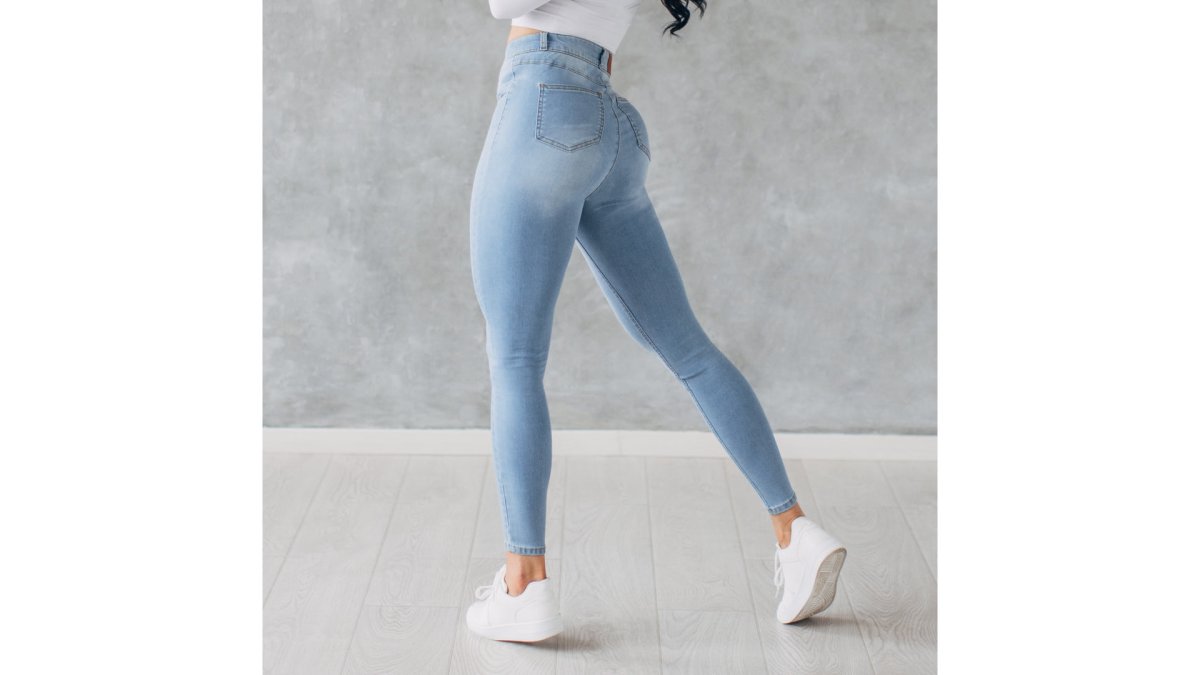
Contour styles sit closer through the hip and thigh; Hyper Stretch leans on maximum give for freedom of movement. Coming from rigid high-street denim, expect the first wear to feel noticeably softer.

What to Look For in Athletic Fit Clothing for Curvy Women
Athletic fit clothing follows the proportions of a trained body, with stretch and seam placement that accommodate larger quads, glutes and shoulders without excess fabric elsewhere. Two things decide whether a garment works: the fabric's stretch and recovery, and how the seams and waistband are built.
Fabric and Stretch: What Actually Holds Up
Four-way stretch is the baseline: the fabric gives in both directions, so it moves with you through a squat rather than fighting back. Look for enough elastane to snap back after washing, because cheap stretch fabric relaxes and goes saggy at the knee and seat. Recovery matters more than initial feel, a pair that feels perfect in the fitting room but loses shape after three washes was never a good buy.
Seams, Waistbands and Chafing Prevention
Flatlock seams sit flush against the skin, preventing chafing on longer runs or high-rep sessions. A wide, high-rise, non-slip waistband stays put when you hinge or bend instead of rolling down mid-set. A tight waistband just creates pressure points, you want grip, not squeeze.
The Best Moisture-Wicking Fabrics for Workouts
The best moisture-wicking fabrics for workouts move sweat to the outer surface where it evaporates faster. For curvy, athletic frames, the priority is a breathable fabric that wicks without clinging. The label "moisture-wicking" tells you little on its own, what matters is the fibre blend, the knit structure, and how the fabric behaves when saturated.
How Wicking Actually Works
Wicking is capillary action. Synthetic fibres like polyester are hydrophobic, so sweat travels along the fibre surface rather than soaking in, and the knit structure pulls moisture from the inner face to the outer face where it evaporates. That is why a thin, tightly knit polyester can outperform a thick cotton blend, cotton absorbs sweat and holds it against your skin.
Fibre-by-Fibre: What Works for Curvy, Athletic Frames
- Polyester and elastane blends: The workhorse for high-intensity training. Polyester wicks fast and holds its shape; elastane adds four-way stretch for squats, lunges and jumps. Look for at least 15% elastane for genuine recovery, cheaper blends relax permanently after a few washes.
- Polyamide (nylon) and elastane blends: Softer, more durable and cooler to the touch than polyester, often used in premium leggings and sports bras. It resists odour better but dries slightly slower.
- Merino wool: Naturally breathable, temperature-regulating and odour-resistant, and it wicks without clinging, a strong choice for cooler training and layering. The trade-off is cost and slower drying.
- Bamboo and modal blends: Soft, breathable and comfortable, best for yoga, pilates and lower-intensity sessions because they absorb moisture rather than repelling it. They lose shape faster than synthetics under repeated high-intensity use.
- Recycled polyester: Made from post-consumer plastic bottles, it performs close to virgin polyester in wicking and durability, so you are not trading function for lower impact. It still sheds microplastics during washing, so a guppyfriend bag or similar wash bag is worth using.
The Breathability Trap
Wicking only works if the fabric can breathe. A tight, non-breathable layer traps heat no matter how good the wicking claim is, and for curvy frames there is more skin surface area in contact with the fabric, so more heat and moisture to manage. Look for a visible knit structure or mesh panels in high-sweat zones such as the back, underarms and behind the knees. If a garment feels clammy within ten minutes, it will not wick well during a session.
Sustainable Options That Actually Perform
Recycled polyester and bamboo blends now perform close to virgin synthetics, so you are not trading function for lower impact. Check the percentage of recycled content and the elastane source, some brands use bio-based elastane derived from castor oil, which has a lower carbon footprint and recovers just as well. Sustainable activewear costs more upfront but lasts longer, reducing cost per wear.
Matching Fabric to Activity
- HIIT and running: Polyester or polyamide with at least 15% elastane, mesh panels, and a high-impact bra in a wicking fabric.
- Yoga and pilates: Bamboo, modal or a soft polyamide blend with four-way stretch and a non-slip waistband.
- Weightlifting: Durable polyamide or polyester blend that handles deep squats without pulling at the seam, with a high-rise waistband that stays anchored under a belt.
- Cooler training: Merino wool or a merino-synthetic blend for breathability and odour control without the clammy feel of pure synthetics.
Supportive Sports Bras for Curvy Women: Getting the Support Right
Supportive sports bras for curvy women need to control movement in two directions, not one. A bra that only compresses flattens the bust and still allows bounce; the better design encapsulates each side and holds it steady, which is what high-impact support actually means.
Look for wide, adjustable straps that do not dig in, a band that sits snug but flat against your ribcage, and a high-impact rating if you run, jump or do HIIT. For yoga and lifting, a medium-support bra with a softer band is enough. The most common mistake is buying for cup size alone and ignoring the band, the band carries the support, and if it rides up when you raise your arms, it is too loose.
NHS guidance on choosing a well-fitting bra
Activity-by-Activity Gear: Yoga, HIIT and Weightlifting
Different training styles put different demands on your kit, so matching gear to activity matters more than buying one outfit for everything. Here is what fails in each discipline, and what to look for.
Yoga and Pilates: Range of Motion and Non-Slip Waistbands
Yoga and pilates demand range of motion, breathability and a waistband that stays put through forward folds, twists and inversions. The failure point is almost always the waistband: a narrow, low-rise band rolls down the moment you hinge, and a tight band creates pressure points mid-flow.
What to look for:
- Four-way stretch leggings with a wide, high-rise, non-slip waistband that sits at your natural waist and stays flat when you bend.
- A medium-support bra with a softer band, high-impact compression is unnecessary for yoga and less comfortable in seated and reclined poses.
- Breathable fabrics such as bamboo, modal or a soft polyamide blend, which feel cooler and do not cling during long holds.
- Flatlock seams that sit flush against the skin, especially in the inner thigh and underarm areas where chafing is most likely.
What to avoid: Cotton leggings, which absorb sweat and become heavy and clammy; low-rise waistbands, which roll down; and high-compression bras, which restrict breathing in pranayama and deep backbends.
HIIT and Running: High-Impact Support and Chafe Prevention
HIIT and running put the highest demands on support and chafe prevention. The failure points are bounce, chafing and kit that rides up or down mid-session, for curvy, athletic frames, the bust and inner thigh need the most attention.
What to look for:
- A high-impact sports bra that encapsulates each side rather than compressing the bust flat, encapsulation controls movement in two directions and is far more effective for larger busts. Look for wide, adjustable straps that do not dig in and a band that sits snug but flat against your ribcage.
- Compression leggings with a high-rise, non-slip waistband and flatlock seams. Compression reduces muscle vibration and helps prevent chafing without feeling restrictive.
- Moisture-wicking tops in polyester or polyamide blends with mesh panels in high-sweat zones. Avoid cotton, which holds sweat and causes chafing.
- Anti-chafe balm or shorts with a longer inseam for longer runs. Chafing usually starts at the inner thigh and underarm, so address those areas first.
What to avoid: Bras that only compress, which flatten the bust and still allow bounce; leggings with a low-rise or narrow waistband, which roll down; and seams that sit directly on the inner thigh, which rub with every stride.
Weightlifting and Strength Training: Durability and Deep-Squat Freedom
Weightlifting and strength training demand durable, high-stretch fabric that handles deep squats, hinges and overhead presses without pulling at the seam. The failure points are seam blowouts, waistbands that roll under a belt, and fabric that loses shape after a few heavy sessions.
What to look for:
- High-stretch leggings or shorts with at least 15% elastane and a gusseted crotch, which adds fabric where you need it and prevents the seam pulling during deep squats.
- A high-rise waistband that stays anchored under a lifting belt, a wide, flat band distributes pressure more evenly than a narrow, elasticated one.
- A medium-support bra for lifting, or high-impact for Olympic lifts or plyometrics. The band should sit snug but flat and the straps should not dig into your shoulders under load.
- Durable fabrics such as polyamide or a heavy-weight polyester blend, which resist pilling and hold shape through repeated heavy use.
What to avoid: Thin, cheap stretch fabric that relaxes after a few washes; leggings with a low-rise waistband that rolls under a belt; and bras with thin straps that dig in under load.
Gym-to-Street: One Pair That Works Across the Session and Beyond
If you lift heavy and want one pair for the gym and the street, the Hyper Stretch Jeans in Deep Blue give you the movement of gymwear with a tailored finish. For a cleaner, more contoured line, the Contour Jeans in Cosmic Black sit closer through the hip and thigh.
A Note on Testing Your Kit
Before committing to a full capsule, test each piece in the activity you bought it for. A bra that feels supportive in the shop may bounce on a run; a legging that feels stretchy in the fitting room may roll down in a deep squat. The first wear usually reveals the failure point, so buy one piece at a time.
How to Build a Capsule Wardrobe for the Gym
A gym capsule wardrobe is a small set of versatile, hard-wearing pieces that mix and match across every session, so you stop buying fast-fashion kit that fails after a month. Build around function first, then colour.
- Two to three pairs of high-stretch leggings (one compression, one softer)
- Two supportive sports bras (one high-impact, one medium)
- Three moisture-wicking tops in neutral tones
- One layering piece, such as a running jacket or zip-through
- One pair of hyper-stretch jeans for gym-to-street days
- One durable pair of shorts for warm-weather sessions
Stick to two or three colours so everything works together, and you cut decision time on early training days. The NHS physical activity guidelines are a useful reminder of how often you should be training, which tells you how hard your kit needs to work.

Caring for Technical Fabrics So They Keep Their Shape
Technical fabrics keep their shape when you wash cool, avoid heat and air dry. Heat is the enemy: hot water and tumble drying break down elastane, causing that saggy, stretched-out look after a few months.
Wash at 30°C or lower on a gentle cycle and air dry flat or on a line (Decontamination). Turn garments inside out and wash technical kit separately from towels and anything with zips or hooks that can snag the weave. Do this and good stretch leggings or jeans will hold their fit far longer than the price tag suggests.
Standard sizing will keep letting athletic, curvy bodies down as long as it assumes everyone shares one ratio. The workaround is choosing cut, stretch and seam placement deliberately rather than sizing up and tolerating the gap. Fitizen makes that easier with muscle-fit, hyper-stretch denim built for trained proportions, so the jeans follow your shape instead of hiding it. Explore the women's range, including the Contour and Hyper Stretch styles.

Frequently Asked Questions
What is the best activewear for curvy people?
Look for pieces built around four-way stretch, flatlock seams and a non-slip waistband rather than standard sizing. High-rise fits stay put through squats and deadlifts, while moisture-wicking fabrics move sweat away from skin during high-impact sessions. Fitizen's hyper-stretch jeans, at £89, show the same principle outside the gym: a body-contouring cut that follows muscular quads and glutes instead of hanging loose at the waist. Prioritise fit testing in the movements you actually train before buying a full gym kit.
What are some good gym clothes for curvy women?
A workable gym kit starts with a supportive sports bra, moisture-wicking tops and compression leggings with a high-rise, non-slip waistband. Add layering pieces such as a lightweight running jacket for outdoor sessions. Check that seams are flatlock to reduce chafing under repeated movement, and that fabric returns to shape after washing. Fitizen's hyper-stretch denim, priced at £89, works as the gym-to-street layer for women who want their athletic silhouette visible after training rather than hidden under baggy clothing.
How should athletic clothing fit a curvy body?
It should follow your proportions without pinching or gaping. The waistband should sit flat against the lower back when you bend, the thigh should have enough four-way stretch to move through a full squat, and the shoulder area should allow full range of motion. If you size up to fit your quads and the waist ends up loose, the cut is wrong, not the size. Look for ergonomic design and body-contouring panels built for curvy-friendly fit instead of relying on a bigger size.
What clothes are flattering for a big tummy?
High-rise fits with a wide, non-slip waistband smooth the midsection without digging in, and darker washes hide creases better than light ones. Compression leggings and contoured jeans work well because the fabric follows the body rather than pulling across it. Fitizen's Contour Jeans in Cosmic Black, at £89, use a body-contouring cut designed for athletic frames. Pair them with a fitted top rather than an oversized one, since loose fabric adds bulk where you do not want it.
How do I stop stretch gym wear going saggy after a few washes?
Wash technical sportswear at 30 degrees or lower, skip fabric softener and tumble drying, and let pieces air dry flat. Heat breaks down elastane, which is what makes stretch fabrics spring back. Turn garments inside out before washing to protect the surface, and avoid overloading the machine. Durable materials with flatlock seams hold their shape far longer this way. If a piece sags after one or two washes, the fabric blend is the problem, not your care routine.